










![Handwork: Handcrafted Objects that Made America [Craft in America]](http://www.phaidon.com/cdn/shop/files/M-handwork-en-3727-3d-standing-front-3000_cf7b8381-b3a2-41fd-86da-6fe623fb0a35.jpg?v=1784715138&width=400)
![Handwork: Handcrafted Objects that Made America [Craft in America]](http://www.phaidon.com/cdn/shop/files/M-handwork-en-3727-3d-overview-3000_038c21c2-0af7-41e2-8a96-9b0beaf9c2d6.jpg?v=1784715138&width=400)
![Handwork: Handcrafted Objects that Made America [Craft in America]](http://www.phaidon.com/cdn/shop/files/M-handwork-en-3727-3d-spread-1-3000_675d5a59-80e7-4b98-bb57-f9d68d61b20d.jpg?v=1784715138&width=400)
![Handwork: Handcrafted Objects that Made America [Craft in America]](http://www.phaidon.com/cdn/shop/files/M-handwork-en-3727-3d-spread-2-3000_a21c9230-7856-470d-8101-09ae2fef75e3.jpg?v=1784715138&width=400)
![Handwork: Handcrafted Objects that Made America [Craft in America]](http://www.phaidon.com/cdn/shop/files/M-handwork-en-3727-3d-spread-3-3000_6dbd48c4-eaab-4b0d-86a2-19b97d8be954.jpg?v=1784715138&width=400)
![Handwork: Handcrafted Objects that Made America [Craft in America]](http://www.phaidon.com/cdn/shop/files/M-handwork-en-3727-3d-spread-4-3000_851a14d9-3b23-4197-85c5-3a4503b24548.jpg?v=1784715138&width=400)
![Handwork: Handcrafted Objects that Made America [Craft in America]](http://www.phaidon.com/cdn/shop/files/M-handwork-en-3727-3d-spread-5-3000_232b034c-682e-4a6f-b47b-81d5a99dd497.jpg?v=1784715138&width=400)
![Handwork: Handcrafted Objects that Made America [Craft in America]](http://www.phaidon.com/cdn/shop/files/M-handwork-en-3727-3d-spread-6-3000_4c787d9d-1fb6-4812-9652-d15d93423bc0.jpg?v=1784715138&width=400)









































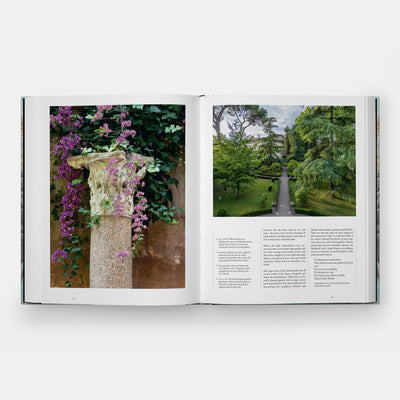
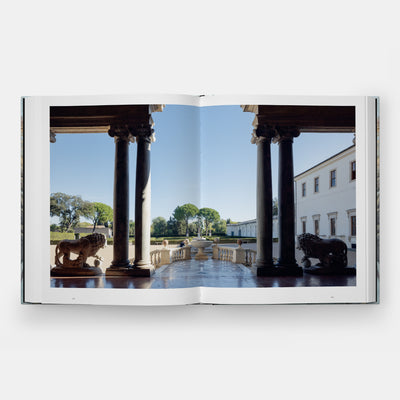
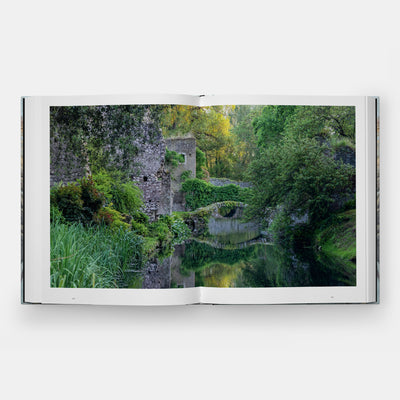
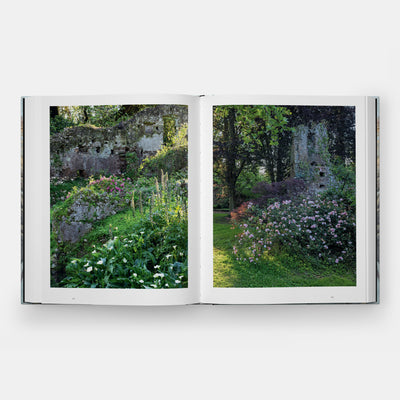





















"There really is no greater pleasure than creating a meal from your own produce, cutting flowers for the table, embracing the seasons, and experiencing the flavour of fruit
and vegetables as they should be," writes Aaron Bertelsen (previously the vegetable gardener at Great Dixter,and author of The Great Dixter Cookbook) in the foreword to our new book, The Kitchen Garden, by Toby Musgrave.
Both Bertelsen and Musgrave share the belief that, while the primary purpose of a vegetable garden is to be productive, there's no reason why it shouldn’t also be beautiful.
With that thought firmly in mind, our new book The Kitchen Garden tells the rich story and history of the kitchen garden, showing how edible landscapes can be every bit as appealing to the senses as any flower garden – and, indeed, how edible plants can be used in place of more traditional ornamentals to add an extra layer of interest.
Toby Musgrave (author of The Garden: Elements and Styles) and a keen grower himself, is the perfect guide to the gardens, more than more than fifty of them, featured in the book.
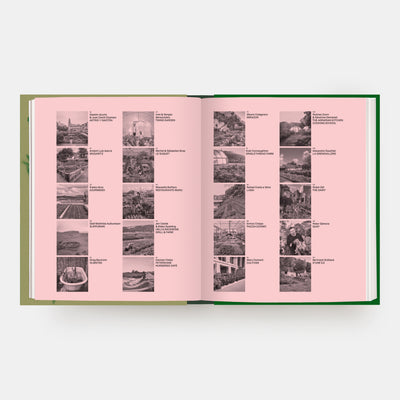
Organized geographically, readers are taken on a journey to the world’s most inspiring kitchen gardens. This is a truly global survey, with accessible texts and detailed captions packed with information about each garden’s story and design. There are plenty of useful takeaways for gardeners of all abilities, given the diverse range of gardens showcased: from historic walled gardens, medieval and renaissance potagers, to community projects, urban rooftop ‘farms and private gardens.
Iconic gardens are also featured throughout, including Bunny Mellon’s Oak Spring Garden, Alice Waters’s Edible Schoolyard project in the US, Château Villandry in France, the rewilded garden at Knepp Castle and Charles Dowding’s no dig flagship, Homeacres in the UK and Patrice Taravella’s work at Babylonstoren in South Africa. One of the more unusual locations included is the remote kitchen garden at Bahia Bustamante Lodge on Argentina’s Atlantic coast where owner Astrid Perkins has battled harsh conditions to produce a bountiful harvest including her own variety of marine tomatoes.
While we may no longer be growing to ensure our own survival like the villager-farmers of the first Agricultural Revolution, the benefits are arguably more important than ever. Here are five kitchen gardens from The Kitchen Garden that demonstrate that.
Funan Urban Garden - Funan, Singapore Grant Associates & Edible Garden City
 Funan Urban Garden, Funan, Singapore. Grant Associates & Edible Garden City. Picture credit: Edible Garden City
Take the Garden Stairs at the newly renovated Funan (2019), passing along raised walkways and up steps beside beds cloaked with ornamental tropical plantings, and discover this rooftop garden or, more accurately, urban farm in downtown Singapore. Occupying more than 460 square metres (5,000 square feet), it has a very different aesthetic from the greenery below. The lushness of the planting – which includes more than fifty types of fruit and vegetables – creates a sense of organized and productive tranquillity that contrasts strongly with the garden infrastructure. For their part, the stark white walls and stacked planters coexisting with raised beds enclosed by Brutalist concrete walls have a strongly futuristic feel. This is partly because the methods of cultivation required by a roof garden in a tropical climate – for example, irrigation, growing medium (its weight must not impact the roof’s structural integrity and for the same reason must freely drain) and nutrition – are specialized, making the site also a showcase for sustainable food production and a range of growing technologies. The garden is managed by Edible Garden City (EGC), an urban farming consultancy and pioneer in Singapore’s grow-your-own-food movement, which in part aims to address the city state’s problem with food security. The harvest, which includes basil, butterfly pea flowers and microgreens, is supplied to 100 restaurants every week. Elsewhere in the city, EGC, which believes that growing your own food allows a reconnection with nature, conserves natural resources and cultivates a sense of community, is working with schools to integrate edible gardening into the curriculum as a vehicle for meeting certain teaching and learning objectives, including Applied Learning Programmes, Values in Action, Character and Citizenship Education, Eco Stewardship Programmes, and Science and Food Sustainability.
Mirazur - Mirazur Menton, Alpes-Maritimes, France Mauro Colagreco
 Mirazur, Menton, Alpes-Maritimes, France. Mauro Colagreco. Picture credit: Matteo Carassale
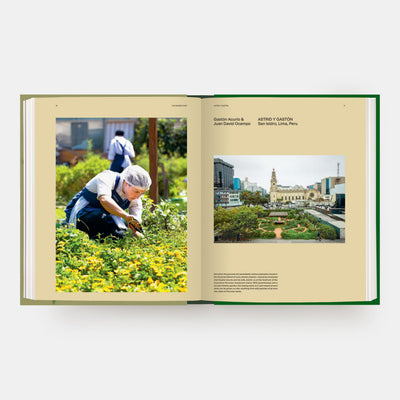
This three-Michelin-star restaurant enjoys an enviable position with a stunning prospect over Menton and the Mediterranean Sea southwest to Cape Martin. Inspiration for what is served comes from five productive gardens covering a total of nearly 5 hectares (about 12 acres), cultivated since 2006 by Argentinian-born chef Mauro Colagreco. Spread across several sites, the plots have different growing conditions that allow for great crop diversity – over 1,500 different edibles are grown – and optimized yields. At the foot of the restaurant is a garden of citrus, flowers and aromatic herbs; in the heart of Menton an edible forest of fruit trees, agaves and wild species; inland at Castillon are olive groves, orchards, vegetables and wild plants; and behind the chef’s home is the lovely, vertiginous Rosmarino garden. The sheltered dry stone-walled terraces (locally called restanque) were formerly an ornamental garden adorning a villa used by the King Albert I of Belgium (r.1909–34). Over time they were reclaimed by nature until Colagreco revived them into a delightfully eclectic, higgledy-piggledy mix of edibles and repurposed formal elements set within the somewhat labyrinthine cascade of restanque, all backed by tall limestone cliffs. It may be charming, delightful and free of ostentation or intensity, but at its core is a carefully nurtured, environmentally responsible working garden that chefs harvest from daily. All available space is used: nooks, corners and old water features converted into planters burst with flowers (mostly edible), elegantly simple bamboo frames support peas, tangles of cucurbits tumble over raised beds, etc. Citrus trees cast shade while the generous microclimate allows the cultivation of subtropical fruit including banana, dragon fruit, mango, papaya and passion fruit. As Colagreco puts it: ‘Having a garden is experiencing a constant transformation and the essential role of interrelation to create life. . . A garden is above all a territory of hope.’
Kasteel Hex -Heers, Belgium François - Charles de Velbrück & Count Ghislain d’Ursel
 Kasteel Hex, Heers, Belgium. François-Charles de Velbrück & Count Ghislain d’Ursel. Picture credit: Jason Ingram
The castle of Hex was built in the 1770s by architect Etienne Fayen for the PrinceBishop of Liège, François-Charles, Count of Velbrück, who also created the rectangular, 1-hectare (2½-acre) walled kitchen garden that has been in continuous use since. Lower than its surrounding gardens, which give magnificent views over it, the kitchen garden was originally laid out with the Potager du Roi at Versailles (see p.188) as its model, and has been simplified twice to what is seen today. The tall retaining wall to the northeast is 250 metres (820 feet) long and clothed along its full length with espaliered fruit trees, among them apples, apricots, figs, grapes and peaches. The sloping bed at its foot is known as the rabat (collar), and both it and the beds in the level central area are bounded by low box hedges. The cutting garden is a chain of flower borders in an informally planted style set within the strict formal framework. The greenhouses (containing tender fruit) and nursery occupy the northwestern end, while the lowest, western triangle is an orchard. Today, keeping old traditions alive is an important part of the approach at Hex. The many fruit cultivars are selected for reasons of conservation and local relevance, and the vegetables are heritage varieties, with a focus on some fifty-five grown in the Prince-Bishop’s time, including cardoon and greater burdock. An especially rare and interesting feature, still in use, is the vaulted vegetable cellar set into the retaining wall. Used to preserve harvested vegetables in the dark and at a steady temperature, it was more effective than the conventional vegetable root clamp – a simple underground storage space where vegetables are laid either on the soil or in a crate and then covered with sand or soil. Beetroot (beet), cardoon, carrot, cabbage, celeriac, squash and potato are among the vegetables stored in this way throughout autumn and winter, and in late winter and spring the cellar is used to blanch and force chicory (endive) and other green leafy plants, such as lettuce, as well as red dandelion and rhubarb, among other crops.
Château Villandry - Villandry, Indre-et-Loire, France Joachim Carvallo
 Château Villandry, Villandry, Indre-et-Loire, France. Joachim Carvallo. Picture credit: Chateau de Villandry – Guillaumette Mourain
Villandry has the rare accolade of being more famous for its kitchen garden than for its ornamental one. In fact, its 1-hectare (2¼-acre) potager is arguably the contemporary archetype. But while it is the centrepiece of the surrounding six gardens, this sheltered potager to the southwest of the Renaissance château (built by Jean Le Breton from 1532) is not original. The doctor and medical researcher Joachim Carvallo purchased the property in 1906 and made his meticulous reinterpretation of a French Renaissance garden between 1908 and 1918. What makes his potager so engaging is its combination of planting and structure. Carvallo envisaged it as ‘a well-served table’, and today two plantings are made annually for both spectacle and the requirements of crop rotation: in the spring, for a show between March and June; and in the summer to last until November. Many of the forty types of vegetable ordered with mathematical precision are colourful and architectonic, creating an ornamental edible display that both harmonizes and contrasts with the herbs and mass plantings of bright annuals, and provides the perfect counterpoint to the forms of the nine square beds. Their different motifs are picked out in box hedging clipped low, ornamented here with short trellis fencing and there by an oval fruit bush or standard rose. Between them runs a grid of wide gravel paths with, at each of the four central intersections, a pool bounded by four climbing roseclad lath bowers. A key source for Carvallo were the detailed engravings of Loire Valley period gardens printed in Jacques I Androuet du Cerceau’s two-volume work Les Plus Excellents Bastiments de France (The Most Excellent Buildings of France, 1576–9). The influence of square beds laid out in intricate geometric patterns, as at Château de Bury near Blois, is clear; however, Villandry’s design is not copyist but original in its formulation.
Edible Schoolyard - Martin Luther King Jr. Middle School, Berkeley, California, United States Alice Waters

Edible Schoolyard, Martin Luther King Jr. Middle School, Berkeley, California, United States. Alice Waters. Picture credit: Kelly Sullivan
The Edible Schoolyard Project was founded in 1995 by chef, writer and activist Alice Waters to transform the food experience at a Berkeley public middle school. This first Edible Schoolyard remains a classroom without walls, but there is nothing pretentious about the organic garden that was made by repurposing 0.4 hectare (1 acre) of derelict asphalt to the east of the school buildings. A central, roughly circular rustic pole pergola provides seating for al fresco classes. Around it, rough, low-cut bark chip and grass paths enlivened by patches of flowers meander through a somewhat higgledy-piggledy array of informal beds planted with rows of vegetables identified by cheerfully painted labels. The sixth-, seventh- and eighth-grade students who work and study in this garden classroom do so for three years as part of the curriculum. According to The Edible Schoolyard Project, the students are ‘the keepers of the soil and shepherds of the harvest’, sowing seeds, tending the growing plants and harvesting the produce. The garden has burgeoned over the years, supported by an energetic team of thirty volunteers. In addition to the teaching kitchen, where students learn to prepare fresh food using the more than 100 cultivars of berry, herb, fruit and vegetable they grow, there are flocks of chickens and ducks, and an orchard irrigated by a rainwater capture system. The Edible Schoolyard is much more than ‘just’ gardening and cookery, however, for students also learn about growing and food as a component of culture, ecology, science and social justice. This pioneering garden multitasks as a demonstration site and innovation hub for the field of edible education, and so successful is the paradigm that the Edible Schoolyard Network now connects more than 5,800 programmes from fifty-three US states and territories and seventy-five countries around the world.
Take a closer look at The Kitchen Garden, by Toby Musgrave.