













![Handwork: Handcrafted Objects that Made America [Craft in America]](http://www.phaidon.com/cdn/shop/files/M-handwork-en-3727-3d-standing-front-3000_cf7b8381-b3a2-41fd-86da-6fe623fb0a35.jpg?v=1784715138&width=400)
![Handwork: Handcrafted Objects that Made America [Craft in America]](http://www.phaidon.com/cdn/shop/files/M-handwork-en-3727-3d-overview-3000_038c21c2-0af7-41e2-8a96-9b0beaf9c2d6.jpg?v=1784715138&width=400)
![Handwork: Handcrafted Objects that Made America [Craft in America]](http://www.phaidon.com/cdn/shop/files/M-handwork-en-3727-3d-spread-1-3000_675d5a59-80e7-4b98-bb57-f9d68d61b20d.jpg?v=1784715138&width=400)
![Handwork: Handcrafted Objects that Made America [Craft in America]](http://www.phaidon.com/cdn/shop/files/M-handwork-en-3727-3d-spread-2-3000_a21c9230-7856-470d-8101-09ae2fef75e3.jpg?v=1784715138&width=400)
![Handwork: Handcrafted Objects that Made America [Craft in America]](http://www.phaidon.com/cdn/shop/files/M-handwork-en-3727-3d-spread-3-3000_6dbd48c4-eaab-4b0d-86a2-19b97d8be954.jpg?v=1784715138&width=400)
![Handwork: Handcrafted Objects that Made America [Craft in America]](http://www.phaidon.com/cdn/shop/files/M-handwork-en-3727-3d-spread-4-3000_851a14d9-3b23-4197-85c5-3a4503b24548.jpg?v=1784715138&width=400)
![Handwork: Handcrafted Objects that Made America [Craft in America]](http://www.phaidon.com/cdn/shop/files/M-handwork-en-3727-3d-spread-5-3000_232b034c-682e-4a6f-b47b-81d5a99dd497.jpg?v=1784715138&width=400)
![Handwork: Handcrafted Objects that Made America [Craft in America]](http://www.phaidon.com/cdn/shop/files/M-handwork-en-3727-3d-spread-6-3000_4c787d9d-1fb6-4812-9652-d15d93423bc0.jpg?v=1784715138&width=400)






















































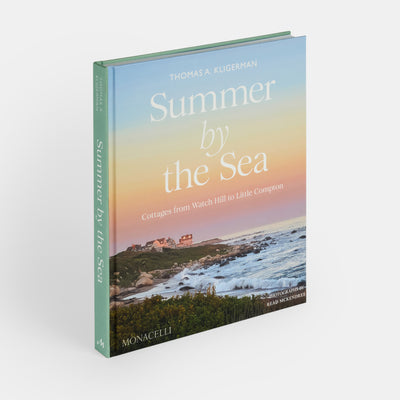
With a population of just over one million Rhode Island is the smallest state in the union and was the first to declare Independence in May 1776. In the years since, it has become renowned as the summer capital of the Gilded Age, and most important, from the perspective of our new book, Summer by the Sea: Cottages from Watch Hill to Little Compton, the birthplace of the shingle style, “the architecture of the American summer.”
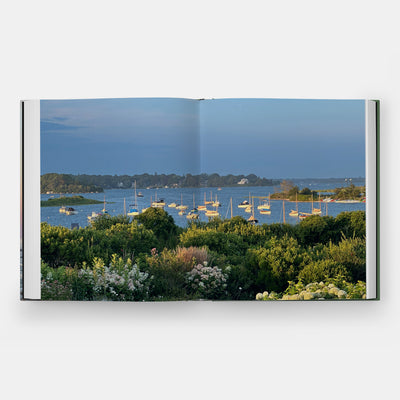
Summer by the Sea celebrates the coastline facing the Atlantic, carved out by the glacier into coves and ponds and barrier beaches. It focuses on eight towns: Watch Hill, Weekapaug, Haversham, Block Island, Saunderstown, Jamestown, Middletown, and Little Compton, exploring sixteen houses and weaving together the history of the state, the evolution of the shingle style, and the geology and wildlife that create such a unique sense of place.
Noted architect Thomas Kligerman is the author and guide for this tour. And it's an extremely personal one for him, as he shares boyhood memories and the details of the design of his own summer house in Weekapaug, as well as a deep knowledge of the shingle style and its presence along the coast.
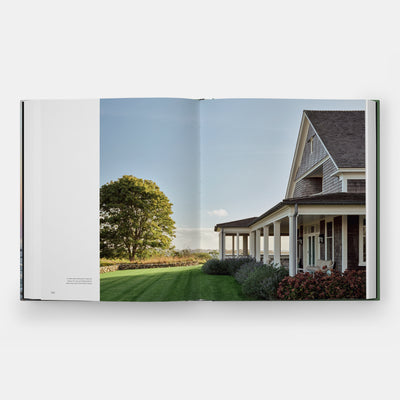
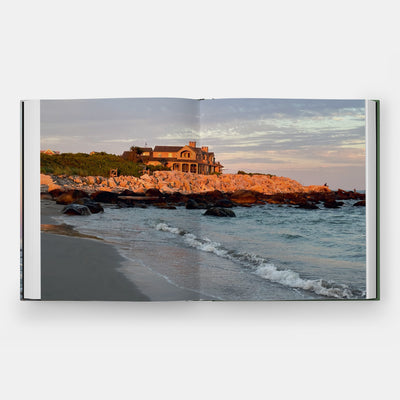
Beautiful photographs (including our main image, above) taken for the book by Read McKendree, capture spirited interiors filled with personal histories, generous, inviting porches, and views out over meadows and ponds to the Atlantic beyond. Kligerman’s own photographs of beaches, harbors, and houses, taken while biking along narrow roads and sandy paths, complete the portrait of this special summer world. Here, we took a look at three houses from the book.
Wainwright Cottage, Jamestown

Wainwright Cottage, Jamestown. Photograph: Read McKendree Ceiling fans and open space above the bedroom partitions allow for nighttime air movement.
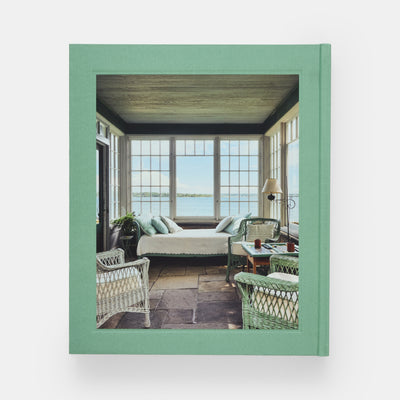
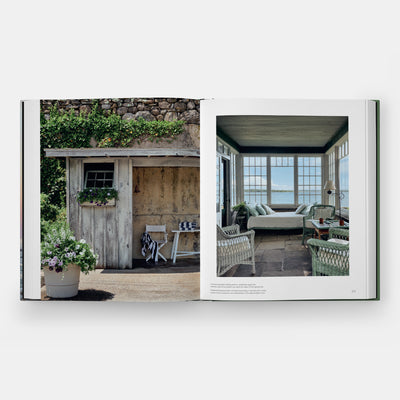
Compact and simple, Wainwright Cottage is low-slung, as unprepossessing as the gravel road that brings you to the front porch. Its location down the slope from the road exaggerates its modest form and scale. The exterior belies the world inside—tall visitors duck or stoop to enter through the painted shingle entrance, but inside it feels as though the building has suddenly grown. The main room runs front to back, from the windows on the inland side through a glazed porch to Narragansett Bay. The spaces in the house, including its five bedrooms, are warm and layered, honeycolored wood from floor to ceiling. Rear Admiral Richard Wainwright built the cottage around 1915. Wainwright was second in command on the battleship Maine when it was blown up in Havana harbor during the Spanish-American War. He retired to Jamestown, selecting this grassy site across the water from the U.S. Naval War College. During the Great Depression, the current owners’ great-grandparents bought the cottage from Wainwright’s widow. Its location on a sheltered part of the bay allowed them to moor their sailboat and watch the parade of other craft passing by against the backdrop of Aquidneck Island. Generations, from grandparents to grandchildren, still share the cottage. Its physical layout creates life patterns and traditions. One of them is preparing lunch in the kitchen but enjoying it on the porch served on 1950s-vintage TV tables. The juxtaposition of the painted metal trays and wicker chairs from a hundred years before television sums up the aesthetics of this family. It’s not just the objects themselves but their juxtaposition that gives this building its personality.

Inn Beach, Weekapaug. Photograph: Thomas A. Kligerman
The living room furniture likely dates from Wainwright’s ownership, but other furniture and seaside paraphernalia fill the house in the same way a fisherman’s net may catch a variety of unintended prey. In other hands, this might have been clutter, but this is a family with an extraordinary eye for beauty and meaning in every object. Collecting antiques and furniture grew into a business, and items were cherrypicked to display in rooms throughout the house in every nook and cranny. A corner cupboard is filled with majolica, but the everyday china is Vernon Kilns “Homespun” pottery made in California. There is a smattering of additional midcentury objects acquired by the grandparents after World War II. The dining table is Danish modern, the light fixture above it from the early 1960s. The white enameled St. Charles kitchen, though seventy years old, is still called the new kitchen. Conveniently and artistically hung above the stove is a collection of vintage spatulas and utensils, arranged on a painted pegboard panel. By contrast, the owner’s bedroom hosts a minuet of cobalt plates, platters, and bottles above a bed covered in a pale blue coverlet and toile pillows. A painting of a clipper ship hangs above the brick fireplace—the building’s sole source of heat. Nautical touches like storage bins with hatches outfitted with flush ring pulls are vestiges of Admiral Wainwright’s world. A curved bronze plaque from the Wildwood, a ferry that plied the waters between Jamestown and Newport, hangs near a chart of the bay. Over the barn door at the dining room entrance spans a name board with “Wildwood” in capital letters. A vintage running light is now a lamp set behind the sofa. None of this feels cliché—it all feels right. The cottage is one of a few remaining unwinterized houses on the island, and despite its small size, it has its own, even smaller outbuilding across the road. The one-room cabin is known as the chauffeur’s cottage, once sparse quarters for the family’s driver. Until recently, his chair, a desk, and single bed were arranged in the modest room. This arrangement is a vestige from a time when families living in houses, no matter how small, still retained staff. It also suggests that a house as good as this one can change with the times and be home to new ways of life.
Risom House, Block Island
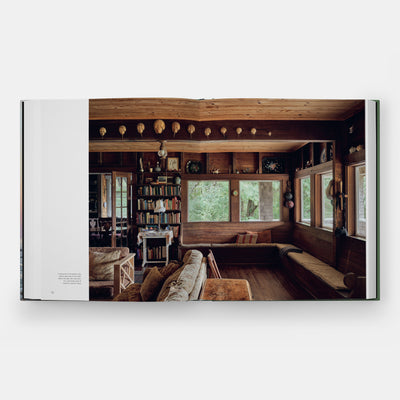
 Risom House, Block Island. Photograph: Read McKendree The grand space, a room of many functions, is a gallery of mid-century life, the walls a curated clutter of daily life.
This house sits on its open wood deck as a midcentury wooden chair might sit on a patio overlooking the ocean. And for good reason: famed Danish furniture designer and Knoll Furniture co-founder Jens Risom built this house in 1967. A native of Copenhagen, Risom made New England his home in 1939, choosing to live among like-minded designers and their modern houses in New Canaan, Connecticut. Perhaps his earlier life on the Baltic drew him to Block Island, thousands of miles across the Atlantic. The grassy site and salt air might have reminded Risom of the Jutland Peninsula’s horizontal landscape. The house bridges traditional shingled cabins of yore and postwar flatroof and plate-glass houses, the clean, uncluttered open plan yielding a beach house of modern efficiency. The prefab house, components fabricated in Massachusetts, was built for less than $25,000. Barges ferried panels, windows, and other pieces from Point Judith to New Shoreham. From the pier, trucks rumbled across the landscape to a waiting foundation. Construction on the island and its logistical complications slowed the schedule from an anticipated two months to a still-speedy four. Not an A-frame, but close to it, a clean, folded shingle roof shelters a double-height room with loft above. Missing are the typical details and flourishes of a classic shingle style or Victorian cottage. Besides a small kitchen and living area, two bedrooms and a bathroom occupy the first floor. They are on the closed, inland side under what was originally an open loft lit by a lone skylight and large triangular window. Risom divided the loft to incorporate two bedrooms as his sons grew, turning the cottage into a four-bedroom house. Opposite is the main event: the twenty-foot-tall wood and glass curtain wall that captures the sea and sky. In the double-height space is a box of black steel placed against a fireproof metal shield, a Scandinavian take on the American Franklin stove. It connects to a lone red brick chimney that rises through the space, piercing the roof.
 A Beetle Cat, a mainstay of New England sailing, moored at the Weekapaug Yacht Club. Photograph: Thomas A. Kligerman
Risom moved beyond an austere machine for living, marrying the warm wood interiors with shingle style roots. Taking cues from Danish design, bold colors and simple wood-laminate cabinetry set in a Mondrian-like composition fill the great room. But rather than the primary colors of Mondrian, maize, turquoise, and vermilion punctuate the wood interior. The floor of this room slides out under the glass wall to the deck through the diaphragm of glass. Truly, this house makes good on the adage about form and function. The family continues to enjoy summers in the compact house, a focal point in the New England landscape. A clean sensibility organizes the whole composition—house, deck, lawn, hedges, view, concentric rings of indoor and expanding outdoor space. This careful arrangement reveals the methodical mind of the designer and his ability to turn that organization into well-considered beauty. A faded yellow “R” hangs on the inland shingle wall. With this initial, like a chop on an Asian print, Risom seems to have signed off on this love letter to family and site.
Nushka Hoo, Weekapaug

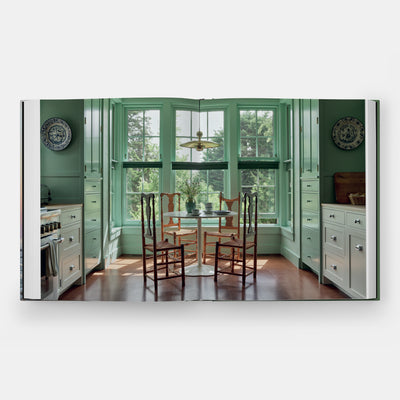
Nushka Hoo, Weekapaug. Photograph: Read McKendree Cork floors and a pale institutional green remind me of kitchens from the 1930s to the mid-century.
When my wife, also an architect, and I discovered a piece of land atop Weekapaug’s highest ridge—an impenetrable scrub of brambles and invasive vines filled with rabbits, turkeys, and roving coyotes—we knew we had found the perfect spot for the house we wanted to build for our family. The land had been sliced off the original Chapman farm, a once sprawling, nearly treeless expanse crisscrossed with stone walls leading down to the Atlantic and Quonochontaug Pond. In clear sight was the blue horizon, Watch Hill, New Shoreham on Block Island, and the tip of Long Island. It was a strategic vantage point. In the late 1930s, the U. S. Army built two tall fire towers. I always thought they were to watch for forest fires, but it turns out they were there so that soldiers could direct fire from local gun emplacements to enemy ships and submarines trying to slip into Long Island Sound. That explains why our neighbor’s house is called The Barracks—it housed soldiers manning the lookouts. Friends of mine remember the towers. They were torn down when an adventurous boy fell from one and broke his arm. But the concrete foundations were still there when we cleared the land, along with hundreds of boulders, some the size of pickup trucks. I never wanted to design my own home. It seemed like a busman’s holiday, and I could barely imagine becoming my own client. I spend my days designing for wonderful clients from as near as a block away to as far as Bangkok, fulfilling my creative spirit. In the end, just as with any house design, I took it one step at a time, looking at the history of great Rhode Island houses. Two came to mind. One, renowned—the William G. Low house that sat above the water in Bristol, designed by McKim, Mead & White. For those who study the shingle style, almost no house is as famous. The second house was an unknown bungalow, Periscope, in the neighboring hamlet of Haversham. Somewhere in the blend of these two buildings was our house. We sited the house perpendicular to the road to catch more sun and built a suite of rooms in a separate building—guest room, garage, watercolor studio—defining the western edge of a green front court. I borrowed the Low house’s elongated gable silhouette.

Flat-roof dormers and a prow-like balcony add space to the second floor. Replacing the Low house’s spindly brick chimneys, one large, center stack pins the house down. A sheath of western red cedar shingles and nearly black Seal Harbor green trim lets the house fade into a revived native woodland and meadow. The property welcomes back wildlife that scattered during construction. For those considering native plantings, it works. The property teems with beautiful birds from goldfinches to a great horned owl and animals like squirrels, foxes, and a silent, nocturnal bobcat. To capture an older cottage vibe, we chose an interior of wood—dark and cool during the day, glowing caramel at night. We all but banished plaster board. Kitchen, bathrooms, and the solar, a medieval term for a second-floor living space, are paneled in planks painted seafoam green or the warm white of a traditional sailboat. The hall, a name used by early shingle style architects, is our main living and dining space. Five woods grace the room: mahogany paneling below a frieze of diamond cut yellow cedar shingles, quarter-sawn white oak floor, and pine windows all below a limed poplar ceiling. A scant coat of finish oil lets the wood breathe; no thick varnish separates your touch from the wood. Bedrooms sport different species, giving each a distinct character: white oak, red cedar, or vertical grain fir. The staircase is lined—walls, ceiling, and railing—in planks of pine. The exposed wood gives the house a distinct aroma, as though the carpenters walked out the day before. And there are other architectural references. An exposed steel beam in the living space honors Stanford White’s steel-beam-supported ceiling at his own residence, Box Hill in St. James, New York.

The glass-and-mahogany screens that create the inglenook around the fireplace are borrowed from the Isaac Bell house in Newport. Like that house, double-hung windows come right down to the floor, an idea also taken up by A. Hayes Town, a Louisiana architect whose work I admire for its vernacular simplicity. The furniture has been cobbled together from estate sales in Weekapaug and grand Newport houses. Twelve arts and crafts dining chairs were rescued shortly before the demolition of a neighbor’s 1885 cottage. Wicker furniture abounds, and a ship’s clock from a Newport sale chimes every thirty minutes. There’s meaning in every selection. This house has deep South County roots, over sixty years of memory brought to life in physical form.
Take a closer look at Summer by the Sea: Cottages from Watch Hill to Little Compton.