


![Handwork: Handcrafted Objects that Made America [Craft in America]](http://www.phaidon.com/cdn/shop/files/M-handwork-en-3727-3d-standing-front-3000_cf7b8381-b3a2-41fd-86da-6fe623fb0a35.jpg?v=1784715138&width=400)
![Handwork: Handcrafted Objects that Made America [Craft in America]](http://www.phaidon.com/cdn/shop/files/M-handwork-en-3727-3d-overview-3000_038c21c2-0af7-41e2-8a96-9b0beaf9c2d6.jpg?v=1784715138&width=400)
![Handwork: Handcrafted Objects that Made America [Craft in America]](http://www.phaidon.com/cdn/shop/files/M-handwork-en-3727-3d-spread-1-3000_675d5a59-80e7-4b98-bb57-f9d68d61b20d.jpg?v=1784715138&width=400)
![Handwork: Handcrafted Objects that Made America [Craft in America]](http://www.phaidon.com/cdn/shop/files/M-handwork-en-3727-3d-spread-2-3000_a21c9230-7856-470d-8101-09ae2fef75e3.jpg?v=1784715138&width=400)
![Handwork: Handcrafted Objects that Made America [Craft in America]](http://www.phaidon.com/cdn/shop/files/M-handwork-en-3727-3d-spread-3-3000_6dbd48c4-eaab-4b0d-86a2-19b97d8be954.jpg?v=1784715138&width=400)
![Handwork: Handcrafted Objects that Made America [Craft in America]](http://www.phaidon.com/cdn/shop/files/M-handwork-en-3727-3d-spread-4-3000_851a14d9-3b23-4197-85c5-3a4503b24548.jpg?v=1784715138&width=400)
![Handwork: Handcrafted Objects that Made America [Craft in America]](http://www.phaidon.com/cdn/shop/files/M-handwork-en-3727-3d-spread-5-3000_232b034c-682e-4a6f-b47b-81d5a99dd497.jpg?v=1784715138&width=400)
![Handwork: Handcrafted Objects that Made America [Craft in America]](http://www.phaidon.com/cdn/shop/files/M-handwork-en-3727-3d-spread-6-3000_4c787d9d-1fb6-4812-9652-d15d93423bc0.jpg?v=1784715138&width=400)







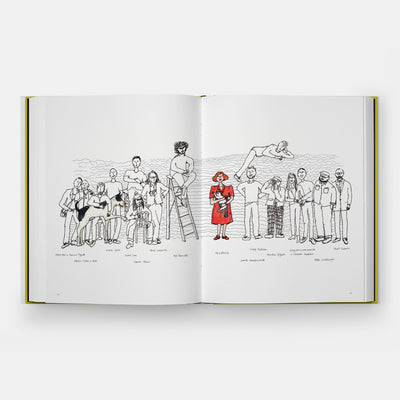
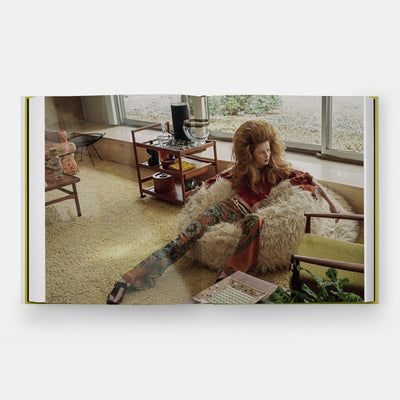
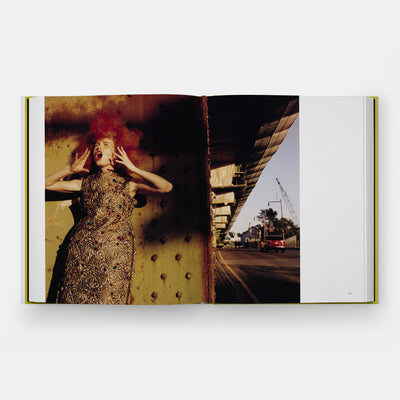
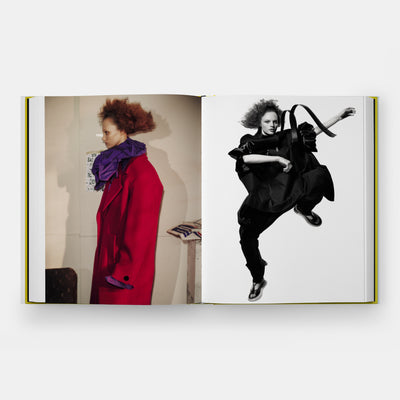



















The loss of Celeste Dupuy-Spencer in April was felt painfully on Phaidon.com. This most talented and engaging of artists, one who felt too keenly the anguish of life, left us way before her prime. We will never know where her work, unparalleled in its depiction of a dispirited age, might have gone.
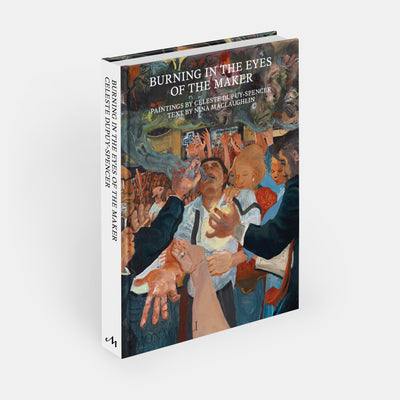
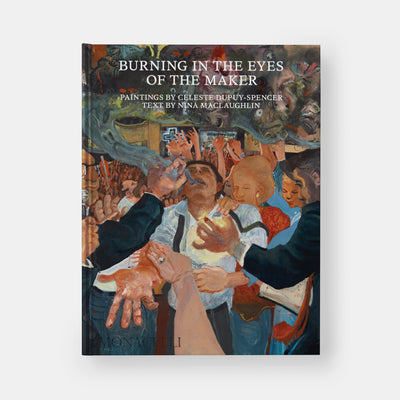
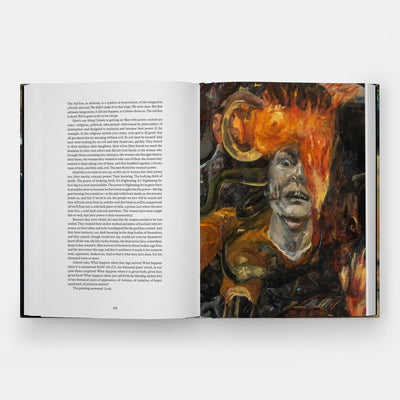
Of the many great pieces of writing by Nina MacLaughlin in our new book on the artist, Burning in the Eyes of the Maker, completed while Celeste was still alive, is one entitled Self Portrait in the Dark. It accompanies a similarly titled self portrait of Celeste, her eyes staring out from the canvas to meet the gaze of the viewer.
In the piece of writing that accompanies the self-portrait, Nina MacLaughlin composes fragile elements of the artist’s being into a compelling portrait, a beautifully evocative piece of writing worthy of a beautiful, evocative artist.
Celeste Dupuy-Spencer chose MacLaughlin to create the narrative backbone of the book after listening to her critically acclaimed book, Wake, Siren: Ovid Resung, in which more than thirty women from Ovid's Metamorphoses reclaim their stories.
"When I encountered her writing, it wasn’t just admiration; it was clear recognition," Celeste explains in our monograph. "I was listening in my studio, and I heard coming out of my speakers the exact same register that was coming off my walls. Here was someone being addressed, sometimes violently, insistently, by figures that would not leave her alone."
For Celeste, the notion of an art writer writing about her paintings as finished objects, based within the art world, felt, in her words, "dead on arrival".
"I wanted somebody to meet them as they exist, if they are still there. And by someone, I meant specifically Nina MacLaughlin. We agreed that the book had to be relentless about contact, contact between somebody experiencing the act of painting and encountering a painting, and through that, a human, and somebody experiencing the act of encountering a painting also achieving contact with the painting. This book came from a shared belief in contact, not commentary. From the recognition between two people who know what it means to be worked on by something that does not belong to them."
To mark the publication of Burning in the Eyes of the Maker, and with respect to the memory of Celeste, we reproduce MacLoughlin's descriptive profile of the artist as she was.
(Main image above: Celeste Dupuy-Spencer signing her Artspace edition: When you’ve eaten everything below you, you’ll devour yourself/except in dreams you’re never really free.- photographed by Dawn Blackman)
 Celeste Dupuy-Spencer, Self Portrait in the Dark, 2024. Photo by Charles White - JW Pictures. Courtesy of the artist and Jeffrey Deitch, New York and Los Angeles Oil on linen. 35 × 28 in. (88.9 x 71.1 cm).
Celeste Dupuy-Spencer lives in Los Angeles. Celeste Dupuy-Spencer has four cats. Their names are The River, Bellows, Ibis, and Edith. The names of her former dogs, Freeway and Oliver, are tattooed on her skin.
Celeste Dupuy-Spencer lives in a house in Los Angeles where a long set of slanted, uneven stairs leads up to her front door. Succulents grow in the back. The house, not large and sparsely furnished, feels good to be in. Not all houses do. Part of it is the heavenlight of Los Angeles that moves into the rooms in the early evening. Part of it is the thing that works on the under-senses, the chemistry of light and scale and the specific pheromonal heat of the person who lives there. Celeste Dupuy-Spencer has pasture eyes. They are large and sad.
Celeste Dupuy-Spencer makes her paintings in a studio in a building at the end of a street in Los Angeles that one wonders, when turning down, have I made a wrong turn? The ceilings are high. Dostoevsky rented large apartments with high ceilings in poor parts of town instead of small apartments in more fashionable neighborhoods because he wanted room for his thoughts.
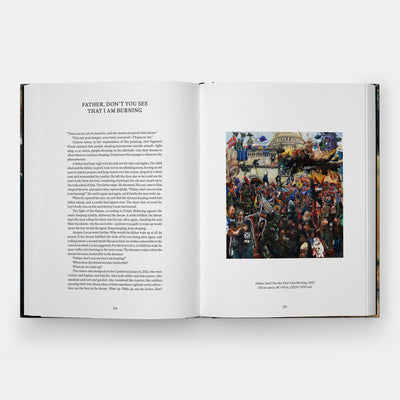
 Celeste Dupuy-Spencer, Father, Don’t You See That I Am Burning, 2021. Photo by Dawn Blackman. Courtesy of the artist Oil on canvas. 85 × 85 in. (215.9 × 215.9 cm)
Celeste Dupuy-Spencer has a smile of such open, generous warmth, only the iciest heart butter wouldn’t melt to see it. One senses, behind its wide expanse, great pain. Celeste Dupuy-Spencer has a smile, let’s put it this way, that reminds one that vulnerability and strength are drawn from the same well.
Celeste Dupuy-Spencer is one of those people who seems taller than she is. Celeste Dupuy-Spencer has more antennae than most people and they are tuned to a wider range of frequencies. She registers what’s being communicated under language; she hears what you’re not saying. This can be compelling to be around, the feeling of being deeply understood, and unnerving, too: one might feel exposed and not quite know why. She registers the atmosphere, immediate, global, universal. This sounds like hyperbole; it is not. It is easy to imagine this being tiring, or overwhelming.
Celeste Dupuy-Spencer can tolerate a lot of time alone. Celeste Dupuy-Spencer is magnetic. She draws people to her. Celeste Dupuy-Spencer makes clear through her actions that the art is the priority. Celeste Dupuy-Spencer has a voice that’s been caramelized by cigarette smoke and the testosterone she injected thirteen years ago.
 Celeste Dupuy-Spencer, If the Rocks Cry Out in Silence, 2019. Photo by Rich Lee. Courtesy of the artist and Pace Gallery Oil on linen. 47 ⅞ × 40 ⅛ in. (121.6 × 101.9 cm)
Celeste Dupuy-Spencer moves when she talks. She crouches. She spreads her arms. She paces. She lights cigarettes. She whitecaps the air and the waves wash against you. Celeste Dupuy-Spencer says, “I want to be Pompeii.” Celeste Dupuy-Spencer makes one know that all of us have masculine and feminine forces inside us and it is better and more powerful to be in intimate contact with both. She’s Little Red Riding Hood and the Wolf if they ate each other. Celeste Dupuy-Spencer had a transformative spiritual experience at the evangelical Oasis Church in Los Angeles. Celeste Dupuy-Spencer does not believe in God. Celeste Dupuy-Spencer is a member of a secret sacred order.
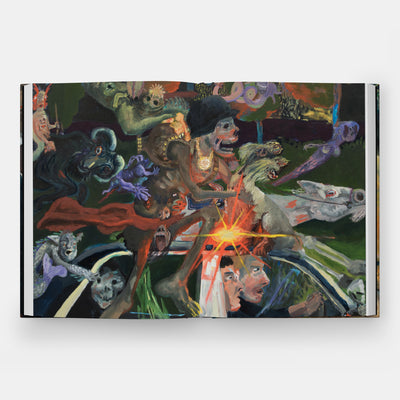
Celeste Dupuy-Spencer stays awake for days when deep into work on a painting. Forty hours. Sixty hours. Decentered. Hallucinatory. Celeste Dupuy-Spencer dreams while painting. Celeste Dupuy-Spencer paints singular events—a house party, a flood, an arrest, the riot on January 6, the toppling of a monument, animals fleeing a fire, a billionaire on a balcony facing his death, a moment of spiritual ecstasy in a jumbotronned megachurch, the ocean on fire, oral sex—and they combine and converse with each other. They accumulate to create an evolving portrait of this moment, a moving distillation of our time.
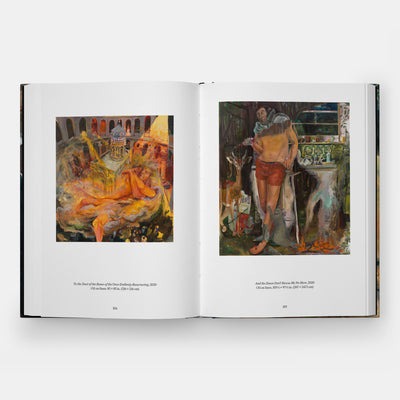
 Celeste Dupuy-Spencer, The Alchemist, the Gospel, the Pillar of Fire (The Showcase), 2024. Private Collection. Photo by Charles White - JW Pictures. Courtesy of the artist and Jeffrey Deitch, New York and Los Angeles Oil on canvas. 60 × 75 ⅛ in. (152.4 x 190.8 cm)
Celeste Dupuy-Spencer paints events as a way of painting character, as a way of painting soul. Celeste Dupuy-Spencer paints the undersoul of America. Celeste Dupuy-Spencer concerns herself with class. But the great theme of her work is denial. The denial of what’s inside us, yes, our inability and unwillingness to meet the monstrous inside ourselves and locating it on others instead, and in so doing, being driven unwittingly by those monsters. As soon as one finds a monster elsewhere, she argues, one washes oneself of any fault or blame. It is a problem. This is one level of denial active in her work. The other, and perhaps more prominent, is the denial of human potential. The denial of human possibility. The tamping, the squashing, the crushing, the slaughtering, the suffocating that happens in the smallest gestures and the largest-scale policies, embedded into our bodies before we emerge into this world. In underlining the denial of human possibility is the inherent acknowledgment of human possibility, its flawed and magnificent range, and it’s here that you sense Celeste’s great gaping tenderness and her love.
 Celeste Dupuy-Spencer, Full Fathom Five Thy Father Lies Nothing of Him That Doth Fade / But Doth Suffer a Sea-Change / Into Something Rich and Astrange., 2023. Courtesy of the artist Oil on linen with mixed media (cigarettes, sculpey, plastic, rubber, etched tin and copper, clay, plasticine). 75 × 60 in. (190.5 × 152.4 cm)
Celeste Dupuy-Spencer, with bravery, honesty, disappointment, despair, and horror, recognizes herself in everyone and everything she paints. In doing so, she urges us to do the same.
Celeste Dupuy-Spencer draws from her own underworld. She draws from the past, the historical past, and the past before measured time. She draws from this surging burning information-glutted present. She is able to turn her head just enough to see the future coming up behind us. Her own world and ours, her own underworld, and the great shared underworld. Past, now, and future. This is a lot to have access to. We all have access to it. Most people spend their entire lives distracting themselves from what they have access to.
Celeste Dupuy-Spencer is solitary and loneliness hovers around her like mist. Celeste Dupuy-Spencer stands in front of the canvas and the images reveal themselves on the canvas and she paints what’s there. It is a collaboration between her and the unnamable else. Celeste Dupuy-Spencer has this reminder about an actress tacked to a wall of her studio: “Hannah Waddingham was waterboarded for ten straight hours for a part.” These are the stakes. It can be torture. To give it all to the art, to surrender yourself to it, it can be torture. Further, waterboarding is used to extract information. Information is being extracted from Celeste. Celeste is extracting information from herself, from the unnamable elsewhere, from the shared current that runs through us all. It can be torture. These are the stakes.
 Celeste Dupuy-Spencer, The Time of Angenumenel, 2026. Photo by Joshua White - JW Pictures. Courtesy of the artist and Jeffrey Deitch, New York and Los Angeles Oil and mixed media on canvas. 40 x 42 in. (101.6 x 106.6 cm)
Celeste Dupuy-Spencer lived in New Orleans for three years. She moved there to go to rehab. Celeste Dupuy-Spencer lived in New York City before that, part of the queer art scene there. She was addicted to heroin. Heroin saved her, she says, and then it almost did the opposite.
Celeste Dupuy-Spencer, would that you were able to open her up in a living autopsy, would be filled with benevolent white rats and a blue whale and the rib bone of an allosaurus and thousands of joyful, menacing, mischievous, impy, playful, horrified, deformed, ecstatic Lilliputians and scrunched tubes of paint and smoke and ocean and a beautiful sad-eyed deer in the shadows and the face of Judas and an orange jumpsuit and a peach pit and her mother’s teeth and a tower of books and a planet and its moonrise and a cuirass and the strings of a guitar and fragment shreds of the broken hearts of other women and knives and arcane tools of prophecy and divination, a feather, a candle, pulverized seed, and a needle and blood and most of all: lava.
 Celeste Dupuy-Spencer - Artspace edition When you’ve eaten everything below you, you’ll devour yourself/except in dreams you’re never really free. (photography Garrett Carroll)
Celeste Dupuy-Spencer didn’t graduate from Bard but studied there, living, for a time, in a storage closet on campus. Celeste Dupuy-Spencer worked as a landscaper. Celeste Dupuy-Spencer grew up in rural upstate New York. Celeste Dupuy-Spencer has a younger brother. Her mother and her father got divorced when she was young. Celeste is not in touch with any of them right now. Celeste Dupuy-Spencer played baseball and was one of the best players in the county, boy or girl. Celeste Dupuy-Spencer wanted to be an anthropologist. Celeste Dupuy-Spencer was born in ’79.
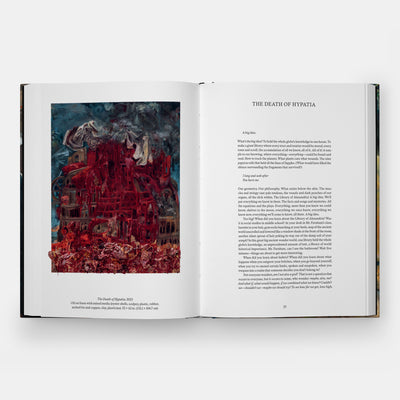
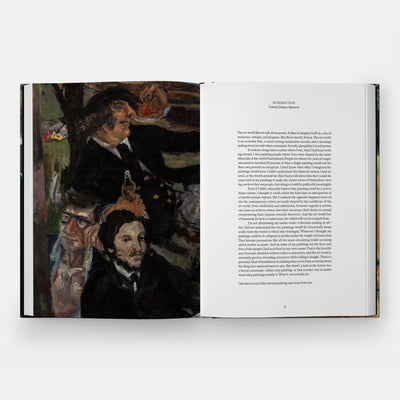
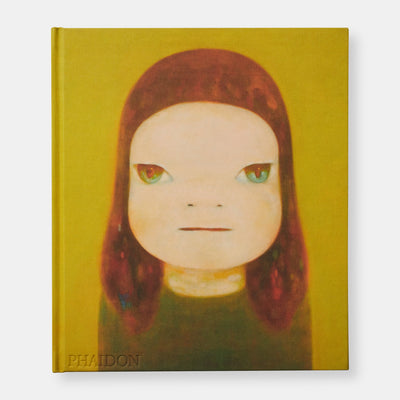
Take a look at Celeste Dupuy-Spencer Burning in the Eyes of the Maker.