



![Handwork: Handcrafted Objects that Made America [Craft in America]](http://www.phaidon.com/cdn/shop/files/M-handwork-en-3727-3d-standing-front-3000_cf7b8381-b3a2-41fd-86da-6fe623fb0a35.jpg?v=1784715138&width=400)
![Handwork: Handcrafted Objects that Made America [Craft in America]](http://www.phaidon.com/cdn/shop/files/M-handwork-en-3727-3d-overview-3000_038c21c2-0af7-41e2-8a96-9b0beaf9c2d6.jpg?v=1784715138&width=400)
![Handwork: Handcrafted Objects that Made America [Craft in America]](http://www.phaidon.com/cdn/shop/files/M-handwork-en-3727-3d-spread-1-3000_675d5a59-80e7-4b98-bb57-f9d68d61b20d.jpg?v=1784715138&width=400)
![Handwork: Handcrafted Objects that Made America [Craft in America]](http://www.phaidon.com/cdn/shop/files/M-handwork-en-3727-3d-spread-2-3000_a21c9230-7856-470d-8101-09ae2fef75e3.jpg?v=1784715138&width=400)
![Handwork: Handcrafted Objects that Made America [Craft in America]](http://www.phaidon.com/cdn/shop/files/M-handwork-en-3727-3d-spread-3-3000_6dbd48c4-eaab-4b0d-86a2-19b97d8be954.jpg?v=1784715138&width=400)
![Handwork: Handcrafted Objects that Made America [Craft in America]](http://www.phaidon.com/cdn/shop/files/M-handwork-en-3727-3d-spread-4-3000_851a14d9-3b23-4197-85c5-3a4503b24548.jpg?v=1784715138&width=400)
![Handwork: Handcrafted Objects that Made America [Craft in America]](http://www.phaidon.com/cdn/shop/files/M-handwork-en-3727-3d-spread-5-3000_232b034c-682e-4a6f-b47b-81d5a99dd497.jpg?v=1784715138&width=400)
![Handwork: Handcrafted Objects that Made America [Craft in America]](http://www.phaidon.com/cdn/shop/files/M-handwork-en-3727-3d-spread-6-3000_4c787d9d-1fb6-4812-9652-d15d93423bc0.jpg?v=1784715138&width=400)

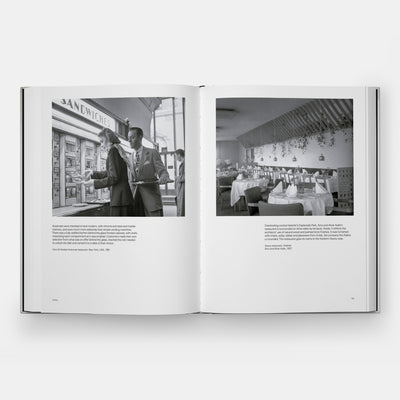
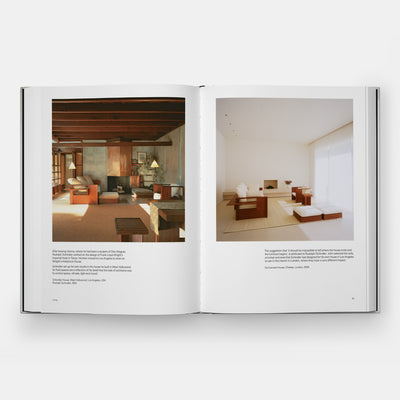
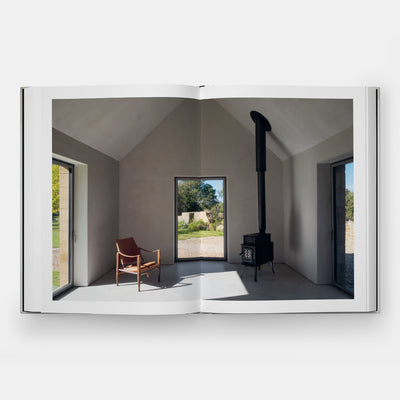
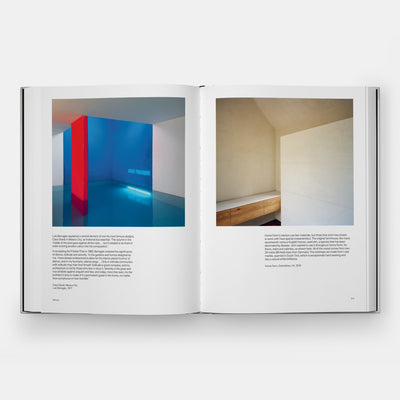




















Something extraordinary is happening in French interior design. Like the cinematic sea change that gave us the New Wave, the next generation of designers and architects is breaking with the past to forge something entirely fresh.
To mark this new movement, the discerning editors at FREDERIC and the creative minds of the legendary design house Schumacher have come together with Monacelli to create Arbiters of Style: The New Wave of French Design.
Arbiters of Style highlights the most gorgeous residences designed by 21 visionary designers working in France, showcasing a cohort of interior decorators and architects redefining the field.
Just as the French New Wave revolutionized cinema, these designers and architects are fearlessly rewriting the rules of décor. Their approach is bold yet restrained, sculptural yet intimate—an intoxicating mix of high-concept design and deep creativity.
From rising stars such as Hugo Toro and Marine Bonnefoy to established names such as Jacques Grange and Jean-Louis Deniot, the twenty-one French designers in Arbiters of Style are leading a bold new charge in the decorative arts: unafraid of color; obsessed with sculptural form; and confident enough to let a single perfect gesture speak volumes. They are proving that the most profound luxury isn’t about having more - it's about knowing exactly what to leave out.
Featuring nearly 200 color photographs, Arbiters of Style showcases inspiring interiors in private residences across France, from Paris and Ormesson-sur-Marne to far-flung holiday locales such as Cap Ferret, the Pyrenees, Biarritz, Île de Ré, and Saint-Tropez.
In an era when design feels caught between maximalist excess and beige-washed banality, these spaces represent an aesthetic reawakening and a burst of creativity that seems light-years ahead of everything else. Below are five French designers featured in Arbiters of Style you need to know about now.
(Main image, above: Hugo Toro. Photography: Stephan Julliard)
FRANÇOIS CHAMPSAUR
 François Champsaur. Photography: Romain Laprade and Christophe Rihet
Marseille-born interior architect François Champsaur can easily recall the moment his work—and design ethos—entered a new era. As jury president for the prestigious Design Parade Toulon at the Villa Noailles in Hyères, he was invited to both evaluate emerging talents and present an exhibition of his own. Rather than stage a retrospective or a display of new furnishings, he used the opportunity to reflect on the urgent question of how design can thrive more responsibly.
“I felt I had a responsibility,” he recounts. “How can we make objects for the sake of making objects, more locally and without increasing pollution?” His show, which used only organic, biodegradable, and reusable materials, was a turning point: After 25 years working on high-profile residential and hotel projects that earned him a reputation for timeless luxury and sensual minimalism, he closed his studio and stripped back the operation to a largely solo affair. Champsaur now focuses solely on “nature design,” breaking away from the usual models of design and manufacturing to explore alternative methods.
That approach means avoiding plastics and hewing exclusively to natural materials, such as plaster, wood, straw, and terra-cotta, processed as little as possible, that can revert to the earth in their original state. “We need to go back to simple craftsmanship, the way things were done before,” he says. Drawing from his Mediterranean heritage, Champsaur sees the blueprint for sustainable design in the region’s vernacular architecture. “Traditional houses in the south were built by local craftsmen using local materials—stone, lime, wood, ceramics, and tile,” he explains. “
All of this supported entire networks of craftsmen and families.” It’s this integrated approach to making and community that he aims to revive. His homes in Paris (seen here), Marseille, and Mallorca (where he built a 100 percent eco-friendly villa) serve as proof of concept for a movement he believes is inevitable. “Right now, it isn’t the popular direction to take,” he admits. “But designing for the future means rediscovering the beauty of traditional materials, the beauty of integration with landscape, and the beauty of contact with nature.”
Dorothée Delaye

Dorothée Delaye. Photography: Mr. Tripper
Born and raised in a family of architects and ironworkers in Paris, Dorothée Delaye discovered her design sensibilities during childhood trips to antique fairs at dawn with her parents. But it was extensive travel, from the sun-drenched coasts of California and Brazil to the vibrant port cities of Beirut and Marseille, that truly led her toward a career in interiors.
“Those early trips meant that, unconsciously, I developed an eye for the eclectic, foreign, and culturally unique,” says Delaye, who operates studios in Paris and Marseille. “What came out of them is my being drawn to mixing the unexpected.” Since launching her own practice in 2020, Delaye has built a vast portfolio of hospitality and private homes across France and internationally. Her instincts for atmosphere, craft, and transporting color palettes have attracted clients including celebrated chef Jean-François Piège, establishing her among France’s most in-demand interior designers.
At Piège’s Mimosa restaurant in Paris, the designer paid tribute to 1950s French Riviera elegance with nautical nods and a monumental ceiling inspired by the hull of a ship flipped upside-down. For the redesign of the Monte-Carlo Beach Club, she gave the nearly century-old institution and its iconic brasserie a Roaring Twenties revival that revels in the location’s storied seaside sophistication and dips into Delaye’s signature decadence.
And it was her color artistry and bold sense of style that inspired luxury vacation-rental outfitter Iconic House to tap Delaye for the luxury surf house on the Basque coast shown in these pages, a project that allowed her to tap into her own memories of having visited there as a child. “I find the unique or eclectic side of things appealing. Anytime I try to be too polished, it doesn’t work,” says Delaye. “In the end, I always need to add some slightly wild or crazy detail to make it me.”
Florence Lopez
 Florence Lopez. Photography: Philippe Garcia, Matthieu Salvaing and Jean François Jussaud
In an age of minimalist restraint and algorithm-approved interiors, Florence Lopez is a glorious outlier. A trained decorator turned celebrated antiques dealer who spent her formative career years working for titans of decorating, first in New York for Parish-Hadley and McMillen, then in Paris for maximalist Jacques Garcia, Lopez does more than curate objects; She imagines entire worlds.
From her atelier in Saint-Germain-des-Prés, Lopez blurs the line between living space and showroom. In reality, her studio-home is her work. One season, the space might channel the Arts and Crafts movement, the next, a modernist ode to Josef Albers. “When I set up the space, I decided to be my own client, do my own decorating and selling, and only do what I love, which is hunting for antiques”, she says.
She brings an anthropological richness to her practice, mixing genres and eras in ways that feel both unexpected and deeply lived-in. You might find Jean Royère chairs beneath Gio Ponti sconces or a Charlotte Perriand daybed beside a totemic mask from the Congo. Her longest-lasting thematic overhaul saw her pay flamboyant homage to Roberto Burle Marx and Brazilian modernism. Each time, a new world settles in: She changes the murals, reimagines the lighting, and rotates in vintage furniture and contemporary art.
But nothing stays for long. She estimates that over the past three decades, there have been more than 20 incarnations of the space. Word about the Lopez laboratory-sanctuary traveled fast. “In the end, interior design caught up with me anyway,” she says. “People would buy two or three pieces of furniture from me and I’d end up doing their whole house.”
Notable creative and business elites— Charlotte Gainsbourg, Daft Punk’s Thomas Bangalter, François Pinault—have tapped Lopez’s singular eye for atmosphere. “I wanted to be a set designer as a little girl. That didn’t happen, but I did end up with my own kind of theater,” she says with a laugh.
Diego Delgado-Elias
 Diego Delgado-Elias. Photography: Matthieu Salvaing
When beginning a new project, Diego Delgado-Elias will turn to any number of small details—the timeworn layers of color, the traces of a molding— to guide the direction of the space. The Peruvian-born, Paris-based architect considers the client’s needs, the site itself, and something more intuitive as well.
“I think in sequences: how someone moves through a space, how light appears, how mood shifts from one room to another,” Delgado-Elias explains of what he calls an “emotional map” that charts the feelings he hopes to evoke in the space. Architecture is a canvas for Delgado-Elias, much like it was for one of his earliest influences, Luis Barragán. Indeed, Delgado-Elias initially studied fine art, quickly realizing he was less interested in the object itself than in the way it shapes the space around it.
“Sculpture taught me how voids can be as powerful as matter and how movement around a form defines how it is perceived,” he says. Today, his projects, whether they be a Michelin-starred restaurant in California or an actor’s 17th-century manor in Provence, tend to have a cocooning ambiance, an effect he achieves through a subtle, tonal exploration of color. He favors a palette of warm neutrals, seemingly lit from within. The materials gain in integrity with time: raw stone, untreated wood, and metals prone to patina.
“I prefer surfaces that absorb life and evolve with it, giving a space a sense of memory even when it is new,” he says. For this house on the Côte Basque, on the west coast of France, Delgado-Elias softened the imposing existing structure with his signature tactile, textural finishes—timber wall cladding, woven straw ceiling panels—and bright color, particularly the rich red often used in the region.
The result, he says, “feels lived in, even on day one, which is always the goal.” One-of-a-kind furniture and art also help his interiors feel as if they were decorated slowly over time. “I am not interested in creating rooms that feel tied to a passing moment,” he says. “I want them to feel like they belong both to the place and to the person who lives there.
Charles Zana
 Charles Zana. Photography: Vincent Leroux
Over his 35-plus-year career, Paris-born architect and designer Charles Zana has developed a distinctive, confident style that affirms his reputation as a well-studied rebel. His interior projects—private homes, luxury hotels, and boutiques for the likes of Louis Vuitton and Goyard—draw on his impressive design and cultural literacy.
His influences span from 18th-century classicism to the vibrant interwar period, the Bauhaus school and French furniture designers such as Jean-Michel Frank, and later, the experimental Italians of the 1970s, such as Carlo Scarpa and Ettore Sottsass, whose work he collects. At his Paris home, aristocratic 18th-century architecture provides a backdrop for works by Italian radicals like Sottsass, furniture by Pierre Paulin, and pieces from Zana’s ever-growing namesake furniture line.
“What interests me are creators who are on the borderline between art and design,” says Zana. “Those who manage to push boundaries, to challenge thinking, comfort, and technique—those are the people who really fascinate me.”
Zana’s own body of work is evidence that in order to disrupt or create something new, you must first have a deep understanding of what preceded it. With balance and originality, his projects convey an impossible-to-replicate combination of European elegance and savoir faire, alongside a bold and idiosyncratic mix of design eras and disciplines.
In the project shown here conceived for a young couple, he felt free to reconsider the standards of Parisian living. That meant making the kitchen—usually an afterthought in the capital city—a statement, reflecting the way they wanted to live and entertain. “It was this freedom, this questioning of conventions, that I found so exciting,” says Zana.
“My work is influenced by a mixture of several periods that I discovered during my apprenticeship and career,” Zana says. “There’s a dialogue with history. It’s this intersection between the context, the memory of the place, and the culture associated with it that brings the story to life.”
Hugo Toro
 Hugo Toro. Photography: Stephan Julliard
To walk into a Hugo Toro–designed space is to step into a film set—grandiose, epic, big-budget. It makes sense, then, that Toro maps out each visual universe like a screenplay, complete with cues that guide the flow of the floor plan, lighting, and design narrative. He sees a staircase, for example, as a place for a cinematic encounter, or uses a corridor to build a sense of anticipation.
“I don’t want just to create an Instagram image; I want people to experience a story the way I have intended,” says Toro. “A scenario, as I call it, is just a guide of what they could feel. But after that, they should be free to experience it by themselves.”
Born to a Mexican mother and a French father, Toro is what the French call a couteau suisse (a Swiss Army knife, or jack-of-all-trades). Wildly creative and protean, he is an architect and interior designer, but also a painter and ceramist whose large-scale works are often incorporated into his projects. His clients—like restaurateur Jean-François Rouquette, the Orient Express hospitality group, or the French family who recruited Toro to completely redesign their six-story mansion—come to him for his total vision, sometimes executed right down to the cutlery.
“I’m happy today to have all the tools to be able to express myself fully,” he says of his practice. Over time, his projects have become more ambitious—a larger canvas for him to attack. Unfazed by ostentation, Toro tends to go all out, crafting daring and immersive spaces from fine materials, and often in sun-drenched palettes, as if bathed in golden light. Take the Haussmannian pied-à-terre shown here, where dialogues play out between glossy, noble surfaces like marble and lacquered wood and more sensual, tactile finishes including plaster and velvet.
“The whole evokes a discreet narrative, composed of tactile materials and controlled light, creating a balance between sensory comfort and graphic silence,” Toro explains. In his hands, no surface is overlooked, and every detail tells a story.
Take another look at Arbiters of Style: The New Wave of French Design.