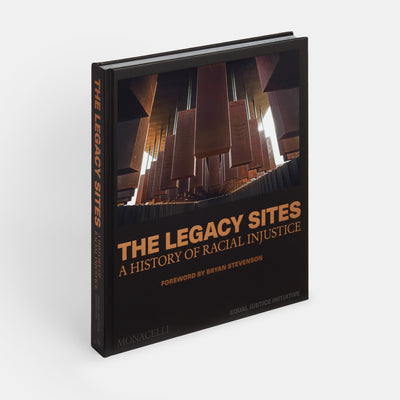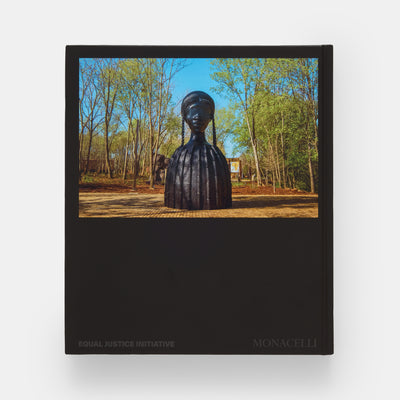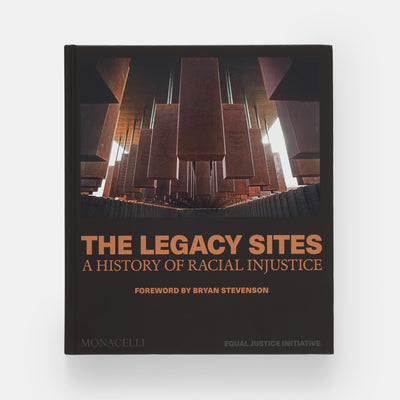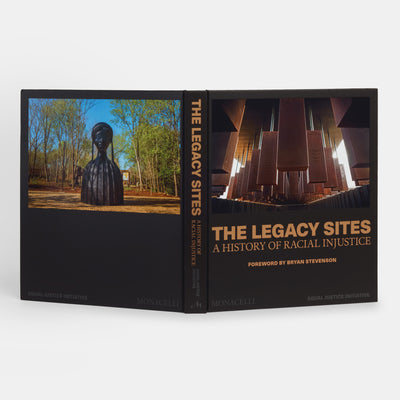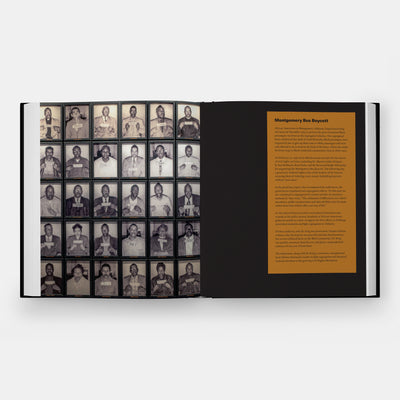



















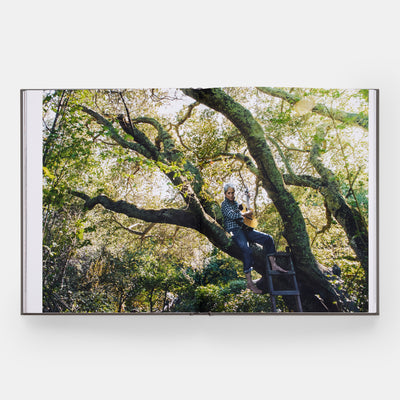
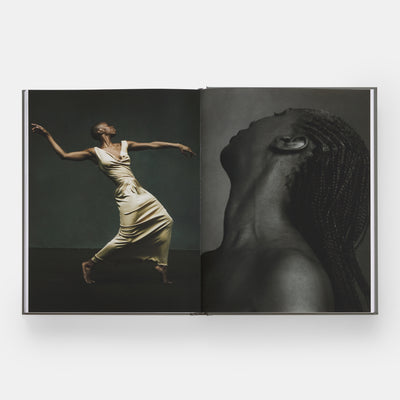

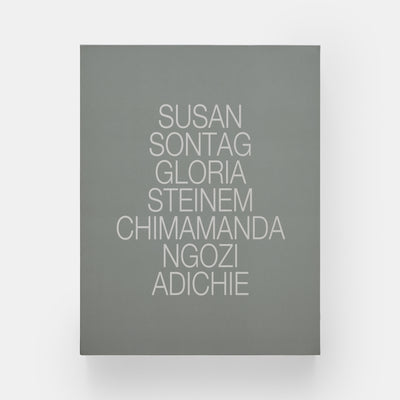





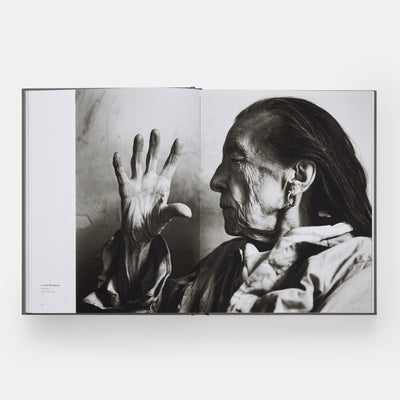
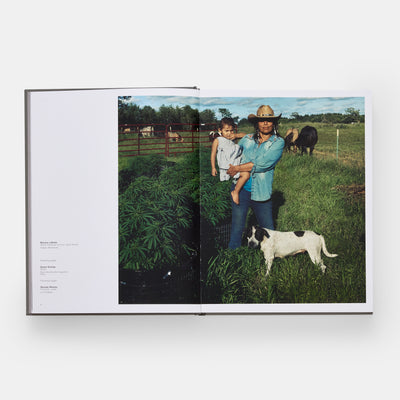

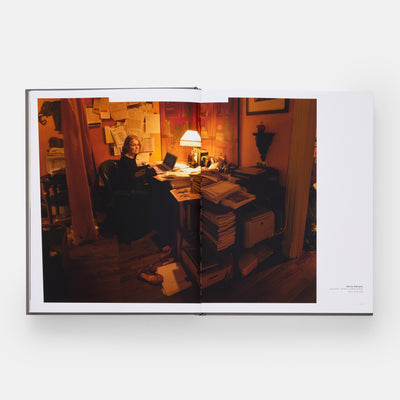
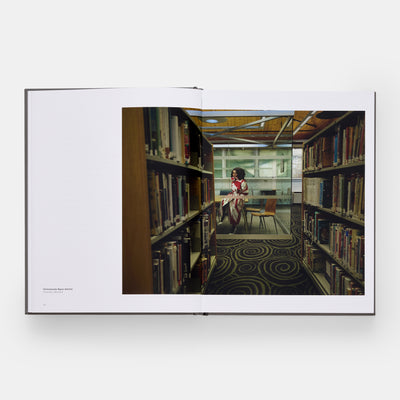
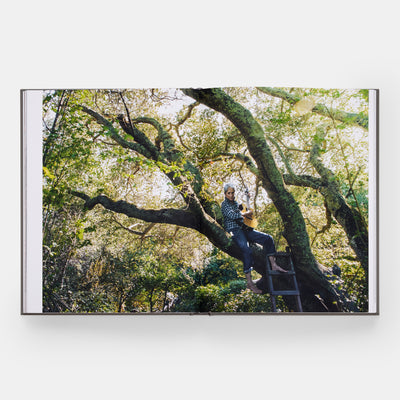











































The Legacy Sites: A History of Racial Injustice is a compelling and visually rich book exploring the groundbreaking work of the Equal Justice Initiative (EJI) through its transformative public spaces: the Legacy Museum, the National Memorial for Peace and Justice, and Freedom Monument Sculpture Park, brought together here for the first time. Through striking photography and powerful narrative, this volume invites readers to engage deeply with America’s long and ongoing struggle for racial justice.

Founded by Bryan Stevenson, acclaimed public interest lawyer and author of the New York Times bestseller Just Mercy, the Equal Justice Initiative has redefined how a nation can reckon with its past. This book serves not only as a guide to the three Legacy Sites in Montgomery, Alabama, but as a meditation on the importance of truth-telling and the hope found in justice-oriented action.
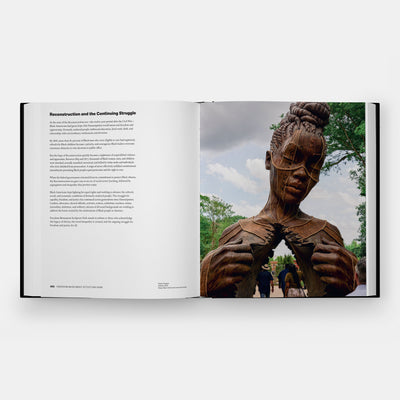
 Alison Saar, Treesouls II, 1994–2024, unique bronze, Freedom Monument Sculpture Park. Photo credit: Human Pictures
Opening with an inspiring foreword by Stevenson, the book is organized into three immersive chapters — each dedicated to one of the Legacy Sites — and designed to reflect the distinct but interconnected missions of each location. First opened in 2018, with the National Memorial for Peace and Justice and the original Legacy Museum, the three sites welcome hundreds of thousands of visitors each year.

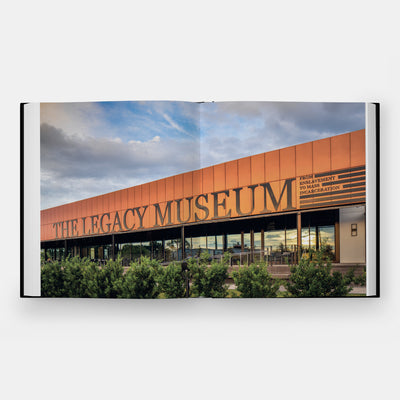
The Legacy Museum. Photo credit: Matt Odom
The Legacy Museum sits on a site where enslaved people were once forced to labor in bondage. It traces the direct line from enslavement to mass incarceration through original research, powerful exhibits, and digital storytelling. This chapter delves into how the Museum reclaims historical spaces to confront visitors with the realities of racial terror and the enduring consequences of systemic injustice.

The National Memorial for Peace and Justice. Photo credit: Human Pictures
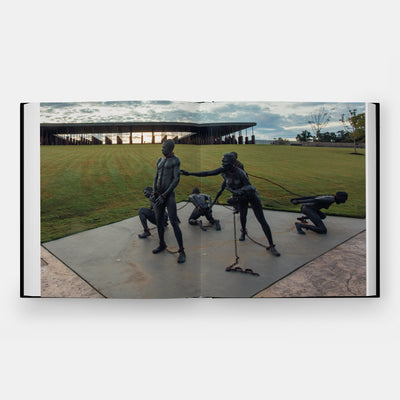
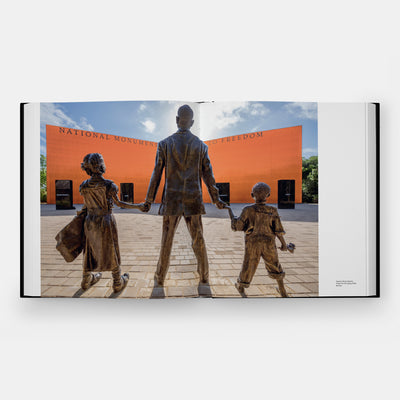
The National Memorial for Peace and Justice, often referred to as the nation’s first Memorial to victims of racial terror lynchings, is a solemn and stunning outdoor space of remembrance. This chapter features moving photographs of its iconic suspended steel monuments — each representing a U.S. county where lynchings occurred — and explores the role of public memorials in collective healing. Woven throughout are stories of the victims and communities represented, grounding the Memorial in personal and historical narrative. The National Monument to Freedom, Freedom Monument Sculpture Park. Photo credit: Human Pictures

The National Monument to Freedom, Freedom Monument Sculpture Park. Photo credit: Human Pictures
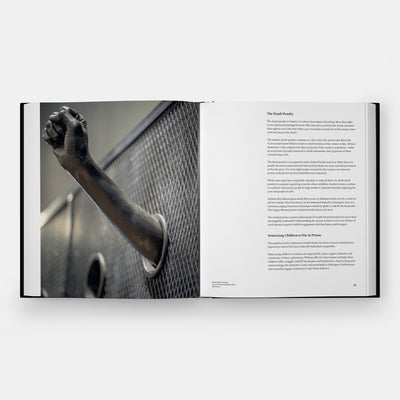
Freedom Monument Sculpture Park, EJI’s newest and most expansive site overlooking the Alabama River, honors the lives and resilience of enslaved people through outdoor sculpture, narrative, and historical artifacts. Spanning multiple acres, it creates a contemplative space where art, history, and landscape converge. Artists featured include: Simone Leigh, Hank Willis Thomas, Rose B. Simpson, Kwame Akoto-Bamfo, and Alison Saar.
 Simone Leigh, Brick House, 2019, bronze (detail), Freedom Monument
Sculpture Park. Photo credit: Human Pictures
Together, these sites form one of the most ambitious and visionary public history projects in the United States. The book captures not just their physical presence, but their emotional and intellectual impact — showing how art, narrative, and memorial can shift national conversations.
Take a closer look at The Legacy Sites.