




![Handwork: Handcrafted Objects that Made America [Craft in America]](http://www.phaidon.com/cdn/shop/files/M-handwork-en-3727-3d-standing-front-3000_cf7b8381-b3a2-41fd-86da-6fe623fb0a35.jpg?v=1784715138&width=400)
![Handwork: Handcrafted Objects that Made America [Craft in America]](http://www.phaidon.com/cdn/shop/files/M-handwork-en-3727-3d-overview-3000_038c21c2-0af7-41e2-8a96-9b0beaf9c2d6.jpg?v=1784715138&width=400)
![Handwork: Handcrafted Objects that Made America [Craft in America]](http://www.phaidon.com/cdn/shop/files/M-handwork-en-3727-3d-spread-1-3000_675d5a59-80e7-4b98-bb57-f9d68d61b20d.jpg?v=1784715138&width=400)
![Handwork: Handcrafted Objects that Made America [Craft in America]](http://www.phaidon.com/cdn/shop/files/M-handwork-en-3727-3d-spread-2-3000_a21c9230-7856-470d-8101-09ae2fef75e3.jpg?v=1784715138&width=400)
![Handwork: Handcrafted Objects that Made America [Craft in America]](http://www.phaidon.com/cdn/shop/files/M-handwork-en-3727-3d-spread-3-3000_6dbd48c4-eaab-4b0d-86a2-19b97d8be954.jpg?v=1784715138&width=400)
![Handwork: Handcrafted Objects that Made America [Craft in America]](http://www.phaidon.com/cdn/shop/files/M-handwork-en-3727-3d-spread-4-3000_851a14d9-3b23-4197-85c5-3a4503b24548.jpg?v=1784715138&width=400)
![Handwork: Handcrafted Objects that Made America [Craft in America]](http://www.phaidon.com/cdn/shop/files/M-handwork-en-3727-3d-spread-5-3000_232b034c-682e-4a6f-b47b-81d5a99dd497.jpg?v=1784715138&width=400)
![Handwork: Handcrafted Objects that Made America [Craft in America]](http://www.phaidon.com/cdn/shop/files/M-handwork-en-3727-3d-spread-6-3000_4c787d9d-1fb6-4812-9652-d15d93423bc0.jpg?v=1784715138&width=400)












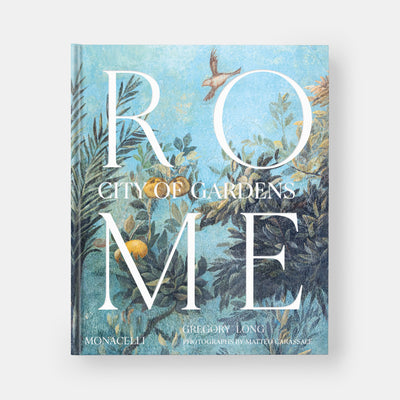
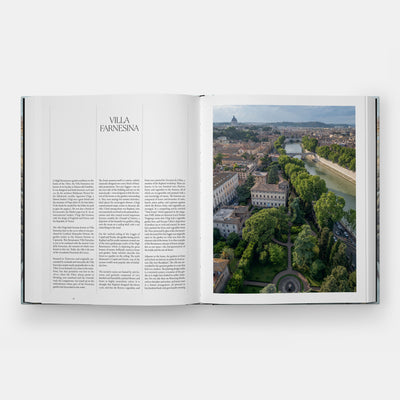
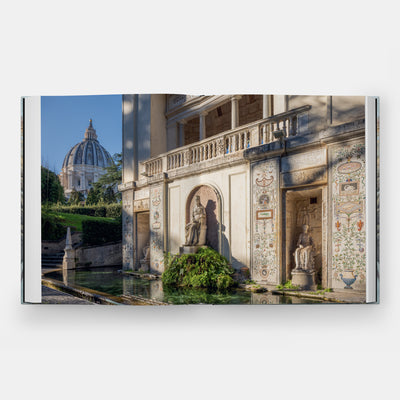
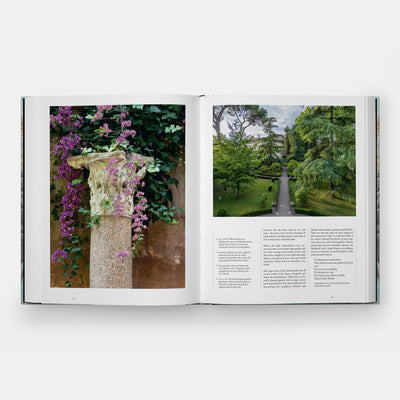
















It takes less than 350 steps to walk around the historic center of Fürstenau, a Swiss town nestled in the Graubunden. And yet there is a lot to discover within the narrow town walls: two castles, three restaurants, a bakery, a coffee roastery, two old lime trees, even. The lords of Fürstenau were allowed to hold court in ancient times, and the lime tree was where people met to settle disputes or decide the fate of a “delinquent”. Because Fürstenau also had market rights, the village was considered a town in the medieval sense.

Duck Mountain Peach - photography Joan Minder
Today, Andreas Caminada calls Fürstenau “the smallest city in the world”. The 48-year-old chef has revived the town’s history as a trading center with a farmers’ market, held for the first time in 2016 and now attracting several hundred visitors every year. At the same time, with head chef Marcel Skibba he gradually developed Fürstenau into a gastronomic center.
The most important stage of this project was the construction of Casa Caminada in 2018. The architect built an inn with twelve guest rooms and a large parlour on the foundations of two old stables. Caminada remembers walking through the corridors of Schauenstein Castle for the first time in March 2003.
 Chamois Chestnut Celeriac - photography Joan Minder
“I found the old walls rather eerie. I doubted whether it was the right place to open a restaurant, especially as Fürstenau, the town in which the castle is located, is far off the beaten track and away from Switzerland's major centres (it’s located 140 kilometres/87 miles south-east of Zurich). Who would come here to eat with a twenty-six-year-old chef that nobody knows? But, luckily, a voice inside me said: ‘Go for it, you’ll find your happiness here!” And that’s exactly what happened when, on 5 December 2003, the castle opened its doors to its first guests.

Curd Soufflé - photography Joan Minder
“I was in the kitchen and Sieglinde Zottmaier, my business partner at the time, took care of the service,” Caminada remembers. “On weekends, my father came from nearby Klosters to help us with the endless dishes. There were no other staff. We borrowed the money we needed from our parents, and one of the hotel rooms was our home and office at the same time. Despite all the worries and eighteen-hour days, I was happy. I finally had my own playground!”Word soon got around that there was now a place in tiny Fürstenau where you could find warm hospitality and lovingly prepared menus.

Tartlet Sunflower Seeds - photography Joan Minder
“An article in the SonntagsZeitung, one of the most influential publications in the country at the time, gave us a huge boost in January 2004. In the autumn (fall) of the same year, we received our first Michelin star – despite chaos during the inspector’s visit. A thunderstorm had hit Fürstenau, wrecking our outside dining and seating areas and causing guests to flee while we hurried to reset tables inside.”

Witch’s Circle - photography Joan Minder
The second Michelin star followed in 2007, the third in 2010 and then a ranking in The World’s 50 Best Restaurants in 2011. Caminada’s restaurant has also been awarded a prestigious nineteen out of twenty points by Gault&Millau since 2009.
Our new book Beyond Peaks: The Cuisine of Schloss Schauenstein is first and foremost a reflection of the philosophy of Schloss Schauenstein.
In Beyond Peaks, Schloss Schauenstein’s visionary chefs, Andreas Caminada and Marcel Skibba, invite readers to explore this extraordinary dining destination. Presented as a stunning dual-volume monograph, the book distils the spirit of Schloss Schauenstein through story, recipes, people, and landscape, both past and present.
Volume I: Stories is a richly textured portrait of the people and ingredients behind the plates. Through essays, profiles, and stunning photography, readers are introduced to the gardeners, artisans, bakers, winemakers, and craftspeople whose contributions shape the restaurant’s quiet brilliance.
Volume II: Recipes presents a curated collection of seasonal tasting menus, which articulate a meticulous yet expressive culinary voice. Dishes such as Fermented Asparagus with Barley and Juniper or Roasted Duck with Rhubarb and Pine are precise tributes to the land. Foundational recipes offer practical insight.

Schloss Schauenstein - photography Joan Minder
The recipes in it are published for the first time. But it is also about Caminada’s home region of Grisons, about its culinary heritage and the passionate people who have provided Caminada, his wife, and their team with exceptional products for many years.
Grisons’ history as a land of flavours began just over 2,000 years ago, with the arrival of the Romans. They brought wine, citrus fruits, olives, dates, figs, spices and even culinary delicacies such as oysters with them. These were for the local population, as well as the Roman officials and soldiers. In the Middle Ages, culinary culture in Grisons lived on, particularly in monasteries. The continued developments in food were also thanks to the trade routes across the Alps.

Yogurt Lemon - photography Joan Minder
The traditional cuisine of Grisons is strongly characterised by farming. It is dominated by what can be grown at high altitudes, produced by dairy and livestock farming and what can be preserved well.
“Our cuisine is a quiet, very personal cuisine,” says Caminada. “Of course, this has a lot to do with the region. The dishes are delicate, surprising and modern, but also grounded and simple. Brown butter, herbs, root vegetables, freshwater fish, underrated cuts of meat such as lamb belly or pork neck, onions, pota - toes: they are all typical of Schloss Schauenstein, and an expression of what I describe as the ‘original flavours of Grisons’. The focus is on what the region has to offer, with an elegant twist rather than a loud bang.”

Andreas Caminada with Marcel Skibba - photography Joan Minder
In culinary terms, Caminada sees himself as something of a quiet revolutionary. “I strive to unite innovation, precision and contemporary aesthetics with naturalness and sensuality. My dishes, no matter how delicate, remain rooted and honest. Ultimately, my goal is always the same: to reflect the original flavours of my home region of Grisons. Yet beyond the kitchen, I still find joy in simple things. I am also the little boy who enjoys wrapping deserving employees in cellophane when they leave and sprinkling a pinch or two of spice on their collars. I find peace on walks with my dog, Ferdinand. These moments in nature are very important to me.

Andreas Caminada - photography Joan Minder
When I look down on Fürstenau from one of the hills opposite, I feel immense gratitude that I can live out my passion for gastronomy in my home canton. Schloss Schauenstein has long been much more than just a restaurant. Many talented restaurateurs who have worked here carry our values out into the world. When they receive an award, I am as happy and proud as I was when I first received one, then two, and finally three stars for the castle.”

Take a closer look at Beyond Peaks: The Cuisine of Schloss Schauenstein.