

![Handwork: Handcrafted Objects that Made America [Craft in America]](http://www.phaidon.com/cdn/shop/files/M-handwork-en-3727-3d-standing-front-3000_cf7b8381-b3a2-41fd-86da-6fe623fb0a35.jpg?v=1784715138&width=400)
![Handwork: Handcrafted Objects that Made America [Craft in America]](http://www.phaidon.com/cdn/shop/files/M-handwork-en-3727-3d-overview-3000_038c21c2-0af7-41e2-8a96-9b0beaf9c2d6.jpg?v=1784715138&width=400)
![Handwork: Handcrafted Objects that Made America [Craft in America]](http://www.phaidon.com/cdn/shop/files/M-handwork-en-3727-3d-spread-1-3000_675d5a59-80e7-4b98-bb57-f9d68d61b20d.jpg?v=1784715138&width=400)
![Handwork: Handcrafted Objects that Made America [Craft in America]](http://www.phaidon.com/cdn/shop/files/M-handwork-en-3727-3d-spread-2-3000_a21c9230-7856-470d-8101-09ae2fef75e3.jpg?v=1784715138&width=400)
![Handwork: Handcrafted Objects that Made America [Craft in America]](http://www.phaidon.com/cdn/shop/files/M-handwork-en-3727-3d-spread-3-3000_6dbd48c4-eaab-4b0d-86a2-19b97d8be954.jpg?v=1784715138&width=400)
![Handwork: Handcrafted Objects that Made America [Craft in America]](http://www.phaidon.com/cdn/shop/files/M-handwork-en-3727-3d-spread-4-3000_851a14d9-3b23-4197-85c5-3a4503b24548.jpg?v=1784715138&width=400)
![Handwork: Handcrafted Objects that Made America [Craft in America]](http://www.phaidon.com/cdn/shop/files/M-handwork-en-3727-3d-spread-5-3000_232b034c-682e-4a6f-b47b-81d5a99dd497.jpg?v=1784715138&width=400)
![Handwork: Handcrafted Objects that Made America [Craft in America]](http://www.phaidon.com/cdn/shop/files/M-handwork-en-3727-3d-spread-6-3000_4c787d9d-1fb6-4812-9652-d15d93423bc0.jpg?v=1784715138&width=400)


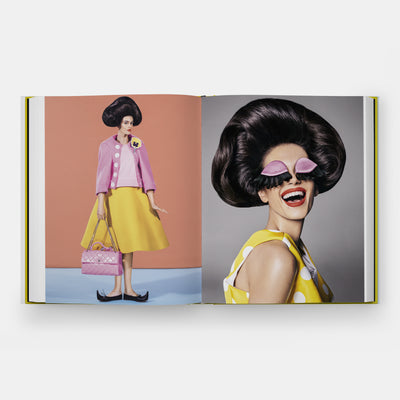
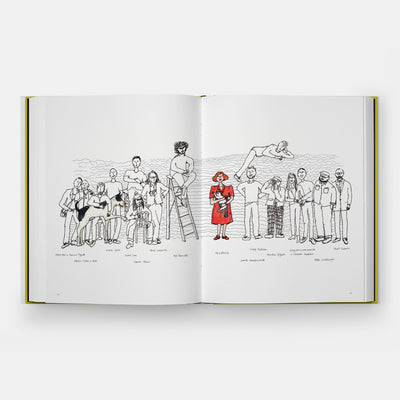
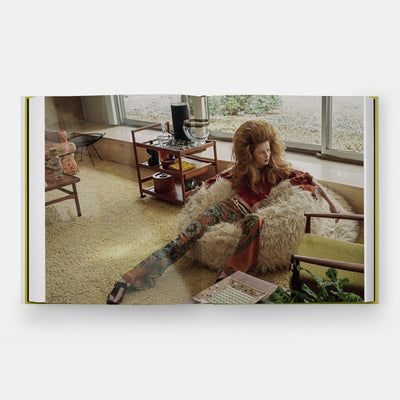
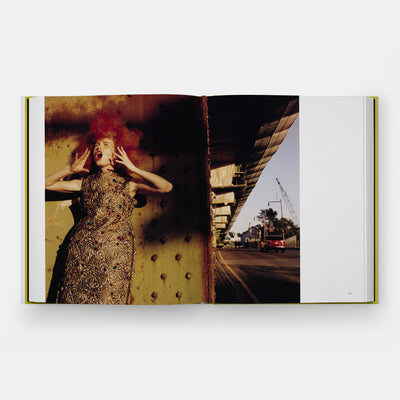


























Since the late 1980s, Wolfgang Tillmans has been an influential cultural force. His photography documents subcultures, nature, intimate scenes, and broader sociopolitical themes. He approaches the ordinary and extraordinary with the same observational and matter-of-fact disposition, blending a quiet intensity with a democratic view of his subjects. Mid-career retrospectives of his work have been presented as large-scale, immersive, site-specific installations at Tate Modern, London; the Museum of Modern Art, New York; and Centre Pompidou, Paris.
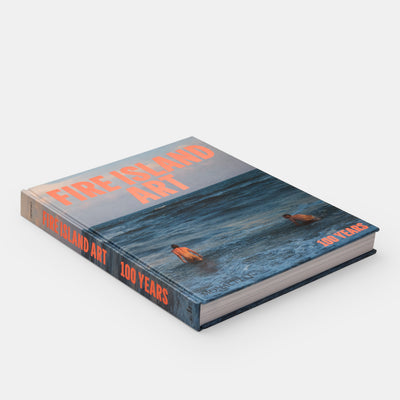
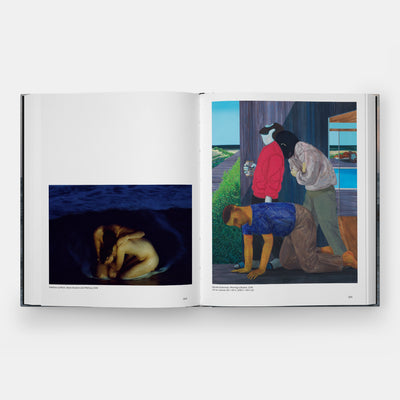
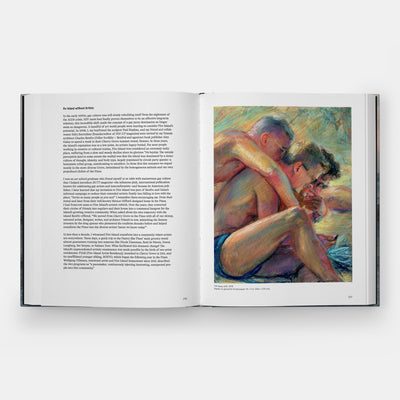
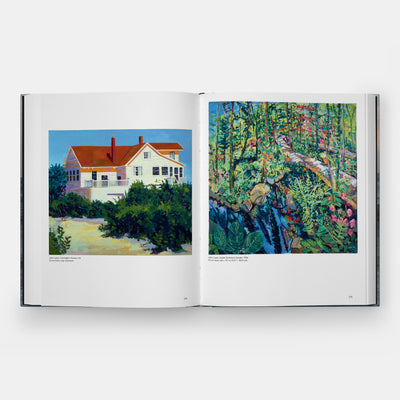
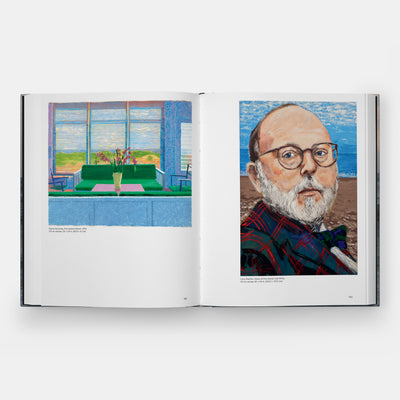
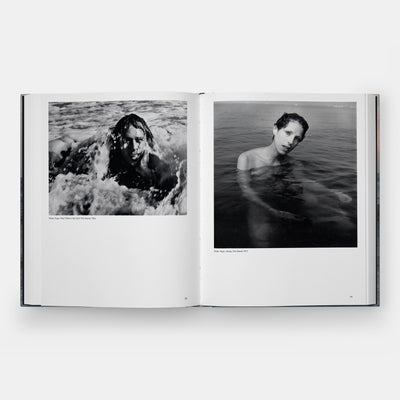
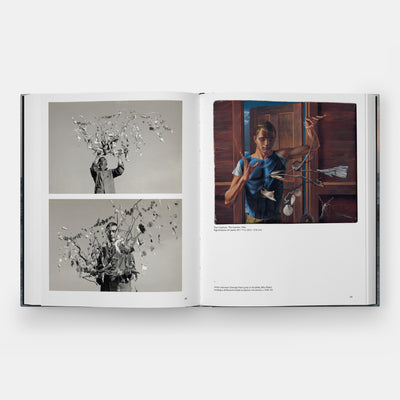
He’s one of the artists featured and interviewed in Fire Island Art: 100 Years, the first book to explore Fire Island’s art history, from its beginnings as a small, makeshift vacation spot in the 1930s to the queer pilgrimage site it is today. Organized in fifteen chapters, each written by a prominent art writer, the book tells the story of the island through the networks of artists who gathered there and were inspired by their surroundings to make stunning artworks.

It begins with the 1930s artist collective PaJaMa – comprised of artists Paul Cadmus, Jared French, and Margaret French – whose most famous photographs were made on Fire Island. From the 1950s to the 1980s, it was visited by some of the titans of postwar art: Richard Avedon, Peter Hujar, Paul Thek, Robert Mapplethorpe, and Andy Warhol, whose diary excerpts about the island are republished in Fire Island Art: 100 Years.
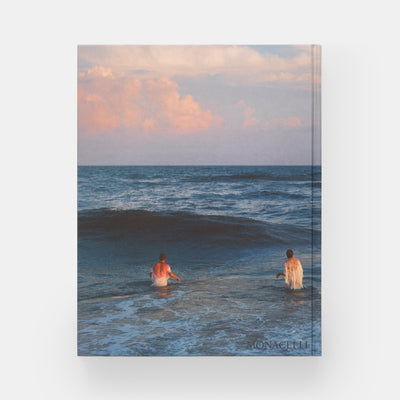
The island’s activity diminished in the 90s and 2000s due to the AIDS crisis, but it came back stronger than ever starting in the early 2010s when several high-profile artist residencies were established, helping it become the artistic mecca it is today. The dozens of contemporary artists featured in the book include names such as Nan Goldin, Doron Langberg, Salman Toor, and Wolfgang Tillmans, whose photograph graces the book’s cover.

Wolfgang Tillmans, Fire Island, 2015. Image credit: Courtesy Wolfgang Tillmans and Galerie Buchholz; Maureen Paley, London; David Zwirner, New York
Tillmans had only visited Fire Island once, in the mid-1990s, until the summer of 2015, when a last-minute trip to the Pines made at a friend’s invitation unexpectedly opened a new chapter in his life and artistic practice.
In this interview with Michael Bullock, conducted at Tillmans’s home on Fire Island, the artist reflected on how his decade as a member of the community has impacted him, renewing his interest in making music and deepening his engagement with nature.
To read the full story get a copy of Fire Island Art: 100 Years.
 Jenna Gribbon, Sand in her shoe, 2019. Image credit: Courtesy Fredericks & Freiser Gallery Archives Oil on linen, 14 × 11 in. (35.6 × 27.9 cm)
Bullock tells Tillmans that the first image he ever saw of Fire Island, before he even knew what it was, and before he knew of Tillmans, was the photographer's famous picture of a man and a deer on the beach [Deer Hirsch, 1995]. "I first saw it in the early 2000s, and it burned into my memory. It looked like another world. If you have never been here, it’s not easy to understand," Bullock says.
"The photo has a mysterious yet universal quality because it could be almost anywhere on Earth," Tillmans replies. "There are very few markers. But if you know Cherry Grove, it’s difficult not to say that it is Cherry Grove. There’s no other place I know where deer live on the beach. So the image is a bit fantastical and yet so realistic."
 Dick and Doe Avedon, late 1940s. Photo by Lillian Bassman. Image credit: © Estates of Lillian Bassman and Paul Himmel
"That was a special moment in my photographic image-making. In the mid-1990s, there was this quest for a newfound authenticity in photography. The man in the picture, Jochen Klein, was my boyfriend at that time. I was very much inspired by the multitudes that our identities were constructed from. We grew up in the ’80s, and we were the first generation that fully grew up in postmodernism. What we were experiencing in our formative years was the puzzling together of cultural components from different eras and decades, reconfiguring our identities without needing to be pure or original."
"Authenticity wasn’t the goal in the ’80s. And then in the ’90s, I became known for this new authenticity, which people were longing for. There was this desire for singular readings. And so there was this purity bestowed onto me, which I actually rejected. Even though I wanted a new sincerity, a new realism, it didn’t mean that I rejected this idea of multiplicity—that you can, on the one hand, be into drag, and on the other, enjoy going to an S&M club. You’re never read in just one way."
 Joe McShea and Edgar Mosa, Flag, Fire Island, 2019. Image credit: Courtesy Joe McShea and Edgar Mosa Ribbon and bamboo installation
"The way we experienced our lives was always as this composite of things that seemed staged but were actually happening, and other things that were staged but looked very real."
"Deer Hirsch looks completely staged—people have asked, “Is it a stuffed deer?”—but it was actually a documentary moment. There was nothing arranged for it at all. It was just Jochen and I taking a walk on the beach. We’d fed all our food to the deer. Jochen was showing his empty hands to the deer. I saw it and said, “Stop, don’t move.” I stopped time for a couple of seconds, took the photograph, and then we carried on with our leisurely afternoon."
"I love how the photo looks highly stylized, but it was just a moment from real life that I was able to catch. Here is Jochen, a man encountering the animal kingdom, attempting to communicate with its creatures."
 Henry Geldzahler and David Hockney, 1970s
"In that period, Jochen and I both lived in New York. We went for a couple of nights and stayed at the Cherry Grove Hotel. It was nice, but we didn’t feel like it was this magical place, the way I think of it now. We moved back to Europe in ’96, and I didn’t come back for twenty years. Nothing about it had left a deep impact. We didn’t know anybody here. I think that seems to be the thing—you need to have some point of entry, and then it all unfolds in a completely different way."
"I’ve always been fascinated by the Atlantic, and I’ve just never seen a place where you could be so quietly and peacefully close to it. Plus New York City is just two and a half hours away; there’s the security and the friendliness of the LGBTQ+ community, and one of the best grocery stores within walking distance. Once I met people here, I realized how interesting many of them are. For me, it felt like a retreat where I could be on my own, but not alone. People respected that I was actually working here, and it wasn’t a party spot for me."
 Mark Beard, Two Men on a Beach, n.d. Image credit: © Mark Beard [Bruce Sargeant) (1898–1938)], courtesy CLAMP, New York Oil on canvas, 36 × 24 in. (91.4 × 61 cm)
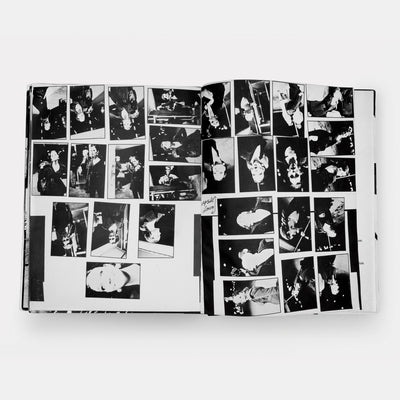
To read more of Wolfgang's reminiscences take a closer look at and buy a copy of Fire Island Art: 100 Years. The book was assembled by John Dempsey, President of the Fire Island Pines Historical Society. Dempsey conducted extensive archival research for the book, unearthing artworks that are published for the first time ever: contact sheets by Peter Hujar, a never-before-seen portrait of Patti Smith by Robert Mapplethorpe, and a photo album that David Hockney made by hand.
Fire Island Art: 100 Years is a groundbreaking look into an understudied part of art history, showing how a small stretch of sand has been central to the story of queer art and culture in America.
 Wolfgang Tillmans, Deer Hirsch, 1995. Image credit: Courtesy Wolfgang Tillmans and Galerie Buchholz; Maureen Paley, London; David Zwirner, New York