



![Handwork: Handcrafted Objects that Made America [Craft in America]](http://www.phaidon.com/cdn/shop/files/M-handwork-en-3727-3d-standing-front-3000_cf7b8381-b3a2-41fd-86da-6fe623fb0a35.jpg?v=1784715138&width=400)
![Handwork: Handcrafted Objects that Made America [Craft in America]](http://www.phaidon.com/cdn/shop/files/M-handwork-en-3727-3d-overview-3000_038c21c2-0af7-41e2-8a96-9b0beaf9c2d6.jpg?v=1784715138&width=400)
![Handwork: Handcrafted Objects that Made America [Craft in America]](http://www.phaidon.com/cdn/shop/files/M-handwork-en-3727-3d-spread-1-3000_675d5a59-80e7-4b98-bb57-f9d68d61b20d.jpg?v=1784715138&width=400)
![Handwork: Handcrafted Objects that Made America [Craft in America]](http://www.phaidon.com/cdn/shop/files/M-handwork-en-3727-3d-spread-2-3000_a21c9230-7856-470d-8101-09ae2fef75e3.jpg?v=1784715138&width=400)
![Handwork: Handcrafted Objects that Made America [Craft in America]](http://www.phaidon.com/cdn/shop/files/M-handwork-en-3727-3d-spread-3-3000_6dbd48c4-eaab-4b0d-86a2-19b97d8be954.jpg?v=1784715138&width=400)
![Handwork: Handcrafted Objects that Made America [Craft in America]](http://www.phaidon.com/cdn/shop/files/M-handwork-en-3727-3d-spread-4-3000_851a14d9-3b23-4197-85c5-3a4503b24548.jpg?v=1784715138&width=400)
![Handwork: Handcrafted Objects that Made America [Craft in America]](http://www.phaidon.com/cdn/shop/files/M-handwork-en-3727-3d-spread-5-3000_232b034c-682e-4a6f-b47b-81d5a99dd497.jpg?v=1784715138&width=400)
![Handwork: Handcrafted Objects that Made America [Craft in America]](http://www.phaidon.com/cdn/shop/files/M-handwork-en-3727-3d-spread-6-3000_4c787d9d-1fb6-4812-9652-d15d93423bc0.jpg?v=1784715138&width=400)



























(Main image above: Gohar Dashti, Untitled #5 from the series Today’s Life and War, 2008. Picture credit: © and courtesy the artist Archival pigment print, 27 1/2 × 41 1/2 in. 70 x 105 cm)
Fiona Rogers well remembers the joy of developing her first print and seeing it come to life. "I’d seen some Paul Graham photographs and I’d gone around a housing estate taking pictures of little details - a dandelion growing out of the side of a building - trying to find beauty among the brutality of the architecture. Seeing my photographs emerging from the darkroom was so satisfying.”
The curator and writer of our new book, Great Women Photographers, has spent the 20 or so years since art college working with galleries and agencies, including a long stint at Magnum, before taking up her current role as the Parasol Foundation Curator of Women in Photography at the V&A in London.
“Working in a museum is new for me,” she tells Phaidon.com. “I don’t come from a family that went to museums. My brother was the first in our family to go to university. I went to art school, where I studied a mixed-media course then specialised in photography. I found the white studio space quite intimidating, and the instruction to “fill it with something” pretty terrifying. But I loved the immediacy of photography and being in the darkroom. I could turn out a whole day’s work in eight hours.”
“That’s where I developed a deeper interest in the medium. What brought me to this role was an interest in women in photography, which grew out of a broader interest in documentary and photojournalism.”
Straight out of university Rogers began working for Magnum. She was there for over 16 years, inaugurating their education department and education initiatives, working across the exhibitions programme, and eventually rising to COO.
“That’s partly where my interest in women photographers came from. We used to have these really big debates at Magnum. One side would say, 'It needs to be about the photography. It shouldn’t matter what the photographer’s gender, race or class is.' And the other side would say, 'Yes, but we also need to recognise that, as a particular demographic, we’re not always the people best placed to comment on the work of people from different genders, races or classes.'"
"Through the education initiative I’d set up, I was meeting all these amazing women photographers, people who perhaps wouldn’t necessarily have been considered 'Magnum material', and I felt like I couldn’t really help them. I’d spent 10 years working in the photography industry, but I couldn’t see a practical way of supporting these people."
So Rogers created her own pre-Instagram platform called Firecracker, using an off-the-shelf web tool. “People were incredibly generous and let me show their work, and we had a monthly newsletter introducing a new photographer each month. Eventually we were able to take the audience we’d built through the monthly newsletter and turn that into something tangible by giving people a grant. So it was a small difference, but it made a difference. And that experience really led me to realise that this was what I wanted to do. It became my passion.”
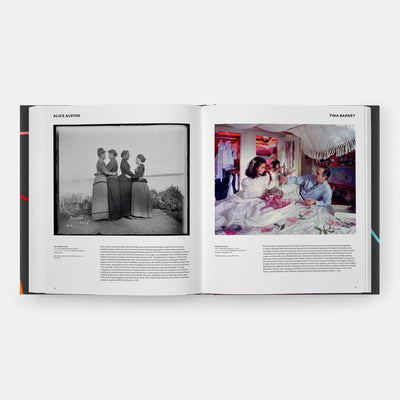
 Alice Austen, The Darned Club, 1891. Picture credit: © the artist / Collection of the Alice Austen House Silver gelatin glass plate negative, 4 x 5 in. (10.2 x 12.7 cm), Collection of the Alice Austen House
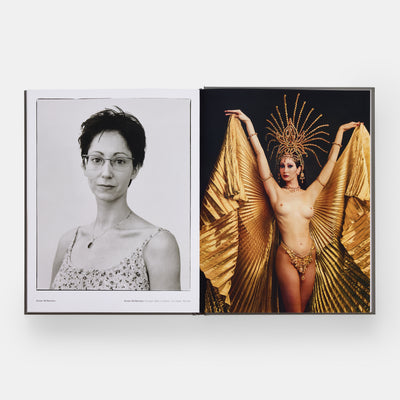
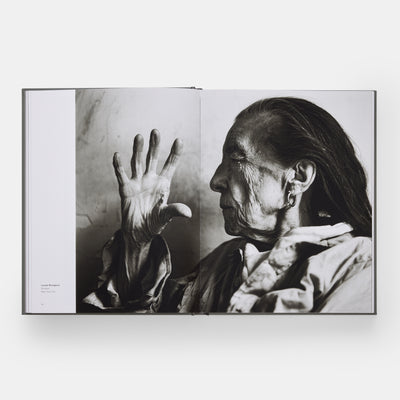
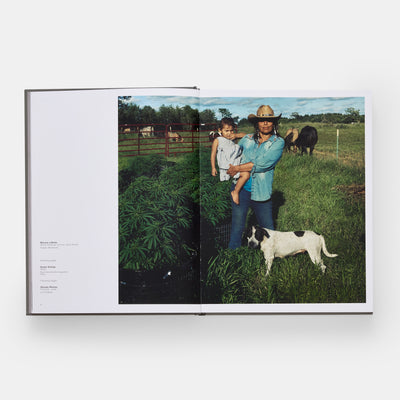
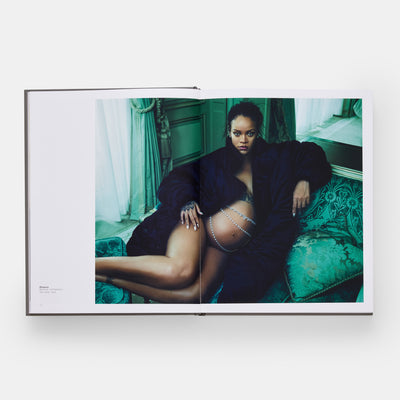
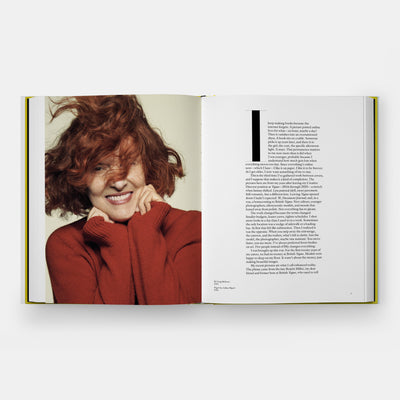
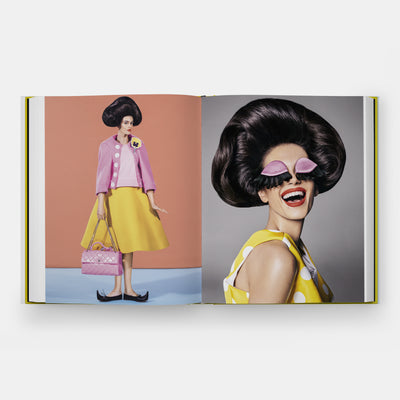
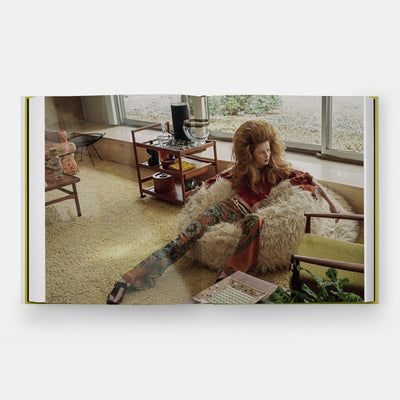
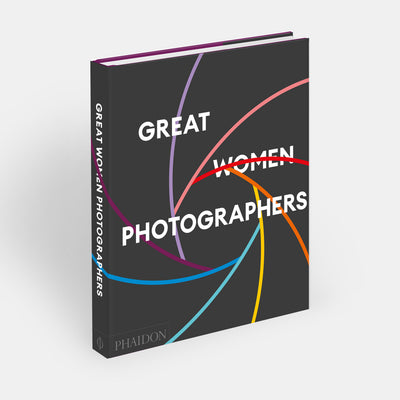
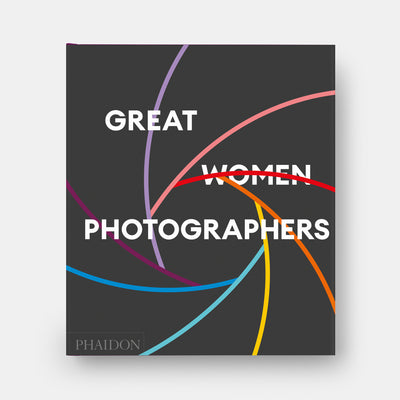
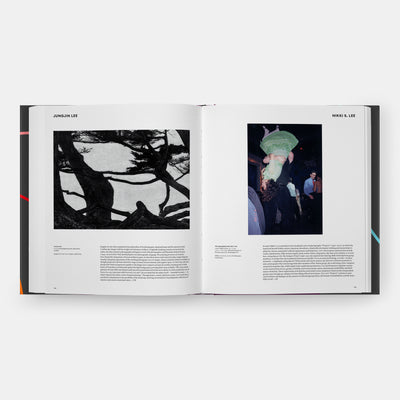
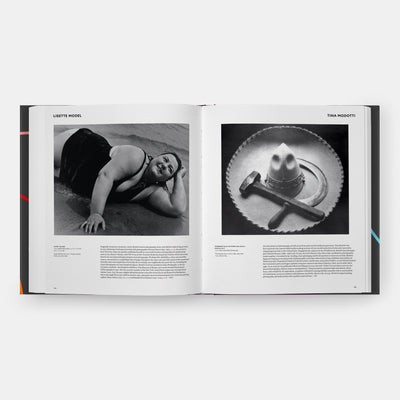
Rogers is one of the principle writers behind our new book Great Women Photographers, a celebration of photography in its most expansive form; showcasing more than 250 photographers from 68 countries across the globe over almost 200 years. As well as portraiture, photojournalism, street photography, fashion, fine art and landscape, the definition of photography is kept purposefully expansive and includes photomontage, conceptual practices, photographs with decorated surfaces – embellished with paint or embroidery – cameraless photographs, and archival treasures.
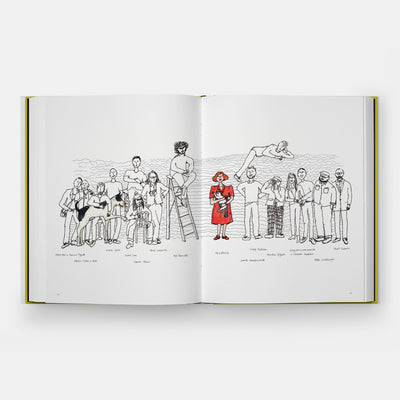
As well as inclding famous photographers such as Julia Margaret Cameron, Diane Arbus, Rinko Kawauchi, Dorothea Lange, Zanele Muholi, Nan Goldin, Dayanita Singh, and Annie Leibovitz, it also sheds light on the work of many lesser known photographers, alongside the rising stars, who are developing a more diverse picture of this dynamic medium. Beautifully designed by Astrid Stavro – who has worked on the other books in our Great Women series – the cover is inspired by the click of a camera’s aperture. We asked Rogers a few question about it and women photographers throughout the ages.
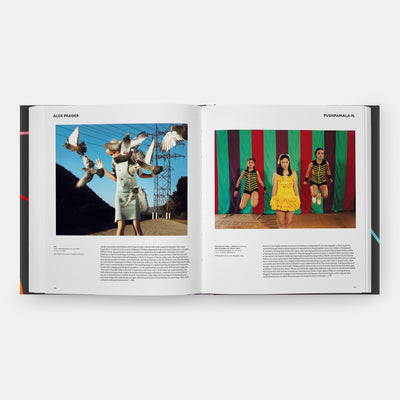
 Alex Prager, Eve, 2008. Picture credit: © Alex Prager. Courtesy Alex Prager Studio and Lehmann Maupin, New York, Seoul, and London Chromogenic print, 36 x 45 in. (91.4 x 114.3 cm)
What are the elements of the book you're particularly happy with? The whole chronology and the depth. It’s a sweeping book. What is impressive is the internationality and intersectionality. Naomi Rosenblum did a book in the 90s about the histories of women photographers and did a very thorough academic, effort, which is fantastic, but perhaps not so accessible for the average person who wants to just know about some of these histories. Great Women Photographers does a little bit of that, but also then brings in different photographers. There are the names that repeat - the Eve Arnold, Lee Miller, Carrie Mae Weems - but there are also some great surprises in there as well.
Writing the essay for this book gave me an opportunity to look back. Although my knowledge centres on the post-war period, researching and writing it reminded me that women have always been present in photographic history. Initially, I thought I would write an essay about “firsts”: the first woman to make a photobook, the first to establish a photographic studio, the first to learn the daguerreotype process. But that started to feel reductive, even forced.
So I flipped the question. The idea of what makes someone “great” becomes a way of asking why women who were so pioneering had not been recognised for their contributions. And, of course, the word “great” is deeply connected to feminist art history, particularly Linda Nochlin’s seminal 1971 essay, Why Have There Been No Great Women Artists? So for readers of this book, I think that word is loaded, historically, but also from a feminist perspective.
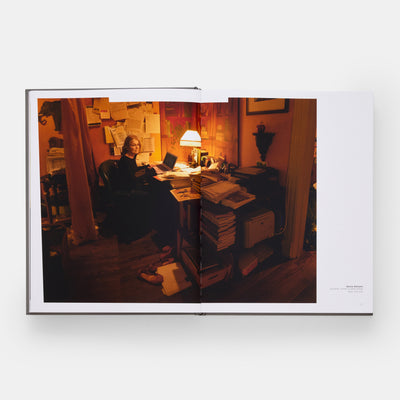
 Tina Barney, Marina’s Room, 1987. Picture credit: © and courtesy the artist chromogenic print, 48 x 60 in. (121.9 x 152.4 cm), Smithsonian American Art Museum, Washington, DC
Is there a line you can draw from the earliest women in the book to contemporary women photographers now? Definitely. I think photography is a form of self-expression, and I don't always mean that as self-portraiture. You could argue that even photographers like Lady Clementina Hawarden and Julia Margaret Cameron, although they were photographing other people, were still expressing something of themselves. With Cameron, it's very much about her home environment, the way she exists within her social class, and how she interacts with her household. With Lady Hawarden, it's about family relationships, particularly with her daughters. So even in those very early experiments with photography, there's a strong sense of the medium being used as a form of self-expression.
You see that again in the cut-and-paste albums of the Victorian period, by people like Kate Gough and Lady Mary Georgiana Filmer, who was likely the first person to make a photomontage, around 1863. There's still this strong sense of photography being used to express identity and experience, and that carries through into the interwar period. You've got women like Hannah Höch using photography very much as a form of self-expression, and then, with second-wave feminism, that becomes even more pronounced. In contemporary photography, you still have many women using the medium to explore and express themselves, particularly around queer identities. Photography is a particularly powerful medium for that.
 Simryn Gill, from the series A Small Town at the Turn of the Century, 1999–2000. Picture credit: Courtesy the artist © Simryn Gill. Chromogenic print, 36 x 36 in. (91.4 x 91.4 cm)
Was there a moment that proved pivotal in the emergence of women photographers? Yes. the industrial revolution was a pivotal moment for women. We have this perception that photography was developed in the 1820s and that somehow women came to it later at the turn of the century. But actually, when you look at the history, it was a respectable profession for women. Researchers say that the women were learning the medium as it was being developed. And at the time, there was no gendered separation. It was such an early medium that people didn't know who it was going to be for.
Actually, it was distinguished more by class and wealth rather than by gender. So if you had the money to do it, regardless of whether you were a woman or a man, it was available to you. And even some of the early schools were teaching photography to women in the late 1800s. You also see where women are developing visual literacy at the same time as the carte de visite (a small, card-mounted photograph that became popular in the 19th century) is being commercially reproduced.
So you're seeing not just professional women photographers, who are either itinerant, taking their studios on the road or migrating to Canada like Hannah Maynard does, and setting up photographic studios that document the development of the colonies. But there are also women like Karimeh Abbud, one of the early studio photographers in Palestine. So people are creating early studios, but in addition to that you've got respectable women using commercialised, reprint reproductions of photography in their album making. So you've also got this very domestic use of photography, and it goes on to have links with the way in which women keep family albums now, or the way women have historically been the keepers of memory.
Women also drew on their roles in caregiving to create commercial opportunities. For example, if you wanted a photograph of yourself and your child, you might prefer to go to a studio run by a woman rather than a man. Women were therefore finding ways to exploit these opportunities as well, which is exciting and offers a very different perspective from the histories we might otherwise think about. If you look at the pictorialists and you look at people like Gertrude Käsebier. She was seminal in teaching women practical, but also commercial skills. And she probably is the best known example of paying it forwards, taking the knowledge that she had and being generous with it.
 Atong Atem, Our Neighbor Was a Witch, 2022. Picture credit: © and courtesy the artist and MARS Gallery Ilford smooth pearl print, 39 3/8 x 59 1/16 in. (100 x 150 cm), edition of 3
Who were the women that were overlooked in the broader canon of photography? The idea of erasure or invisibility is interesting. Sometimes we try to apply our contemporary knowledge of authorship, or our contemporary sort of societal norms, to things that happened in centuries gone by. What we have to remember about this kind of this erasure is it's not always negative or purposeful. With the example say of Jane Clifford - who was making work with her husband - she may have been perfectly happy to have been in that co-authored environment. She was printing his work, he was printing her work. He then dies unexpectedly, and she continues to run their family practice, but she never seeks to say this is a Jane Clifford work, and this is my husband's work As feminist historians, want to see Jane Clifford as a sort of independent woman, but that's us projecting our contemporary world onto something that we don't know. There could have been a lot of women who were operating in husband and wife environments that might have been perfectly happy to have that under a family banner. But I'm sure that there were also many women who felt their labour was less important than the labour of their male family members because that was the way that society worked in that period.
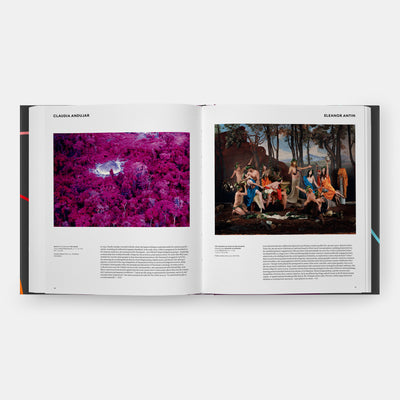
 Eleanor Antin, The Triumph of Pan (After Poussin), from the series Roman Allegories, 2004. Picture credit: Courtesy the artist and Diane Rosenstein Gallery, Los Angeles © Eleanor Antin Digital print, 61 x 72 in. (154.9 x 182.9 cm)
Did your research trigger any emotional responses regarding these women's treatment? Yes, on the one hand, but then you also feel reinforced by it, because the world moves on quite quickly. In the book I talk about how we're not just interested now in gender representation. There's a much broader issue around representation in the arts. For me, class is a big issue, I'm quite passionate about that. And as we move on, I sometimes think: do we even need roles like curator of women in photography? Do we need books like Great Women? But then I look back at those histories, and I’m still surprised by how many women I can find who did incredible things, not just the first woman to do something, but the first person to do something. And then you think if that’s just within photography, there must be so many other undiscovered, uncelebrated stories. The legacy element is tricky. Even with Lee Miller the foundation has only just been able to register itself as a charity. They don't get any public funding. It's run entirely privately. So they've been doing all that work entirely self-sufficiently, and quietly. And that is Lee Miller, who is probably one of the most famous photographers ever. This is a polymath who had seven lives. And even she has a legacy which absolutely needs to be protected. And yet the family are still trying to figure out what to do with it and they're doing amazing things with very little resources.

Louise Dahl-Wolfe, Carson McCullers, 1940. Picture credit: © the artist / Smith Archive / Alamy Gelatin silver print, 14 x 11 in. (35.6 x 27.9 cm)
Was there was there a technological development which impacted on women's photographic practice? I would say it was probably more the commercialisation of photography. There were women before the 1840s who were doing photography or experimenting with chemical processes, what we might call proto photography. Elizabeth Fulhame, for example, was conducting early scientific experiments in the 18th century, and Anna Atkins is another good example. We wouldn't necessarily call either of them photographers if we look back through a contemporary lens. Atkins was a botanist, while Fulhame was a chemist and scientist. So there were certainly women engaging with photography and photographic practices before the commercial success of the medium. But women became more visible within the photographic industry, particularly on a professional level, once photography becomes commercialised.
The increasing reproducibility and affordability of photography opened up new possibilities. The technology was changing and developing; the equipment was still cumbersome and heavy, but the chemicals were becoming easier to handle. As these things changed, we start to see women becoming more visible, both in studios and using photography at home. People like Lady Clementina Hawarden and Julia Margaret Cameron are good examples. It was still a particular type of woman who had access to these practices, but it’s really the commercialisation of photography that marks the point at which women begin to become more visible within the medium.
You can almost think about photography in the same way as historians talk about how the bicycle was fundamental to women's emancipation. What’s interesting to me is to see how women were using photography as a form of self-expression as the medium was being developed. By the 1860s, women were using these reproductions in their albums to comment on their family lives, their societal roles, and their place within class structures, all as the technology itself was evolving.

Moyra Davey, The Coffee Shop, The Library, 2011. Picture credit; © Moyra Davey / Courtesy of Galerie Buchholz 25 chromogenic prints, tape, postage, ink, 62 x 891/2 in. (157.5 × 227.3 cm), overall, Museum of Modern Art, New York
Can you tell if a photo has been taken by a woman? As someone interested in feminist history, I suppose I should say yes, absolutely. But I believe the way that we look is informed by our lived experience. Photography is highly subjective, and we bring our own readings to the visual. We project our personal histories onto what we see. So I don't necessarily think you can tell whether a photograph was taken by a woman, but I do think that, historically, there have been situations and experiences made available to women that perhaps haven't been available to men.
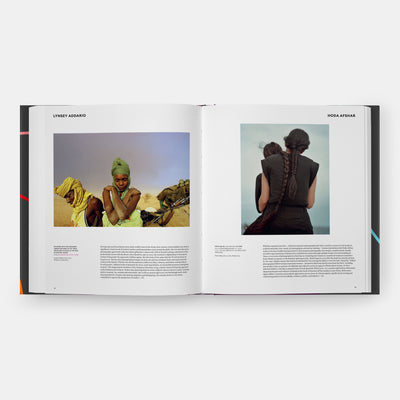
Lynsey Addario getting access to women in Afghanistan in the 90s would not have happened had she not been a woman. Eve Arnold would say that the only way she was able to photograph a Nazi rally, even though she was a Jewish woman, was because she was tiny and kind of insignificant. There have been examples of where women have leveraged their gender to fit the circumstance. So perhaps, yes, in that respect, if you look at a Lynsey Addario picture you possibly might think that's taken by a woman, but it's more circumstantial than being able to look at a pictorialist photograph and say, that was taken by say Edward Steichen, or that was taken by Gertrude Käsebier.
 Carolle Bénitah, Le Déguisement (The Disguise), 2009. Picture credit: © Carolle Bénitah, courtesy Clémentine de la Féronnière Gallery & Sous Les Étoiles Gallery. Archival pigment print with silk thread, 16 1/2 × 24 in. (41.9 x 61 cm)
What are the emerging trends that are being led by women? Reclamation of craft is something I see a lot - a lot of stitching, photo montage and collage. This idea of assemblage or, as they called it in the ’70s, “femmage”: the mixing of feminist practice and assemblage. Women have always saved things and made things out of old things, often out of necessity, drawing on class, poverty and survival. So there’s a circularity around that approach, but I also think it comes out of sustainability. People are interested in historic craft practices and in finding ways to live more sustainably and make work more sustainably. There has been a reclamation of analogue processes. There are many artists now who are going back to using cyanotype or natural chemicals or trying to find sustainable ways to do things because people are very planet conscious. And that rejection of digital media is in some ways linked. And, if we’re talking about trends, for me I’m particularly interested in postcolonial themes, and in artists who are interested in decolonising. That’s something we’re working on a lot at the V&A. It’s obviously a museum-wide interest, linked to our own imperial histories, but I think some of the most interesting work is coming out of those conversations.

Graciela Iturbide, Nuestra Señora de las Iguanas (Our Lady of the Iguanas) Juchitán, Oaxaca, 1979. Picture credit: © and courtesy the artist Photograph, variable dimensions
Finally what’s the one photo in the book you could happily live with forever? I knew you’d ask this question! The selection in the book is fantastic, a great representation of past, present, and hopefully future. My personal favorites include: Alice Austin, Tina Barney, Gohar Dashti, Moyra Davey. But the idea of living with, say a portrait of someone or a documentary image or a journalistic image, brings up the question of do I want to live with some uncomfortable histories? So I’d choose something quite clean and aesthetic, and it would probably have to be one of the modernists. I'd probably go with Florence Henri’s Still Life Composition. It’s very Bauhaus looking and the Bauhaus was an interesting period for women. It's just a beautiful, compositionally led photograph. It’s just a beautiful image you could live with forever.
 Pushpamala N., The Native Types / Circus from the series Native Women of South India, 2004. Picture credit: © and courtesy the artist and Nature Morte Delhi Color photograph, 22 x 1413/16 in. (55.9 × 37.6 cm), edition of 20, Art Gallery of New South Wales
Get a copy of Great Women Photographers, here.