


![Handwork: Handcrafted Objects that Made America [Craft in America]](http://www.phaidon.com/cdn/shop/files/M-handwork-en-3727-3d-standing-front-3000_cf7b8381-b3a2-41fd-86da-6fe623fb0a35.jpg?v=1784715138&width=400)
![Handwork: Handcrafted Objects that Made America [Craft in America]](http://www.phaidon.com/cdn/shop/files/M-handwork-en-3727-3d-overview-3000_038c21c2-0af7-41e2-8a96-9b0beaf9c2d6.jpg?v=1784715138&width=400)
![Handwork: Handcrafted Objects that Made America [Craft in America]](http://www.phaidon.com/cdn/shop/files/M-handwork-en-3727-3d-spread-1-3000_675d5a59-80e7-4b98-bb57-f9d68d61b20d.jpg?v=1784715138&width=400)
![Handwork: Handcrafted Objects that Made America [Craft in America]](http://www.phaidon.com/cdn/shop/files/M-handwork-en-3727-3d-spread-2-3000_a21c9230-7856-470d-8101-09ae2fef75e3.jpg?v=1784715138&width=400)
![Handwork: Handcrafted Objects that Made America [Craft in America]](http://www.phaidon.com/cdn/shop/files/M-handwork-en-3727-3d-spread-3-3000_6dbd48c4-eaab-4b0d-86a2-19b97d8be954.jpg?v=1784715138&width=400)
![Handwork: Handcrafted Objects that Made America [Craft in America]](http://www.phaidon.com/cdn/shop/files/M-handwork-en-3727-3d-spread-4-3000_851a14d9-3b23-4197-85c5-3a4503b24548.jpg?v=1784715138&width=400)
![Handwork: Handcrafted Objects that Made America [Craft in America]](http://www.phaidon.com/cdn/shop/files/M-handwork-en-3727-3d-spread-5-3000_232b034c-682e-4a6f-b47b-81d5a99dd497.jpg?v=1784715138&width=400)
![Handwork: Handcrafted Objects that Made America [Craft in America]](http://www.phaidon.com/cdn/shop/files/M-handwork-en-3727-3d-spread-6-3000_4c787d9d-1fb6-4812-9652-d15d93423bc0.jpg?v=1784715138&width=400)
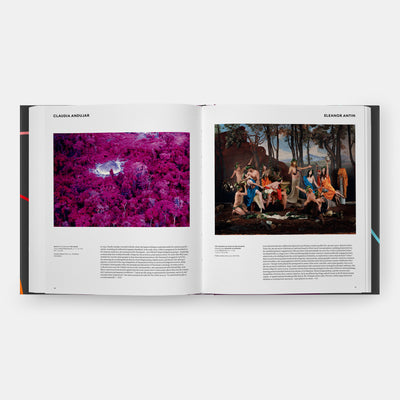
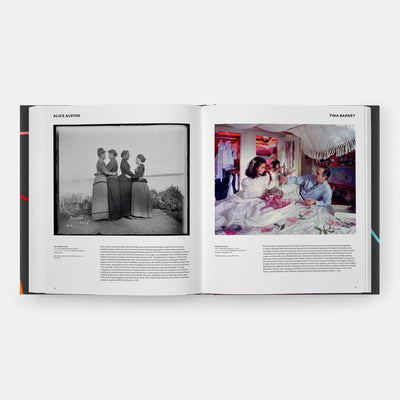
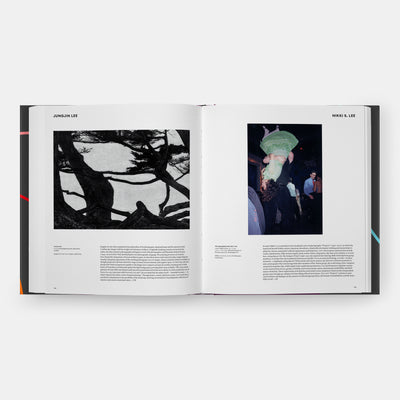
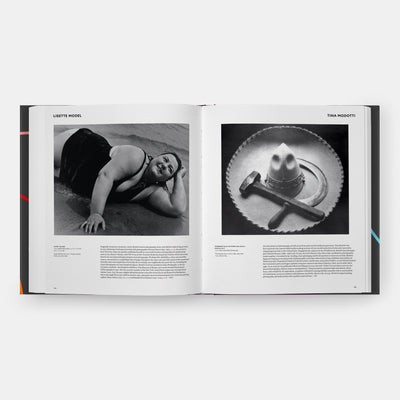














While for many the last few years have been ones of increasing anxiety around the role of AI in our lives and labors, the artist Matthew Stone has been embracing technology in contemporary painting, viewing it as a field of creative expansion rather than existential threat.
You’d expect nothing less from this most digital of digital natives. Stone emerged from the vibrant South London underground of the mid-2000s, where warehouse parties, fashion, performance art, and club culture all bled into each other.
He became the point person - part nightlife impresario, part shaman, part philosopher of optimism - of the !WOWOW! collective; a loose congregation of artists, musicians, and designers that included fashion designer Gareth Pugh and performance artist Millie Brown. The sense of utopian possibility that fired that turn of the millennium moment continues to pulse through his work.
In the years since, he’s found a natural collaborator in FKA Twigs, another artist whose work merges corporeality, spirituality and hyper-contemporary aesthetics. The two have worked together for more than a decade, beginning with an early i-D magazine cover shoot and extending to visuals for her 2019 album Magdalene.
In conversation, Stone is provocative, intellectually adroit. On canvas his work feels similarly, simultaneously Baroque but futuristic.
And yet, for all the technological complexity, what perhaps hits hardest in his work is his approach to color: layer upon layer of it, overwhelming the senses - atmospheric, emotional, choreographed, pulsing with saturated violets, citrus oranges, aqueous blues and sensuous pinks. Stone somehow manages to make digital space feel like nature.
Kathy Grayson, founder of The Hole gallery in New York, has praised his ability “to make things in real life look as good as they do on a computer screen.”

Matthew Stone Holding (Removed), 2026 - photography Daniel DeWolfe
This effect is in full force in a new edition for Artspace and Monacelli. Holding (Removed), 2026 is an edition of 25 + 6 APs. It's a dimensional resin relief on liquid electrophotographic image, 311 gsm uncoated eggshell paper with deckled edges, measuring 20 x 24 inches, priced $1,500.
"What I love about this print is how slowly the surface reveals itself,” Stone tells Artspace in our interview below. “Fine tactile detail catches the light and ripples across the image. It shifts as you move around it, while the composition considered wholly retains a sense of calm and resolved presence."
Stone spent a week developing the new imagery required to create the edition's impasto-like raised profile. "I returned to and reworked the original image to build the five layers of physical texture that follow both my gestural brushstrokes and the spatial depth and logic of the 3D composition," he says.
"Moving between two and three dimensions has always been central to the way I think about images, and this print takes that process into the surface itself. Much like the texture of a painting, there is a quiet magic to the surface that is only fully revealed in person."
Stone's work has been exhibited extensively in the United States and internationally, in galleries and institutions including Fiorucci Foundation, Stromboli, Italy; The National Museum of Photography, the Netherlands; The Royal Library, Copenhagen, Denmark; Fotografiemuseum, Amsterdam, Netherlands; Tate Britain, London, UK; and Centre for Contemporary Art, Glasgow. We asked him about Holding (Removed), 2026 and his wider practice.
 Matthew Stone
Holding (Removed), 2026 - photography Daniel DeWolfe
Matthew Stone
Holding (Removed), 2026 - photography Daniel DeWolfe
How would you describe what you do? I construct paintings in 3D modelling software. I have a big archive of images of my own brush strokes, and I use them to texture virtual 3D models. A lot of that work is figurative. I have this motif of entangled bodies that comes from Western religious art. And I also move towards more abstract images that focus on the movement of the brush strokes and the ways that that sense of movement can evoke the same energy or passion of these bodies that are interacting physically with each other. It's as much dance as it is Titian's brawls.
How did this approach take shape? In 2014 I had a strong feeling about the pending nature of digital life. And I'd set myself this task of finding a way to paint that was of my time, that wasn't just looking backwards, where I wasn't just effectively cycling to my studio on a penny farthing.
It's important to think about why one would make an oil painting in 2026. I took very literally, the idea that they share at art school, which is that you can't just repeat what's been done. You've got to build on, or find ways to interact with, art history and the work that's been done by artists who have come before. So I thought I can’t just go to Florence and get classically trained and copy Caravaggio.
But you were formally trained, yes? I studied painting. But I've also had this very much expanded idea of art, where I understood that the project of a lot of modern art in the 20th century was to establish that artists could do anything. And I interpreted that to mean that everything is creative.
So there's a layer of awareness that when you're doing something, you are making a series of decisions, whether you know it or not. And if you make those decisions consciously, what you do, and how you impact or interface with the relational web of being, is to make a choice for it to be beautiful or challenging, or to make somebody think, or make somebody feel.
 Matthew Stone
Holding (Removed), 2026 - photography Daniel DeWolfe
Matthew Stone
Holding (Removed), 2026 - photography Daniel DeWolfe
That juggling of spontaneity and control is an interesting part of the work, how do you approach that? Yes, it is. I feel I have both qualities within me. If I'm making an exhibition, the first thing I want to do is make a spreadsheet about how many paintings I'm going to make, how many do I need to make? What size should they be?
But then there's another part of me that is very impulsively driven and knows that the miracle of art is in this sort of latent discovery of being in the mess, that if you do it, things happen, and it comes alive as a result.
A lot of people’s idea of creativity is that you have this really strong idea and then you go and execute it and the result is what you had in your head and that that is the quality of someone who is ‘visionary’.
But I really think that it's much more about maintaining curiosity and provoking sets of circumstances where novelty and unexpected outcomes arise. I've concluded that my nervous system is regulated by novelty. And I also had to realise that that was not the case for everybody.
How does the lightbulb moment manifest itself when painting on a screen? Is there a parallel to the physicality of fighting or dancing with the canvas? In my experience, there's as much room for mistakes and infinite variables that become exponentially more complex as you add more potential variables into the mix.
The first printed paintings that I made, I was photographing individual brush strokes and then stacking them in Photoshop. I was able to edit the brush strokes so they could swoop through each other in ways that wouldn't be possible. But it was very much a stacked Photoshop 2.5D, implied depth thing. But I knew I needed to use 3D software to make some of these individual brush strokes undulate, rather than just sort of float above each other.
It’s more like collage than mixing paint. Essentially a lot of it is cutting things out and putting them together. But going into 3D software, I just wanted a single brush stroke that would float and would look like it was moving through three dimensional space, much like some of the sort of VR painting apps that exist now.
I wanted to simulate that, and I wanted the shadows to be complex in a way that reflected that more dimensional sense of things.
And so I worked out how to do that, but in doing that, I also clicked on a button that made a sphere, and then I had the image of the paint on this undulating plain for the thing that I planned. And I threw the brush stroke onto the sphere and instantly I realised that it looked like a painted sphere or a ball. And so I was, "Oh, hang on a second, I could do this with other things, I could do that to a model of a human being.
So going back to this idea that that might only occur standing shirtless and beating a canvas, that was the moment, the sort of magic moment. I’m highlighting the romantic here, with mild irony.
 Matthew Stone Holding (Removed), 2026 - photography Daniel DeWolfe
Often, when I'm working in 3D software and I'm putting together a composition, something may not be working, and so I'll click on an aspect of the scene, I'll rotate it 180 degrees, and suddenly it's upside down, and it's totally different. And actually, it’s in those moments where I am creating the images that then become my paintings.
Because of the speed and the dynamism of being able to manipulate images so quickly, I would argue there’s more surface for mistakes, because you can move things through things very quickly, whereas if you are painting on a canvas - you have an image and you're looking to effectively render that by hand, and then capture some painterly qualities along the way - you've got a very strict process to achieve what you want to do, and actually, there's less space potentially to disrupt.
My argument would be that the most interesting creativity is actually in the digital processes, because that's where all of the creative decision making is occurring. And I don't think it's arbitrary to render a digital image in oils.
I want to be of the world and make something that doesn't feel like it's in that world. Where people can slow down and they can connect and they can have this moment of trust, even if there isn't total transparency on how the image has emerged. Because as much as I try to blame my process, I know that I'm working in ways that don't have hundreds of years of cultural comprehension behind them.
 Matthew Stone with
Holding (Removed), 2026 - photography Daniel DeWolfe
Matthew Stone with
Holding (Removed), 2026 - photography Daniel DeWolfe
Is it important that people understand what you're doing? No, not to me. I've always had a desire to have a cultural impact that is broader than specifically the art world. From the very beginning, I was organising squat parties and artist collectives and we were our own audience. We built our own situations, institutions, almost, although there were sort of non-hierarchical and incredibly chaotic.
I've done album artwork, for FKA Twigs, and for a few other musicians. I have shot fashion photography. I've always wanted to test the ideas in different contexts, but also show that creativity is occurring anywhere and everywhere because I still do move from this idea that art can be life, although probably, I should say life can be art. So there are aspects to my work that are challenging for people, but then also there are very easy ways into my work.
I'm definitely an aesthetically motivated artist, I think a lot, but I also care really deeply about the sensory experience of images. I find it to be profound, to look and be visually excited. In a way, that is something that lots of people can connect to quite easily without feeling totally intimidated, and I want that. I don't want to just reach people that have been educated on how to think about art. I wouldn't feel it was problematic if someone's grandma liked my work.
People have said my work is energising and uplifting. And that's something that I've thought about quite consciously; this idea that kindness or love can be powerful forces, that we don't have to rely on violence to make culture exciting.
Your work is featured in the book Rainbow Dreams: Color and Light in Contemporary Art, What does color mean to you? I feel I almost I have these phases with color. I've had periods where I've made images where the only color is naturalistic skin tones. And then I had periods where it's gone to the opposite extreme. The work for the edition occurred within one of those phases. I go through a phase where I don't care and I allow color to permeate and dominate my being, where color is pronounced, and then other periods where I don't know if I've gone too far and there's a feeling of wanting to calm down somehow.
I use the natural color of the linen, which I always leave in the background, as being a grounding force. So there are these simultaneous themes of regulation and excitement in terms of moving through the extremities of my experience of being.
I feel if there's one way of using color that feels very much my language, it's the idea of it being a base palette that comes from natural skin tones, but then with these pops of color that add this quick flash of energy.
Because of the way I construct bodies within my images, there are always these big gaps, and part of that is to show the edge of the brush strokes, to show that the structure of the image is constructed from brush strokes.
But that creates these gaps which i think kind of relate to how people sometimes say things like, ‘a part of me died that day’. Often I'm sort of patching those gaps, so I'll add a brush stroke underneath, because I can work in layers and change those layers rather than have to work in a strictly chronological layer.
In a way, I guess I sort of loosely think about these as aesthetic devices, as being post traumatic growth in a sense - the way in life that we patch ourselves back together and then there is something bigger than what was there before, even if there isn't really a possibility to return to how things were before.

I think of myself as a visual stimmer. I use what I'm looking at and what I'm creating and color to regulate my nervous system by stimulating my senses. It is about stimulation and creating something that's visually stimulating but also exudes this sense of peace.
I have ADHD and I'm autistic. You hear about people with ADHD saying that if they drink coffee or take ADHD medication, they go to sleep. And there is a contrary mechanism there where you can personally relax because you're not having to whip up stimulation to create whatever the latest science says is actually happening, whether it's dopamine or reward centers.
The complexity of life is that it can be stressful, but I want to make things that vibrate with a sense of resolution, peacefulness, calm resolve. But then also actually, if you step out of that quality and look at something very closely, then there's all this detail, and there's all of these systems of flow and things like that that you see in the paint.
It’s a proposal for complexity and being at ease with that. I feel nature does a really good job of doing that. Nature is highly complex. It's birth, death, destruction, transformation, rebirth - cycles. It's all these things that are eating each other, things decaying, new life, seeds splitting. But at the same time, it's at ease with itself. It doesn't seem to have this existential anxiety that humans have somehow cultivated while declaring themselves superior beings.
For me, being in nature is really important. And, although it's not something I directly reference in the work, understanding that about complex systems and being able to be at peace is very relevant to the way that I think about my work and the way I make my work.
I had a period where I was trying to establish plant human communication. It was very much a mindfulness practice where I would try and be very aware of what was happening when being in nature or specifically sitting with an individual plant. And I started mapping the inspired thoughts that came up in that time and thinking well, maybe that is a form of communication rather than me being inspired by this inert nature that is out there.
Maybe the intelligence of these complex systems is inspiring me. And yes, OK, maybe my brain reconfigures it into human language. You can think about plants in terms of unconditional love. The way that they give us oxygen for example. There's no point at which where it’s a case of, I'm not giving it to that person, because they should be ashamed of themselves.
And that interfacing with those sorts of sort of fundamental realities on a psychological level, on a symbolic or mythic level, that is how we reprogram the parts of ourselves that the conscious mind can't cover.
What other quote unquote non-art things inform your practice and ways of thinking? I go through very intense, special interest periods. But there are certain constants, like art and car boot sales.
Why car boot sales? I think it's the novelty factor of never knowing what you're going to find. And maybe a hunter gatherer experience that doesn't really exist elsewhere anymore. I feel it's one of the last wild spaces where people are fully autonomous and interacting with each other without too much capitalist interface. It's a deeply emotional space for me.
The people who run those stores, they're the people I see and talk to every week, and they are people who also care about objects in a similar way that I do and, feel that things hold some sense of ‘aliveness’.
Matthew Stone Holding (Removed), 2026 - photography Daniel DeWolfe
Where do editions fit into all this? Editions are more democratic in terms of access points. I've had people who've bought a print from me in the past, and it's the first piece of artwork they've bought. And a few years later they've then come and bought a painting. And that's incredible support from people who really connect to what I'm doing.
What's really exciting about this print is that I've realised some surface texture potential. We’re printing with something that's digital embossing, but the paper itself is not embossed. It's more a case of being able to print dimensional texture to the surface, laying down layers and building up a clear glossy topology to sections of the image.
With this image in particular, there are no bodies, but all of the shapes within it are essentially bits of fabric that are draped over bodies. And so there's this trace of bodies and people together which shapes the composition.
I've gone back into the 3D files and worked from front to back for a week, taking all of the individual brush strokes, and developing new files for this particular work. It's been fun to take it to that level.
It's so stunning to have this beautiful contrast between a really matte image and matte linen, and then aspects of raised surface texture of gloss brush strokes. It's taking all of that tactility to show that there is a way for us to live in these digital spaces and not only hold on to our humanity but actually assert it creatively.
Take a closer look at Holding (Removed), 2026.

Matthew Stone with Holding (Removed), 2026 - photography Daniel DeWolfe