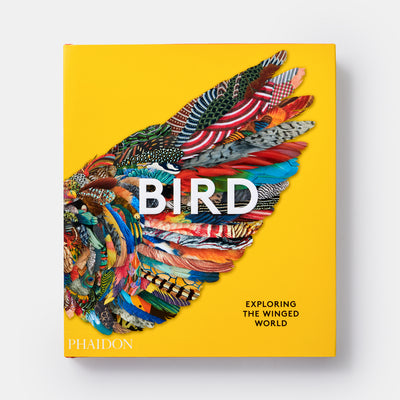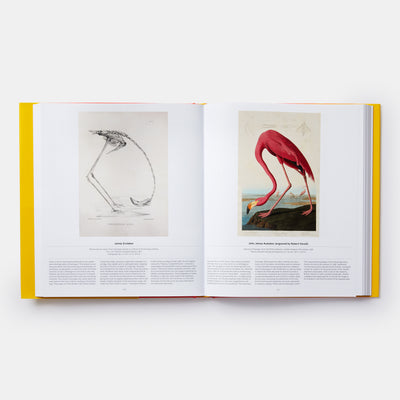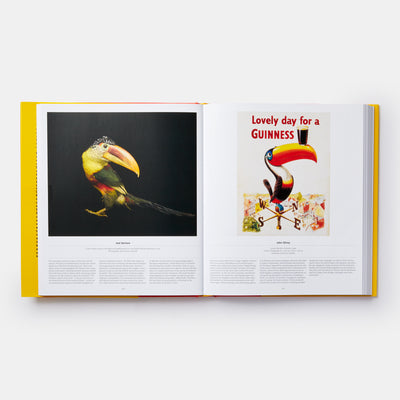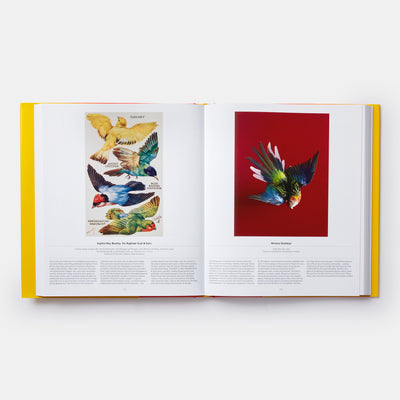























(Main image above Robert Indiana, The American LOVE (White Blue Red), 1966/2000. Image credit: Artwork: © The Robert Indiana Legacy Initiative / Artists Rights Society (ARS), NY / Photo: Christopher Stach. Courtesy Kasmin Gallery, New York. Polychrome aluminum. 72 × 72 × 36 in. 182.9 × 182.9 × 91.4 cm)
The word ‘iconic’ is overused and abused in the art world. However, it’s a description that can rightly be applied to Robert Indiana’s 1964 one word poem, LOVE. The work has proliferated - in true Pop art form – over the years, as a kind of cultural meme, reimagined into different words and circumstances, even influencing the most iconic symbol of New York City, Milton Glaser’s I ♥ NY logo from 1976.
Part of LOVE’s enduring appeal lies in its immediacy, and its dexterity in translating personal experience into shared meaning. But while everyone loves LOVE, few know the influences and inspirations that played into this cultural phenomenon.
It’s beginnings are clear. The work had its origin in a handmade drawing Indiana sent as a holiday greeting to friends in 1964. One of them was The Museum of Modern Art curator Dorothy Miller.
Miller loved the stacked design with its tilted O and selected it to be featured as a MoMA Christmas card the following year.
 Robert Indiana, The Great LOVE, 1966. Image credit: Artwork: © The Robert Indiana Legacy Initiative / Artists Rights Society (ARS), NY / Carnegie Museum of Art, Pittsburgh. Gift of the Women’s Committee (67.23). Photo: Courtesy the Carnegie Museum of Art, Pittsburgh Oil on canvas. Four panels, overall: 120 × 120 in. (304.8 × 304.8 cm); each panel: 60 × 60 in. (152.4 × 152.4 cm)
Various drawings, prints, and paintings in the series followed. Indiana produced a 12-foot (3.7-m) Cor-Ten sculpture of the word in 1970, and three years later, the US Postal Service issued an eight-cent LOVE stamp with a circulation of more than 330 million.
But while Indiana’s imagery is universally recognized, it’s not always understood. Our new monograph, Robert Indiana: An American Icon, reveals the true depth and complexity behind one of the most recognisable, but perhaps least understood, figures in American art.
In it, Prudence Peiffer discusses Indiana’s investigation of American identity. Richard Meyer explores how the inclusion of language in his work allowed Indiana, as a gay artist, to express ideas that often had to remain indirect in mid-century America. Meanwhile, a historic essay by Robert Pincus-Witten situates Indiana within the vibrant artistic community of New York’s Coenties Slip, a creative hub for artists such as Agnes Martin and Indiana’s partner, Ellsworth Kelly.
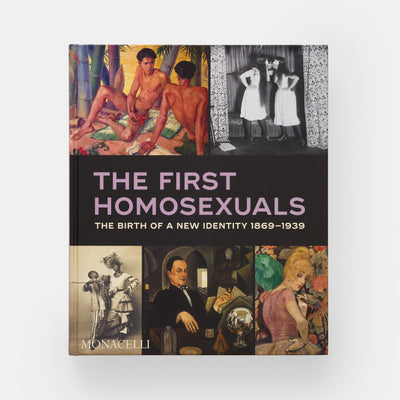
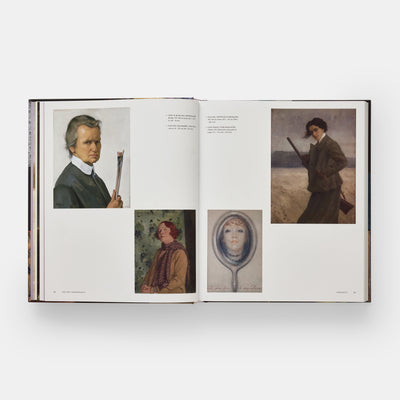
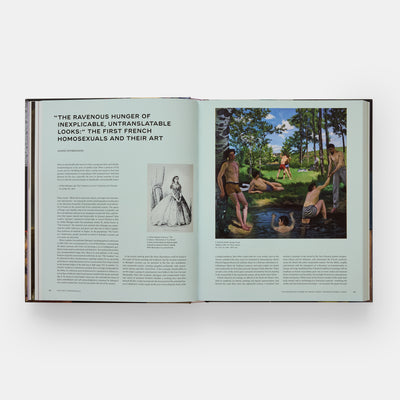
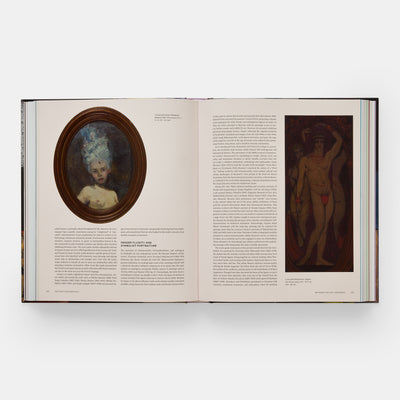
Robert Indiana: An American Icon offers a fresh perspective on a globally recognized artist and is the first to be published since his death, and with its three expert essays, offers a new and significant contribution to the understanding of his work. The book uncovers the deeper dimensions of his practice, revealing an artist whose work challenged the idealized image of the American Dream.
Perhaps no work embodies this part of his artistic legacy more clearly than LOVE. In an interview with the historian, author and TV producer Barbaralee Diamonstein-Spielvogel, reprinted in the book, Indiana revealed the piece’s beginnings, how its primary colors blue, green, and red, were inspired by the memory of his father, and why he gave the O in LOVE a forward slant.
 Robert Indiana, LOVE Cross, 1968. Image credit: Artwork: © The Robert Indiana Legacy Initiative / Artists Rights Society (ARS), NY / The Menil Collection, Houston. Photo: Courtesy the Menil Collection, Houston, Texas. Oil on canvas. Five panels, overall: 15 × 15 ft. (4.6 × 4.6 m); each panel: 5 × 5 ft. (1.5 × 1.5 m)
“It came, of course, from a spiritual rather than erotic beginning,” Indiana says. “When I was a child, I was exposed to and involved in the Christian Science church. And all Christian Science churches are very prim and pure. Most of them have no decoration whatsoever, no stained-glass windows, no carvings, no paintings. And, in fact, only one thing appears in a Christian Science church, and that’s a small, very tasteful inscription in gold, usually, over the platform where the readers conduct the service. And that inscription, of course, is ‘God Is Love.’
Although the Love Is God canvas bears no relationship to what now has become a logo, it started me thinking about the subject of love. I had been at one time employed as a typist to the man who was to become the bishop of California. He, of course, was greatly involved with the subject of love, particularly from an ecclesiastic standpoint. All these things kind of came together.
I like to work on a square canvas, and since the way I put the letters down it is the most economical, the most dynamic way to put four letters on a square canvas— That is how the LOVE came about. When I did the first LOVE, or the first LOVEs, I wasn’t thinking at all about what would happen. However, just as I was tackling the subject, I was invited by the Museum of Modern Art to design a postcard to benefit the Junior Council and therefore the museum. And on my desk at that particular time, or on my painting table, were LOVEs that I was doing, and the thought occurred, what better subject for a Christmas card? This actually preceded my 1966 LOVE show, and that Christmas card at the Museum of Modern Art became the best-selling Christmas card that they were ever to commission.
The words usually occupy a much less dominant position. That was part of the most dynamic arrangement, I believe. The tilted O is a very common typographic device, and though I’ve never been interested in typography, I do know a little bit about it. I never paint with stencils, but I design with stencils, nineteenth-century brass stencils. And when I was playing with the stencils, this was certainly the most effective and most dynamic way to arrange them. You can’t really play with the other letters. The O is playable.

Robert Indiana with one of his cats at his studio and living quarters at 2 Spring Street, New York, c.1970. Image credit: Courtesy Robert Indiana papers, Archives of American Art, Smithsonian Institution
LOVE looks like a typographic exercise, but in most of my other paintings, I don’t think that necessarily comes to mind, because in all of them except the LOVEthere’s more play of composition and forms and shapes.” Indiana then goes on to reveal at least one of the inspirations for the colors of the work.
“Most of my work is very autobiographical in one way or another. In the thirties, my father worked for Phillips 66, when all Phillips 66 gasoline stations were red and green: the pumps, the uniforms, the oil cans. Frank Phillips, who founded the company, just had a thing about red and green, and as soon as he died, the company changed everything. There was no longer any red and green. But when I was a kid, my mother used to drive my father to work in Indianapolis, and I would see, practically every day of my young life, a huge Phillips 66 sign. So it is the red and green of that sign against the blue Hoosier sky. The blue in the LOVE is cerulean. Therefore my LOVE is a homage to my father.”
However, Indiana was talking to Diamonstein-Spielvogel in 1978, long before his relationship with fellow painter Elsworth Kelly was known outside their milieu. In interviews around the time Indiana referred to Kelly as a “close friend” rather than his partner. It is widely believed the colors used in the original LOVEwere also inspired by Ellsworth Kelly’s 1963 painting Red Blue Green.
In a 1976 interview with Donald B Goodall, reprinted in Robert Indiana: An American Icon, Indiana says: “Kelly is the chief influence upon my color. No one more impressed me with the use of primary color. Being a personal friend. Kelly simply made me aware of the use of primary color and of hard edges.”

Read more in our book, Robert Indiana: An American Icon, featuring contributions from: Emeline Salama-Caro, managing director of The Robert Indiana Legacy Initiative; Simon Salama-Caro, author of The Robert Indiana Catalogue Raisonné and a longtime steward of the work of Robert Indiana; and Richard Meyer, the Robert and Ruth Halperin Professor in Art History at Stanford University.