



![Handwork: Handcrafted Objects that Made America [Craft in America]](http://www.phaidon.com/cdn/shop/files/M-handwork-en-3727-3d-standing-front-3000_cf7b8381-b3a2-41fd-86da-6fe623fb0a35.jpg?v=1784715138&width=400)
![Handwork: Handcrafted Objects that Made America [Craft in America]](http://www.phaidon.com/cdn/shop/files/M-handwork-en-3727-3d-overview-3000_038c21c2-0af7-41e2-8a96-9b0beaf9c2d6.jpg?v=1784715138&width=400)
![Handwork: Handcrafted Objects that Made America [Craft in America]](http://www.phaidon.com/cdn/shop/files/M-handwork-en-3727-3d-spread-1-3000_675d5a59-80e7-4b98-bb57-f9d68d61b20d.jpg?v=1784715138&width=400)
![Handwork: Handcrafted Objects that Made America [Craft in America]](http://www.phaidon.com/cdn/shop/files/M-handwork-en-3727-3d-spread-2-3000_a21c9230-7856-470d-8101-09ae2fef75e3.jpg?v=1784715138&width=400)
![Handwork: Handcrafted Objects that Made America [Craft in America]](http://www.phaidon.com/cdn/shop/files/M-handwork-en-3727-3d-spread-3-3000_6dbd48c4-eaab-4b0d-86a2-19b97d8be954.jpg?v=1784715138&width=400)
![Handwork: Handcrafted Objects that Made America [Craft in America]](http://www.phaidon.com/cdn/shop/files/M-handwork-en-3727-3d-spread-4-3000_851a14d9-3b23-4197-85c5-3a4503b24548.jpg?v=1784715138&width=400)
![Handwork: Handcrafted Objects that Made America [Craft in America]](http://www.phaidon.com/cdn/shop/files/M-handwork-en-3727-3d-spread-5-3000_232b034c-682e-4a6f-b47b-81d5a99dd497.jpg?v=1784715138&width=400)
![Handwork: Handcrafted Objects that Made America [Craft in America]](http://www.phaidon.com/cdn/shop/files/M-handwork-en-3727-3d-spread-6-3000_4c787d9d-1fb6-4812-9652-d15d93423bc0.jpg?v=1784715138&width=400)


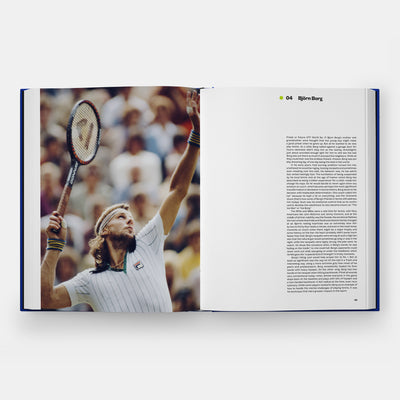

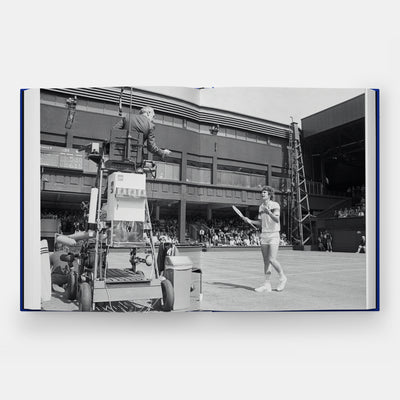


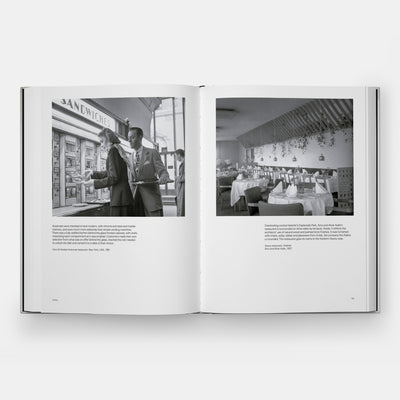
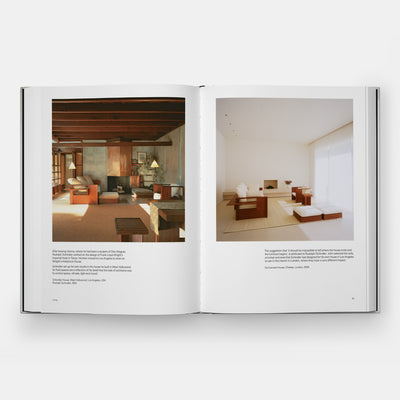
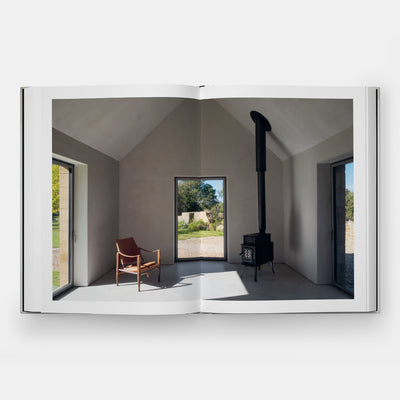
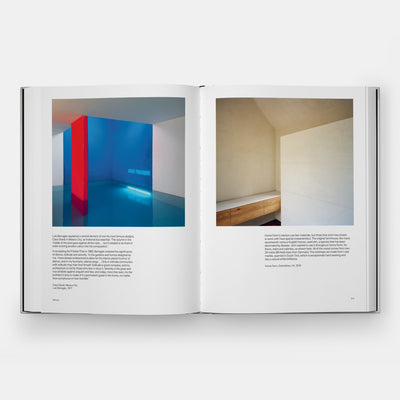
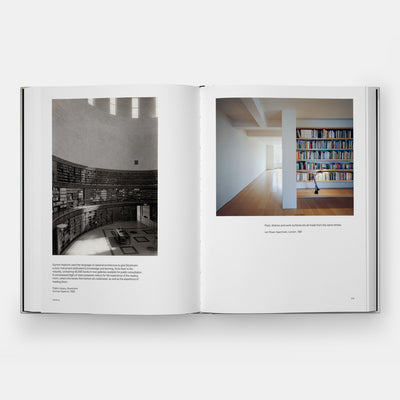
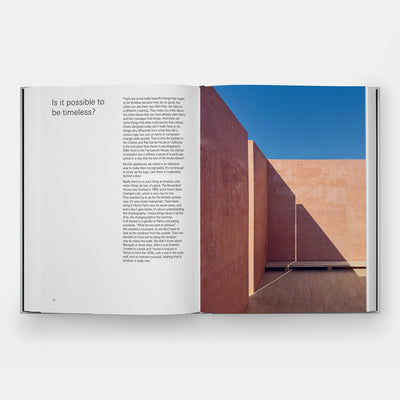



















With more than 3 million species estimated worldwide, fungi make up our fifth natural kingdom and are one of the most diverse and mysterious living things on the planet. Our new book, Fungi: The World of Mushrooms, takes a deep dive into this wondrous world of mushrooms and how they’ve been depicted in art, science, history, and culture.
This comprehensive survey covers all types of mushrooms—from familiar and much-loved culinary favorites to woodland and tropical varieties—as well as all fungi components from stems and roots to caps, gills, and spores. Featured works also explore the psychedelic and medicinal properties of mushrooms, as well as foraging and the use of mycelium in sustainable fashion.
The book showcases how mushrooms have been depicted across an extensive range of media from botanical illustration, macrophotography, and film to jewelry, textiles, even living installations. The entries were curated in collaboration with a panel of global experts and are organized in a stunning visual sequence to highlight thought-provoking contrasts and similarities, regardless of the time period.
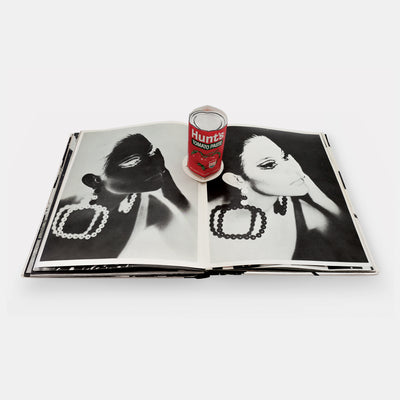
The Super Mario Brothers character Toad might pair up with Yayoi Kusama’s dotted mushroom canvas; Andy Warhol’s Cream of Mushroom Soup could sit next to a Beatrix Potter illustration; or the dancing mushrooms from Fantasia might be seen alongside a fungi-inspired couture gown by Rahul Mishra.

Fungi features 200 large-format images, each with a short, accessible text that delves into the work and creator, as well as the type of fungi depicted. The foreword is written by London-based author Francesca Gavin who has curated a number of fungi-focused contemporary art exhibitions and runs the @artofmushrooms Instagram account.
Here are 5 fabulous fungi etnries to give you a taste. When you’ve read them get your copy of Fungi: The World of Mushrooms, here.
PEARL COWAN Radiant Void, 2021

Pearl Cowan, Radiant Void, 2021. Picture credit: Courtesy Pearl Cowan and Good Naked Gallery info@goodnakedgallery.com Oil and acrylic on canvas, 20 × 16 in. / 50.8 × 40.6 cm. Private collection
Framed by an abstract expanding pink aura, the ashy gray fruiting body of a mushroom grows out of tan soil in an idyllic, open forest landscape. This is the signature compositional approach to fungi in the work of contemporary American painter Pearl Cowan (b. 1982). Born in Texas and based in Massachusetts, Cowan graduated from the University of Texas at San Antonio in 2006 and has exhibited her intimate works on canvas and paper across the United States, as well as in The Art of Mushrooms at the Fundação de Serralves in Porto, Portugal. Her oil, gouache, and watercolor paintings depict detailed fungi in sublime landscapes surrounded by geometric forms. Cowan’s Radiant Void series of works originated in 2019 as a response to her own loss of faith and renegotiation of ideas of the divine. The works mix both botanical illustration and experiments in color theory with diagrammatic forms that emerged at the start of the twentieth century around abstraction in the work of spiritual artists such as Emma Kunz and Hilma af Klint. Cowan’s take is more modern, however, almost veering toward photorealism. She has also used a similar approach for tropical flowers, again fusing botanical detail with shapes that imply spiritual enlightenment. The human figure is absent in these works. Instead, we are presented with something purely based in nature—the meeting place of flora, fauna, fungi, and the divine.
DANIEL DEL CORE IN COLLABORATION WITH DAVID ÅBERG Mushroom Mask, 2021
 Daniel Del Core in collaboration with David Åberg, Mushroom Mask, 2021. Picture credit: Artist: Björk, Photographer: Vidar Logi, Styling: Edda Gudmundsdottir, Look/Dress: Daniel Del Core, Mask: Daniel Del Core in collaboration with David Åberg Stereolithography, resin, air-brush, and lacquer, 10 5/8 × 8 7/8 × 7 3/8 in. / 27 × 22.5 × 18.7 cm
As a musical artist, Björk is a master of invention and reinvention, moving deftly between genres and styles, constantly pushing the envelope in the pursuit of transcendence. And in the annals of fashion risk-takers, she is similarly fearless—and peerless. This fantastic fungi ensemble fits in beautifully with the artist’s audacious oeuvre. Worn for the musician’s launch of the album Fossora (itself fueled by the artist’s interest in mushrooms), the dress and mask were featured at the Nobel Prize Museum in Stockholm in Fungi—in Art and Science, an exhibition celebrating mushrooms’ wide-ranging influences in art and culture. Daniel Del Core (b. 1988), who designed for Gucci before establishing his own eponymous brand at just age thirty-two, created a stunning debut collection inspired by fungi and other wonders of the natural world. The full-length black-and-green couture gown pictured here was sparked by the idea of a field of bioluminescent mushrooms at night. The materials, Lurex and transparent nylon, further reinforce the otherworldly greenish glow. To complete the look, Del Core enlisted Swedish artist David Åberg (b. 1977), who crafted several pieces for the collection, including the mushroom mask seen here. Combining technology with traditional sculptural techniques, Åberg uses 3D-printing technology to create works that, in the artist’s words, blur the line between dream and reality, something this surrealistic, face-hugging creation most elegantly exemplifies.
NICOLAS PARTY Portrait with Mushrooms, 2019
 Nicolas Party, Portrait with Mushrooms, 2019. Picture credit: © Nicolas Party/Courtesy the artist and Hauser & Wirth (page 219) Soft pastel on linen, 59 × 50 in. / 149.9 × 127 cm Private collection
The dreamy paintings of Swiss figurative artist Nicolas Party (b. 1980) draw on both art traditions and surreal imagery to create uncanny other worlds. Party’s early career as a graffiti artist and muralist established in him a confidence in working on a large scale and with bold color, lending a contemporary feel to his work, which is also inspired by traditional techniques and materials. He pays tribute to the historical art canon by using pastels—more commonly associated with the whimsical rococo style from the eighteenth century—and referencing the work of the Old Masters to create a body of work distinctive for saturated tones and overemphasized forms. At first glance, his portraits, landscapes, and still lifes have a sense of the familiar that, upon closer inspection, is belied by otherworldly detailing. His figures are often hard to place—frequently androgynous, they can appear in masks or with features that are almost, but not quite, human, juxtaposing style cues from the Renaissance and the clean lines of graphic design. Party also draws upon motifs from the natural world, including the forest, mushrooms, and insects, most notably in his Sottobosco series, where he explores the mysteries of the forest floor. In Portrait with Mushrooms— part of the Sottobosco series—the oversize fungi encompass hidden ecosystems and a vivid undercurrent of life. Party also uses the mushrooms as symbolic interpretations of metamorphosis, alongside the butterflies, frogs, and flowers referenced throughout the series.
CHRISTIAAN NAGEL Mushroom in Blue, 2019
 Christiaan Nagel, Mushroom in Blue, 2019. Picture credit: Christiaan Nagel Studio (page 144) Polyurethane, H. 393/8 in. / 100 cm, Rue Cazotte, Paris
Noticed only by those glancing up from the street, this oversize blue mushroom—high above the heads of passersby on Rue Cazotte in Paris—delighted and perplexed in equal measure. Attached to the rooftop of a commercial property, the lightweight polyurethane sculpture was created by South African street artist Christiaan Nagel (b. 1982), who has installed his vividly colored toadstools atop buildings and other tall structures around the world, from London and Cape Town to New York and Berlin. In the early 2010s, his vibrant fungi began appearing all over East London’s rooftops as the area’s street art scene burgeoned primarily on the walls below. For Nagel, mushrooms are an apt metaphor for street art, popping up unexpectedly overnight with legal and illegal implications. Fungi on buildings is generally considered a problem, a sign of disrepair, damp, or rot. Yet Nagel’s vibrant and uplifting mushrooms enliven their urban locations. Before turning to sculpture, Nagel was a painter, and his mushrooms, made with expanding polyurethane foam, have a distinctly painterly quality. The domed caps are made by squirting foam over an exercise ball, and while each one adopts the classic mushroom shape, their squiggly surfaces resemble worm castings, albeit colored with sunshine yellow, neon pink, electric blue, and other artificial hues. In addition to his playful street-art installations, Nagel makes bronze mushrooms for private galleries, a range of mini mushroom collectibles, and has even designed a mushroom-themed chessboard.
KATHLEEN RYAN Bad Lemon (Creep), 2019
 KATHLEEN RYAN Bad Lemon (Creep), 2019 Amazonite, aventurine, black onyx, Italian onyx, turquoise, labradorite, carnelian, ocean jasper, sesame jasper, serpentine, fluorite, Ching Hai jade, snow quartz, magnesite, agate, brecciated jasper, rhodonite, rhodochrosite, red agate, garnet, tree agate, rose quartz, amethyst, lilac stone, limestone, marble, mother-of-pearl, bone, freshwater pearl, glass, and steel pins on coated polystyrene, 20 × 28½ × 20 in. / 50.8 × 72.4 × 50.8 cm Hiscox Collection
While many fungi are cultivated for consumption, it is never a welcome moment when one grabs a piece of fresh fruit to eat, only to discover a fuzzy, powdery coating of mold on its skin. California born artist Kathleen Ryan (b. 1984) plays with this revulsion response in her intricate sculptures of rotten fruit. On closer inspection of her artwork, the blooms of white, gray, and green “fungus” are revealed as meticulously placed, sparkling crystals and semiprecious gemstones, which sit alongside a uniform surface of tiny glass beads. In using the more valuable materials for the most repellent part, the artist inverts typical notions of value. Ryan also seeks to draw attention to the delicate beauty and buzzing energy of the fungus, explaining that the “fruit is dying, but mold is thriving.” Such fungal invasions begin when airborne spores land on fruit skin and, feeding off sugars and moisture, grow as multicellular filaments called hyphae. Often spreading from a patch where the peel has been damaged, enabling the pathogen to access the nutritious flesh more easily, the interior is penetrated with fungal threads that take hold and thrive, sometimes rendering the fruit toxic to humans. Due to the high levels of acidity in their flesh and antifungal essential oils in their rinds, lemons are resistant to many common fungi that spoil other fruit. However, some, such as the bluish-green–and–white Penicillium digitatum and Penicillium italicum, have evolved to tolerate acidity, and therefore lemons are prone to some fungal growth, just as Ryan’s sculpture depicts.
FOLDHAUS COLLECTIVE Shrumen Lumen, 2016
 FoldHaus Collective, Shrumen Lumen, 2016. Picture credit: Artwork: FoldHaus Collective / Photography: Rene Smith Aluminum, steel, polypropylene, interactive electronics, 11–17 × 9–12 ft. / 3.3–5.3 × 2.8–3.7 m. Private collection, San Francisco; and Kiewit Luminarium, Omaha, Nebraska
San Francisco; and Kiewit Luminarium, Omaha, Nebraska A garden of giant mushrooms blinks kaleidoscopically against the night sky at Burning Man, but this is no hallucination. The mushrooms are the artistic brainchild of FoldHaus, a San Francisco Bay Area art collective dedicated to the intersection of art, engineering, and technology to create never-before-seen innovations in the public art space. FoldHaus premiered its first installation in 2010 and is currently led by designer Joerg Student and kinetic artist Jesse Silver. In Shrumen Lumen, the group constructed five giant fungi from eighteen sheets of corrugated plastic totaling more than 893 square feet (83 sq. m). Bent in origami-esque folds, the creases create an elastic form that expands and contracts—the caps of the mushrooms extend as much as 12 feet (3.7 m) in diameter. An interior motor powers an umbrella-like mechanism that creates undulating motion from within. Indeed, these shrooms are built for interaction, with pressure pads housed outside the forms to let onlookers activate the display. Also, inside each installation is a network of LED bulbs, allowing for a dizzying array of lights that blink rhythmically and hypnotically. The kinetic sculptures were funded in part by a Kickstarter campaign and installed for the 2016 Burning Man festival in Nevada’s Black Rock Desert. It has since traveled around the world, from Dubai to New York City, among many other destinations, delighting viewers of all ages with its dazzling illumination, massive scale, and satisfying interactivity.
HEMMERLE Mushroom brooch, 2004

MAIN IMAGE Hemmerle, Mushroom brooch, 2004. Picture credit: Courtesy Hemmerle and Private Collection Pock wood, copper, and white gold, 2 7/8 × 3 in. / 7.2 × 7.5 cm. Private collection
Founded in 1893 in Munich, Hemmerle is a fourth generation family-run jeweler known for creating unique, one-of-a-kind pieces that often juxtapose highend jewels with unexpected, often “lower,” metals and other materials. Hemmerle began as a goldsmith house specializing in providing medals of honor and gem-set adornments for the Bavarian court. While the house was continuously sought after for their impeccable technique and workmanship, it was in 1995 that their signature style emerged. Working on a client commission for a woman who “detested flashy gems” and wore only nineteenth-century Berlin cast-iron jewelry, Hemmerle crafted a piece that set a stunning diamond in a ring made of textured iron. With such a spectacular contrast, it was the beginning of the jeweler’s design-driven, architectural, modernist creations that highlight daring and unexpected combinations of colors and textures, and high and low materials. One of Hemmerle’s many high jewelry collections inspired by the natural world, Mushrooms, launched in 2004, embodies the house’s unique approach. Comprising numerous mushroom brooches, the collection does not feature specific species, but instead uses a self described magical realism to simultaneously capture and render abstract the fungal forms. The piece shown here—composed of pock wood (pockmarked lignum vitae wood), copper, and white gold—resembles many different species of mushrooms while also redefining the form. It represents one of only about two hundred pieces that Hemmerle produces annually, each made by a single skilled craftsman who often devotes hundreds of hours to creating just one piece.
Get your copy of Fungi: The World of Mushrooms, here.