


![Handwork: Handcrafted Objects that Made America [Craft in America]](http://www.phaidon.com/cdn/shop/files/M-handwork-en-3727-3d-standing-front-3000_cf7b8381-b3a2-41fd-86da-6fe623fb0a35.jpg?v=1784715138&width=400)
![Handwork: Handcrafted Objects that Made America [Craft in America]](http://www.phaidon.com/cdn/shop/files/M-handwork-en-3727-3d-overview-3000_038c21c2-0af7-41e2-8a96-9b0beaf9c2d6.jpg?v=1784715138&width=400)
![Handwork: Handcrafted Objects that Made America [Craft in America]](http://www.phaidon.com/cdn/shop/files/M-handwork-en-3727-3d-spread-1-3000_675d5a59-80e7-4b98-bb57-f9d68d61b20d.jpg?v=1784715138&width=400)
![Handwork: Handcrafted Objects that Made America [Craft in America]](http://www.phaidon.com/cdn/shop/files/M-handwork-en-3727-3d-spread-2-3000_a21c9230-7856-470d-8101-09ae2fef75e3.jpg?v=1784715138&width=400)
![Handwork: Handcrafted Objects that Made America [Craft in America]](http://www.phaidon.com/cdn/shop/files/M-handwork-en-3727-3d-spread-3-3000_6dbd48c4-eaab-4b0d-86a2-19b97d8be954.jpg?v=1784715138&width=400)
![Handwork: Handcrafted Objects that Made America [Craft in America]](http://www.phaidon.com/cdn/shop/files/M-handwork-en-3727-3d-spread-4-3000_851a14d9-3b23-4197-85c5-3a4503b24548.jpg?v=1784715138&width=400)
![Handwork: Handcrafted Objects that Made America [Craft in America]](http://www.phaidon.com/cdn/shop/files/M-handwork-en-3727-3d-spread-5-3000_232b034c-682e-4a6f-b47b-81d5a99dd497.jpg?v=1784715138&width=400)
![Handwork: Handcrafted Objects that Made America [Craft in America]](http://www.phaidon.com/cdn/shop/files/M-handwork-en-3727-3d-spread-6-3000_4c787d9d-1fb6-4812-9652-d15d93423bc0.jpg?v=1784715138&width=400)





















Yayoi Kusama, who has died aged 97, was an outsider who went on to become one of the most recognisable artists on the planet.
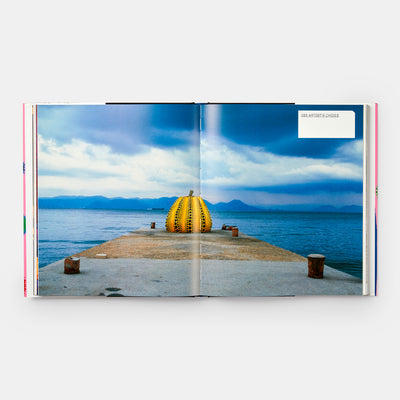
By the end of her long life, a polka dot had become more than just a pattern, a pumpkin more than a vegetable, a mirrored room no longer just a rectangular space. They had become Kusama: endlessly reproducible, but somehow still strange and affecting.
The prettiness of her work could sometimes obscure the severity of its message. Her art repeatedly asks the same unsettling question: What happens when the self is repeated so many times that it disappears?
The repetition in her work was her way of confronting fear. For Kusama, the act of making another dot, and then another, became a way of imposing order on an overwhelming visual universe.
She died in Tokyo on August 14, at 97, having lived in a psychiatric hospital, in order to manage her health and preserve her practice, for the past few decades. Announcing her passing this week, her studio said that “she had remained devoted to artistic creation until the end.”
Perhaps inevitably, her work became synonymous with the rise of Instagram. Indeed, her late career output seemed tailor made for the grid – a series of dots, nets, mirrors, flowers and pumpkins, along with a sense of self identity that had characterised her work right from the start. As such, she was perfect for our moment, and as such, for many years she was the top selling contemporary artist in her lifetime.

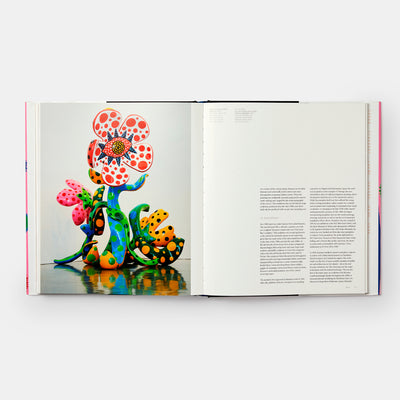
Kusama first experienced hallucinations as a child in Matsumoto, Japan. She saw patterns overwhelm the world around her; flowers seemed to speak. She began translating those visions into drawings.
Her mother opposed her artistic ambitions, but Kusama persisted, eventually leaving Japan for New York in 1957, believing America would offer the freedom unavailable at home. New York wasn’t exactly welcoming. She arrived with little money into a hugely male dominated art scene.
But Donald Judd, then an influential critic and later to become a friend, recognized the force of what he saw. He called her an “original painter” and praised her work as “advanced and remarkable,” an early acknowledgment that this newcomer to the Avant-garde was intent on upending it.

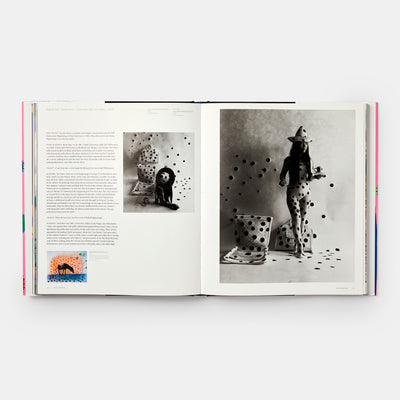
In 1959 she exhibited her first New York series of Infinity Nets, paintings composed of obsessive webs of tiny marks, microscopic and at the same time almost cosmic. In the 1960s she staged naked events that were part provocation, part antiwar protest, part feminist intervention and part deliberate publicity seeking.
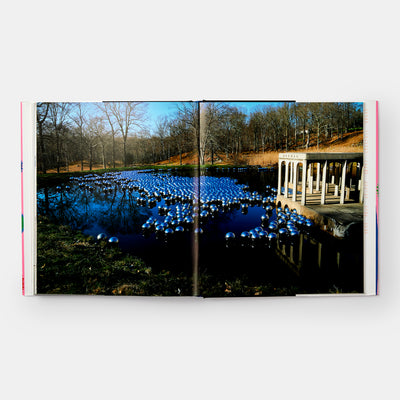
She multiplied dots across paintings and furniture, and phallic forms across sofas and boats. She multiplied herself through performances and 'happenings.' At the 1966 Venice Biennale, without an official invitation, she installed Narcissus Garden: 1,500 mirrored spheres that she offered to visitors for $2 apiece. It was art, commerce, spectacle and self-promotion all wrapped up together.
Kusama understood attention before the attention economy existed. The young artist was also painfully conscious of appropriation. She believed some of her male contemporaries had borrowed ideas from her without giving her sufficient credit.

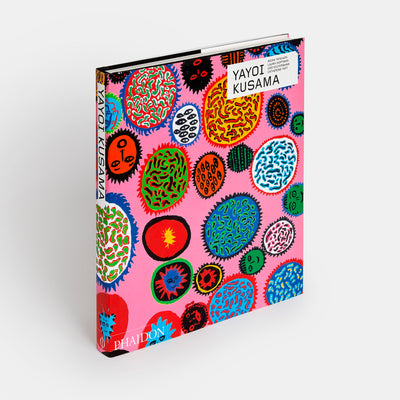
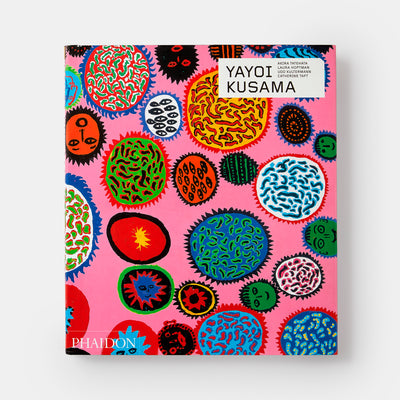
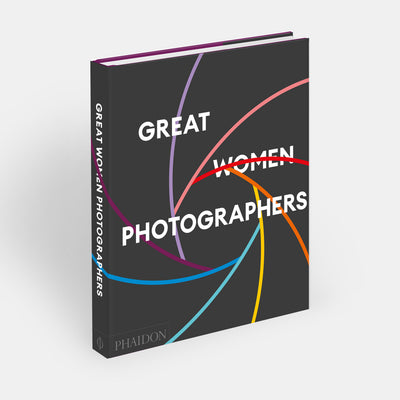
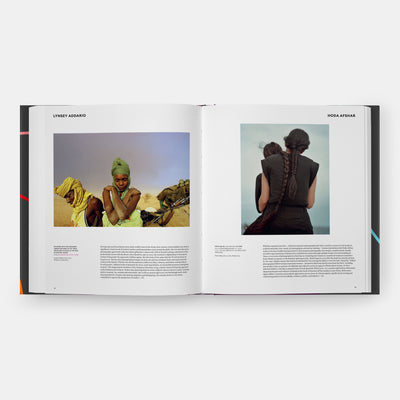
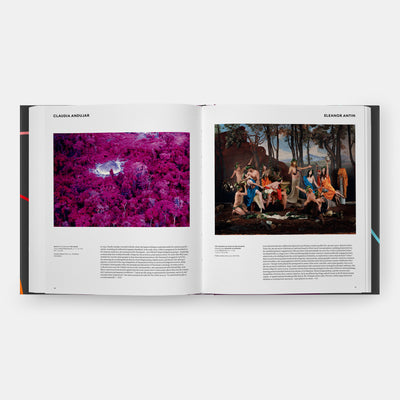
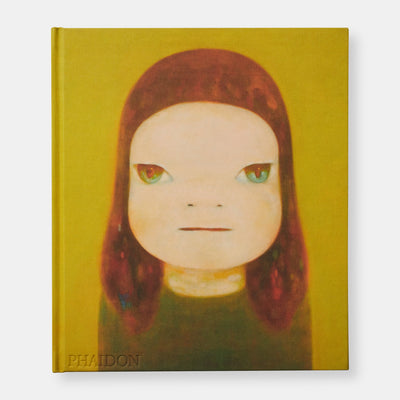
Her suspicions were not always easily separable from the psychological challenges she was experiencing, but the underlying historical problem was real: women and artists working outside the established centres of power often watched others receive recognition for innovations they themselves pioneered, a reality our revised and expanded Contemporary Artist Series book Yayoi Kusama and the books Great Women Artists, Great Women Painters, Great Women Sculptors, and Great Women Photographers explore.
By the 1970s, Kusama returned to Japan. After suicide attempts and worsening mental-health struggles, she entered a psychiatric hospital in Tokyo in 1977, eventually making it her permanent home.
She continued to work from a studio near the hospital. She painted, sculpted, wrote poetry, and developed a visual language that would eventually make her ubiquitous. Her psychiatric treatment, her isolation, obsessive practices and extraordinary discipline existed alongside one another and fed into, rather than hindered, her artistic output.
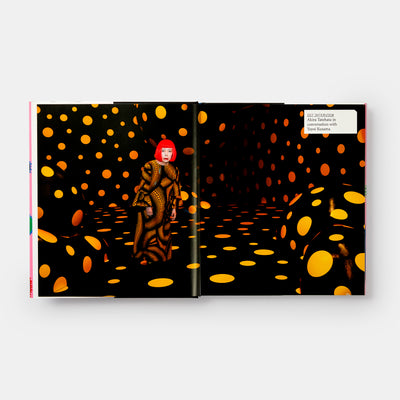
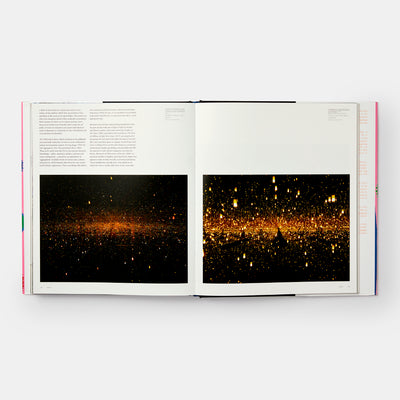
Her great late-career triumph was the Infinity Mirror Room. The basic idea was simple, almost childlike, in fact - mirrors, lights, repetition - but the effect on anyone lucky enough to experience it in person, in galleries and museums across the world, was literally metaphysical.

When you entered one of the rooms the boundaries between body and environment seemed to dissolve; you became one point among many. It might seem lazy to suggest the effect is akin to a psychedelic experience, but it is also true. The room became the universe, the viewer became infinitely important and, at the same time, cosmically insignificant.
The transformation made Kusama perfectly suited to an Instagram moment. Visitors queued for hours to spend minutes inside her installations, emerging with photos that turned themselves into extensions of the artwork. For many it would be a first taste of public art. Many will have been changed profoundly by the experience.
As Michele Robecchi, Phaidon's Commissioning Editor for Art, told Phaidon.com:
“There is an interesting duality in Kusama’s work – on the one hand her paintings and sculptures are vibrant, friendly, accessible and inclusive. On the other hand, there is this dark undertow and existential depth."
Reconciling these two positions, while honouring Kusama's history, was an ambitious objective Robecchi faced when creating Phaidon's revised and expanded edition of our Contemporary Artist Series book Yayoi Kusama.
“Yayoi Kusama was one of the first artists to do a monograph within Phaidon’s Contemporary Artists Series back in 2000," Robecchi told Phaidon.com. "It is one of the many books my predecessors worked on that I wish I had done myself. When I met her on the occasion of her European retrospective in 2012, I saw an opportunity as times were clearly ripe for a revised and expanded edition. By then Kusama was extremely busy and very much in demand, so I was absolutely delighted when she accepted our invitation.
“It was one of the most creative, engaging and respectful dialogues I have ever experienced. If we delivered, it is largely due to Ms. Kusama and her team. It is a testament to her legacy and the immense impact her work had on the world. She will be greatly missed.”

That immense impact Robecchi highlights will doubtless be felt for generations to come. Kusama took experiences that might have isolated her, the hallucinations, the obsessive thoughts, and transformed them into a language understood and shared by millions. In so doing she became one of the most recognisable artist-personas of our time.
The red wig, the polka dots, the sunglasses, the pumpkins, the gesamtkunstwerk theatricality of her public image. She understood that an artist could become an icon, and that an artwork could exist simultaneously in a museum, on a fashion collaboration, a tote bag or inside someone's phone.
The official statement from her studio said that Kusama "continued to explore eternal love and the soul until the end”. But the most concise description of her most important achievement among many, was her own. She once said, “I was given a sad life by fate, but I think I won a happy life.”