



![Handwork: Handcrafted Objects that Made America [Craft in America]](http://www.phaidon.com/cdn/shop/files/M-handwork-en-3727-3d-standing-front-3000_cf7b8381-b3a2-41fd-86da-6fe623fb0a35.jpg?v=1784715138&width=400)
![Handwork: Handcrafted Objects that Made America [Craft in America]](http://www.phaidon.com/cdn/shop/files/M-handwork-en-3727-3d-overview-3000_038c21c2-0af7-41e2-8a96-9b0beaf9c2d6.jpg?v=1784715138&width=400)
![Handwork: Handcrafted Objects that Made America [Craft in America]](http://www.phaidon.com/cdn/shop/files/M-handwork-en-3727-3d-spread-1-3000_675d5a59-80e7-4b98-bb57-f9d68d61b20d.jpg?v=1784715138&width=400)
![Handwork: Handcrafted Objects that Made America [Craft in America]](http://www.phaidon.com/cdn/shop/files/M-handwork-en-3727-3d-spread-2-3000_a21c9230-7856-470d-8101-09ae2fef75e3.jpg?v=1784715138&width=400)
![Handwork: Handcrafted Objects that Made America [Craft in America]](http://www.phaidon.com/cdn/shop/files/M-handwork-en-3727-3d-spread-3-3000_6dbd48c4-eaab-4b0d-86a2-19b97d8be954.jpg?v=1784715138&width=400)
![Handwork: Handcrafted Objects that Made America [Craft in America]](http://www.phaidon.com/cdn/shop/files/M-handwork-en-3727-3d-spread-4-3000_851a14d9-3b23-4197-85c5-3a4503b24548.jpg?v=1784715138&width=400)
![Handwork: Handcrafted Objects that Made America [Craft in America]](http://www.phaidon.com/cdn/shop/files/M-handwork-en-3727-3d-spread-5-3000_232b034c-682e-4a6f-b47b-81d5a99dd497.jpg?v=1784715138&width=400)
![Handwork: Handcrafted Objects that Made America [Craft in America]](http://www.phaidon.com/cdn/shop/files/M-handwork-en-3727-3d-spread-6-3000_4c787d9d-1fb6-4812-9652-d15d93423bc0.jpg?v=1784715138&width=400)






































(Main image above: Christmas Ube Cake, Philippines. Submitted by Florence Mae Maglanoc. Photography: Liz Seabrook)
“Let’s just say I've always had a sweet tooth. There's always been something special to me about time spent in the kitchen, being around family baking, or being present at someone else's house and greeted with something special.”
For the food historian and baking enthusiast Ben Mervis, the festive holidays of his childhood forged a link between a special occasion and food that wouldn't be eaten at any other time of year.
"When you’re a kid, those moments become really powerful memories," he tells Phaidon.com, "associating certain times of year with the anticipation of something rich, sweet or savory coming from the oven, something you loved."
"For me, birthdays were always a big deal, with my mom making a classic American vanilla or chocolate birthday cake. I made my own birthday cake last month and I revisited the memory of licking the spoon as I was making the buttercream. The book is really rooted in those moments when special occasions call for special treats.”
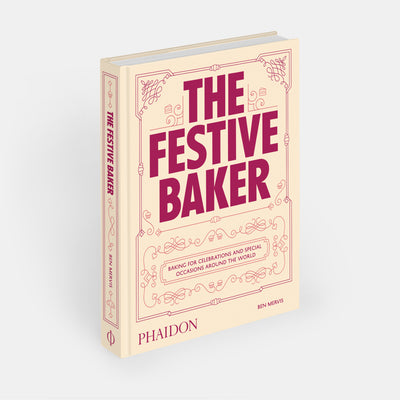
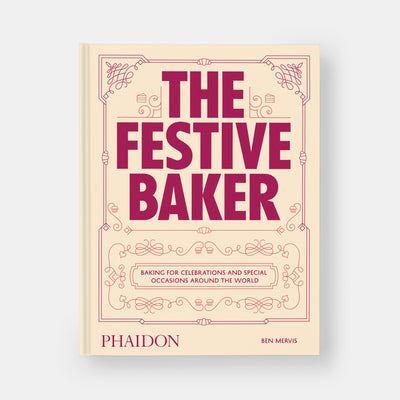
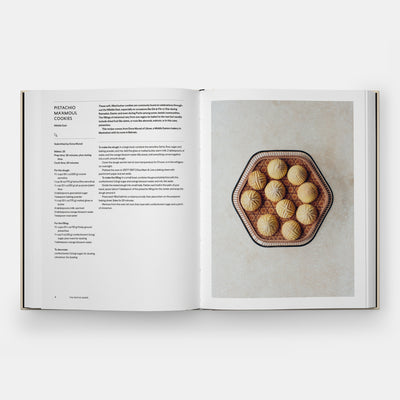
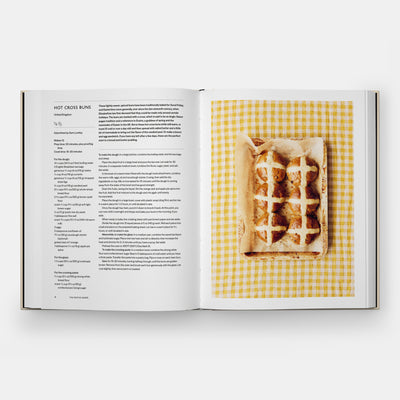
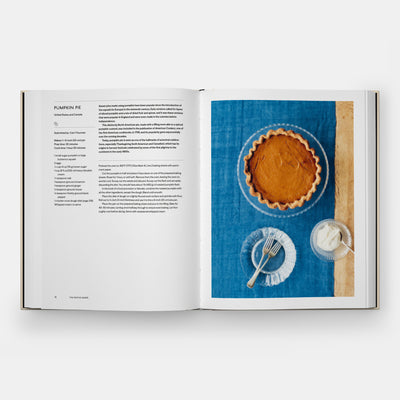
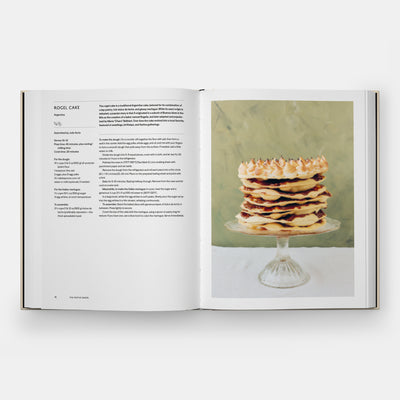
The book in question is The Festive Baker, an expertly curated and extraordinary collection of more than 170 sweet and savory baking recipes to mark festive events, celebrations, and cultural traditions around the world. Organized chronologically by month, the recipes span 56 countries and cover more than 50 celebratory events and special occasions.
 Kunafah, Egypt. Submitted by Moustafa Elrefaey. Photography: Liz Seabrook
It details the history and cultural significance of each event, and gives guidance on how the food is traditionally served. It also offers a fascinating insight into how baking traditions differ across the globe, and underlines why people are attached to them, be it a reminder of their childhood, a part of family tradition, a means of connecting with friends, or the surrounding community.
“I didn't think the book should only be about beautiful bakes with great recipes attached to them," Ben tells us. "It should be about learning, it should be about understanding, respecting, and delving deeper into a lot of different traditions - contextualising these histories but also the histories of the attached holidays as well."
"The introduction to each recipe and understanding the cultural socio-economic context in which these recipes emerge is so essential to our understanding of them. For many people, especially readers who maybe don't come from a very religious background, it gives you the opportunity to understand other cultures and other culture’s values and there's a great connective element there too. Not to be overly cheesy, but it is a lot about seeing each other in the way that you want to be seen and seeing that we're all more similar than we might think.” To celebrate the book's publication, we asked Ben all about it.
 Anzac Biscuits, Australian and New Zealand. Submitted by Maxine Scheckter. Photography: Liz Seabrook
What did you want to explore in creating the book? “I wanted to explore the many culinary and cultural influences that shape baking around the world, and highlight the communities, large and small, whose traditions are all worth bringing to the table. That’s a really core aspect of the book: showing that rich baking traditions aren’t limited to the UK, Italy, France, or the US, but extend across Asia, Africa, South America, the Pacific, and beyond. This book really shows off so many other cuisines you might not know about. And one of the things important to this book is that the recipes are not new and trendy variations. They are tried and tested classics from around the world. Every recipe in the book is something that people grew up with.”
 Bourbon Pecan Pie, United States. Recipe by Camille Cogswell. Photography: Liz Seabrook
The book feels pretty definitive, was a lot of this knowledge already in your head or did it require a lot of research? “I did a lot of research in the beginning, and I came up with 180 recipes - though the book is not meant to be definitive in its composition. There are many other holiday bakes around the world, but this is a sampling of recipes from different cultures, representing different times of year. That’s a really core aspect of the book: showing that rich baking traditions aren’t limited to the UK, Italy, France, or the US, but extend across Asia, Africa, South America, the Pacific, and beyond. I wanted to start with a broad range of cultures and cuisines, then narrow it down to the most interesting examples, both in terms of flavour and the different kinds of bakes they represent.”
“I could only speak to my own experiences growing up, and I do that with some of the recipes in the book. But I wanted to go beyond my own experience and connect with baking experts around the world. I’m very much a writer and researcher, interested in the history of baking, and I wanted to hear people’s own memories of growing up with these bakes - knowing them, loving them, and making them year after year. It was important to me to connect with every contributor who shared a recipe and give them a voice - to have some of the best bakers from around the world explain what makes each bake so special, and to contextualise the recipes: how they’re made, how they’re served, and what they mean within their culture.”
 Torta Delle Rose, Italy. Submitted by Agnese Negrini. Photography: Liz Seabrook
A great roll call of chef names - among them Gaston Acurio, Salma Hage, Reem Kassis, Petty Pandean-Elliott, Rawlston Williams, and Michael W. Twitty - contribute recipes to the book. How did that come about? “I’ve been very lucky. For the last decade, I’ve worked with a food and travel magazine I founded called Fair, where each issue focuses on a different city and tells its story through food and food culture. So many of the people I reached out to were chefs and writers I’d met and worked with over the years, who already think deeply about their cultures through food and baking. That was a great place to start. From there, it was about finding local experts in particular cultures who I felt could speak to the book and its mission in a really meaningful way. And they’ve done exactly that.”
 Pan de Muerto, Mexico. Submitted by Elena Reygadas. Photography: Liz Seabrook
What were the recipes you were most surprised by? “The Philippines and Indonesia, for sure. I could have gone on and done an entire book on baked cakes from this part of the world. That was really surprising to me because they're not cuisines that I have a long association with, but then when you dig into the history and you understand what's influencing the food cultures you begin to see how passionate people are about all kinds of baking there. And so that became an area I really wanted to highlight in the book. We have one recipe from a Sami reindeer herder in the Arctic, which is made using a pine bark flower. She's someone that I've known for years, and I've visited her and really loved her cooking and baking. I wanted to be able to show readers how people use ingredients differently and treat them with the same respect wherever they are in the world.”
 Semlor, Sweden. Submitted by Alice Mahon. Photography: Liz Seabrook
Chinese almond cookies, Victoria sponge cake, pecan pie - what do festive bakes reveal about a country's culture and history? “There are 50 different countries represented in the book, so it’s difficult to describe them all in the same way because every culture is different. And while we’re not looking at cuisines as a whole, but specifically at what gets baked in the oven, baking is still deeply connected to the spices, flavourings, shapes, and decorative traditions of each culture. For example, there are plenty of recipes from Turkey that aren’t baked at all but cooked on the stovetop; recipes from India that are fried rather than baked; and recipes from across Asia that are steamed. So the definition of a ‘bake’ can look very different depending on where you are in the world.”
“What I found fascinating was seeing how different cultures express love, meaning, and tradition through colour, spices, flavour, and shape - the braiding or plating of a loaf or cake, for example, or the incredible elaborateness of how some of these bakes come together. They also mark different times of year and carry deep religious, cultural, and personal meaning.”
 Prinsesstårta, Sweden. Submitted by Cecilia Tolone. Photography: Liz Seabrook
Leafing through the book reveals the relationship between baking and faith. What is the backstory to that? “When you go back in time, you realise that baking wasn’t an everyday activity. It was reserved for the biggest occasions of the year, which, until birthdays became an important personal milestone in the 1800s, were largely religious holidays. In researching the book, I was left with an overwhelming sense of how closely baking has always been tied to faith and community. There were seasonal celebrations too - solstices, harvests, and other important moments in the agricultural year. It makes sense that people would save their ingredients and energy for these special occasions, often working with whatever was naturally available at that time of year.
“Even the idea of ‘festiveness’ is linked to ‘feast’, which in the Christian tradition is connected to feast days, such as the feast day of a saint. The two have been intrinsically linked for centuries, and it’s really only in the last few hundred years that we’ve started to separate them.”
“If you imagine that not everyone had access to, or could afford, ingredients like cooking fat, white wheat flour, or sugar, even a relatively simple recipe - a slightly sweetened, braided brioche, for example - could have been a major celebratory treat. You see this across many cultures, from beautifully braided breads served at Easter to those made for Jewish high holidays. This came up again and again in my research. There are probably many more recipes that could have gone into the book that, by today’s standards, might seem quite plain. But historically, they would have represented something rare and special - made for a particular time of year and shared with a community.”
 Cinnamon Babka, Ashkenazi Jewish. Submitted by Talia Berk. Photography: Liz Seabrook
The book details the festive events linked to each dish. Was there any specific symbolism you came across? “There are, frankly, a lot of saint feast days. But understanding these different religious occasions was fascinating to me. I grew up Jewish, but I’m not terribly religious, so even with some of the Jewish holidays in the book - and certainly with Christian, Muslim, and Hindu celebrations - I was learning about the role baking plays in these traditions and the symbolism behind it. I knew from Jewish tradition, for example, that at Rosh Hashanah you eat something sweet to celebrate a sweet new year, and a round challah symbolises the cycle of the year. But there are so many traditions like this across different cultures.”
“I saw this particularly in some of the Persian recipes in the book, which celebrate Nowruz, the Persian New Year, and in the traditions around Ramadan and Eid. It was a really special way of taking something that is deeply personal and meaningful to many of us - our relationship with baking - and showing how people around the world share that same connection. I think that can be a wonderful way to break down barriers and encourage curiosity about dishes and holidays from cultures we might otherwise never have encountered.”
 Victoria Sponge, United Kingdom. Submitted by Anna Luntley. Photography: Liz Seabrook
Are there countries or regions coming into focus now that have not had the long baking tradition of other countries in the book? “I'd say I noticed this particularly in Asia, which, of course, encompasses an enormous range of cultures and cuisines. Broadly speaking, many of the sweet - if we can call them that - recipes were traditionally steamed, fried, cooked on the stovetop, or simply mixed and chilled or set. They weren’t necessarily made in an oven.”
“I think that over the last several decades, and especially the past 20 years, as cooking and baking have become increasingly globalised, traditional dishes are sometimes being adapted for the oven. That might be because it’s seen as a healthier or more convenient way of preparing them, or simply because you may not have the equipment to steam a large dish or the quantity of oil needed for frying. These changes were already happening over the last century. There are one or two Italian recipes in the book that were traditionally fried but, more recently, have been baked instead. So it’s not just an Asian phenomenon. People in many places are turning to the oven as a more convenient and reliable way of cooking, particularly as ovens have become more precise and dependable.”
 Bánh Bò Nướng, Vietnam. Submitted by Marie Kerkeling. Photography: Liz Seabrook
Has the technology of baking changed the development of festive bakes over the years? “Yes, it certainly had an impact, particularly the growing prevalence of the oven and the role it played in the home. Until well into the 1800s, depending on where you fell on the socio-economic ladder, you might not have had an oven at home at all. There would have been a communal oven in the village, where you’d bring your dough to be baked. So baking might have happened, at most, once a week. As ovens became more accessible, and ingredients became more widely available and affordable, baking and sharing rich, elaborate bakes became more frequent. That’s when we start to see traditions deepen, evolve, and cross-pollinate, with recipes and techniques moving between cultures. And that’s an important part of the story too. The book isn’t just about global baking traditions in isolation, but about the ways cultures have always exchanged and adapted dishes, ingredients, and techniques.”
 Klécha, Iraq. Submitted by Baneta Yelda. Photography: Liz Seabrook
You must have some personal favorites in there, tell us about one or two of them. “I’d be remiss if I didn't have my own family recipe in the book, which is the Noodle Kugel recipe that my mother's cousin made. It's a really interesting recipe. For those who didn't grow up with Jewish American cooking, and who might not have had a noodle Kugel it's very hard to describe, but it's the kind of dish you could kind of eat any time of the day. I’ve had it for breakfast, lunch, dinner and dessert in the past. It is a slightly sweet, slightly savoury kind of pasta bake, with cinnamon and sugar and ricotta or mascarpone. It's very soft and warming and buttery. It’s not overly sweet, but it has that light touch of sweetness. It’s lightly spiced and set like a casserole. On Yom Kippur, one of the biggest days of the year, we would always have noodle kugel as part of the spread to break our fast at the end of the day. I also used to ask for it on my birthdays, so it became a particularly special dish for me. There are many variations of noodle kugel; this isn’t meant to be the definitive version, but it’s the one my family always made and continues to make.”
“I also love the Hungarian recipes. My partner is Hungarian, so we have a shared obsession with anything packed with sweet poppy seed filling, which also connects with my Jewish Ashkenazi background. One recipe that really surprised me was Romanian pasca, a rich brioche tart, almost like a custardy cheesecake, with a braided brioche crust. I’d never had anything quite like it.”
Get your copy of The Festive Baker: Baking for celebrations and special occasions around the world, here