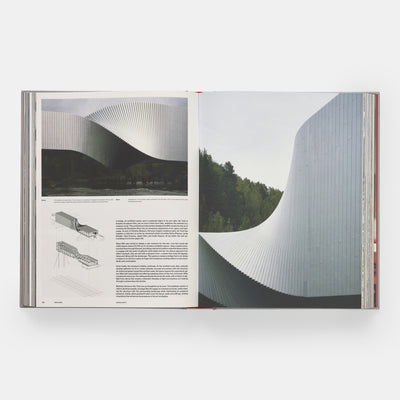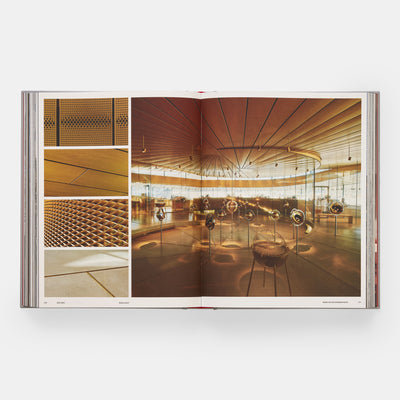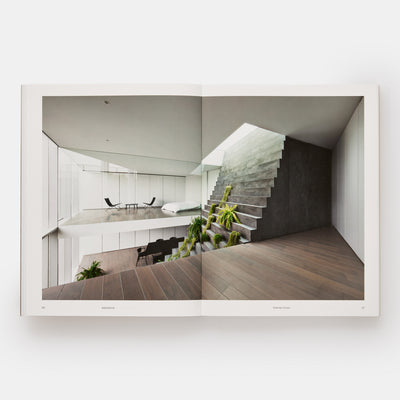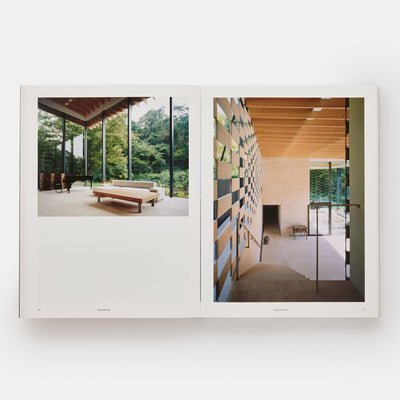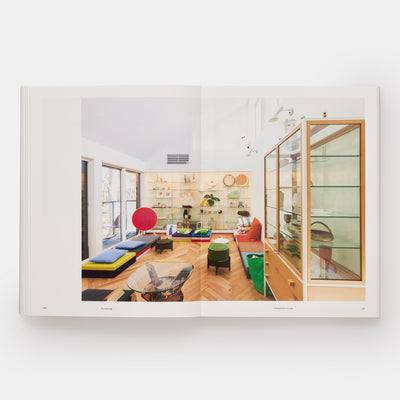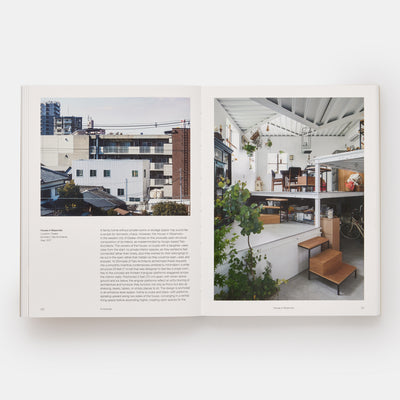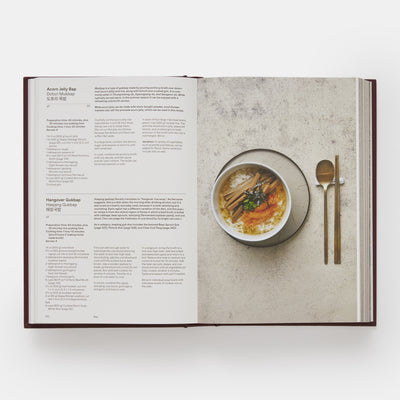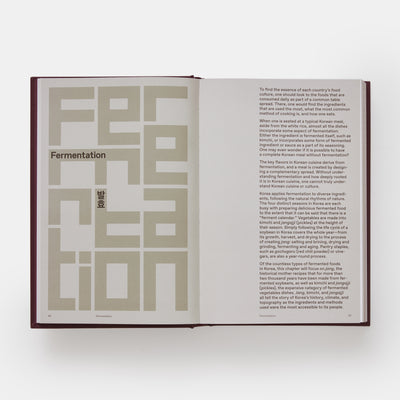










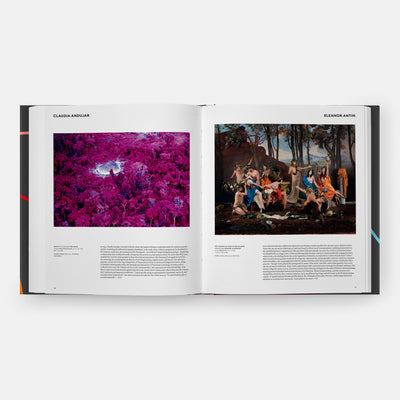
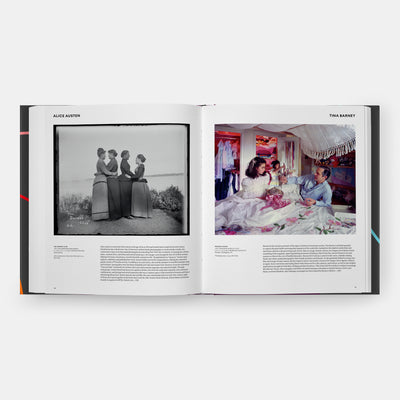
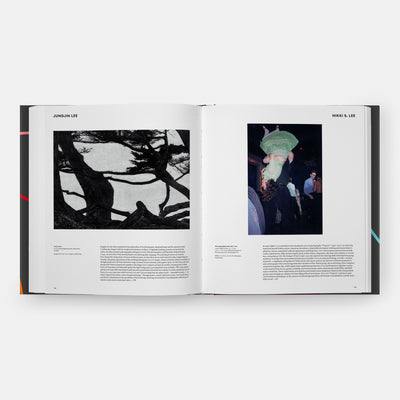
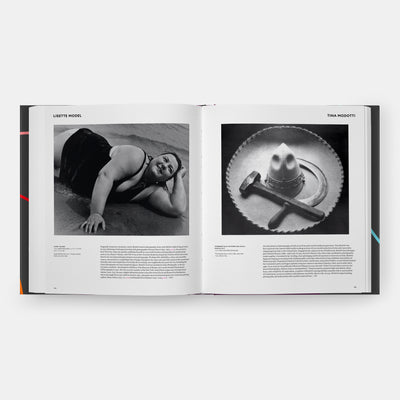


















When it comes to designing their own home, an architect will often seize the opportunity to fulfill their dreams and design theories to the absolute full.
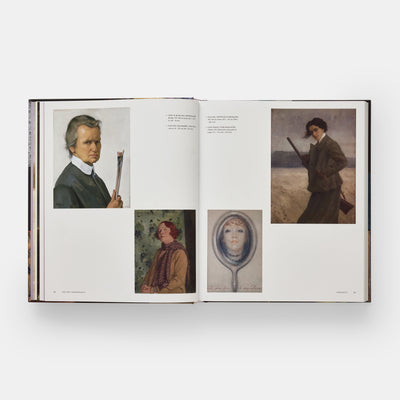
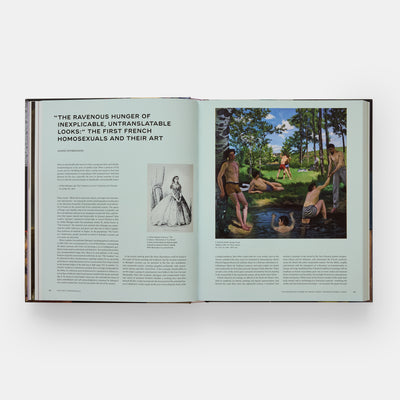
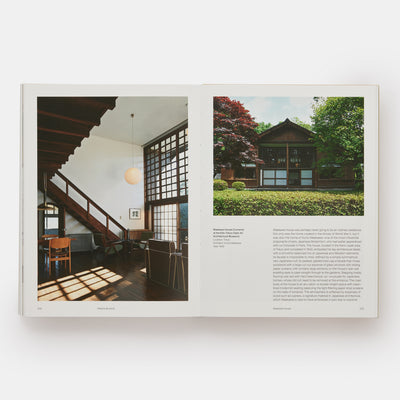
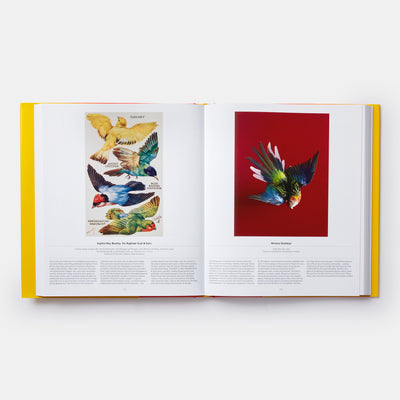
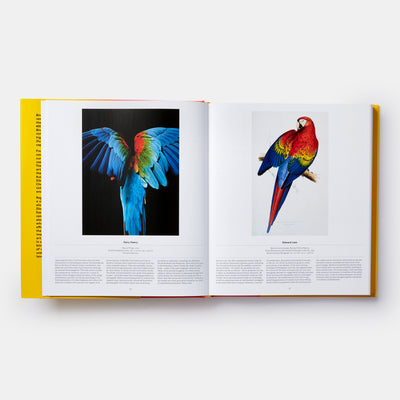
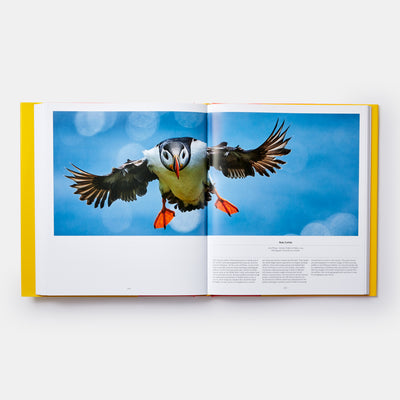
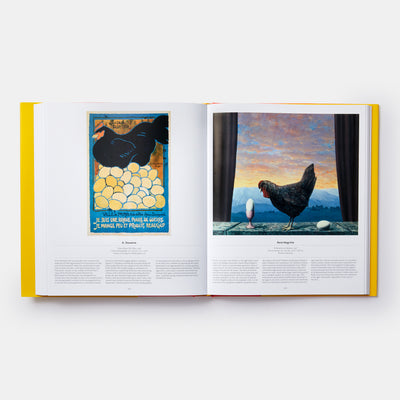
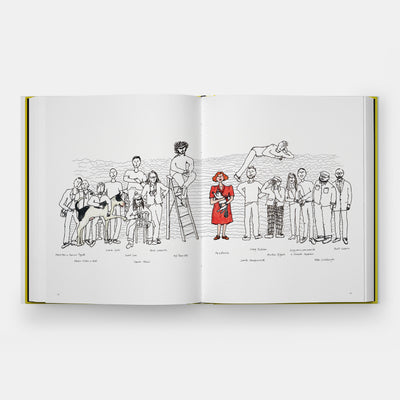
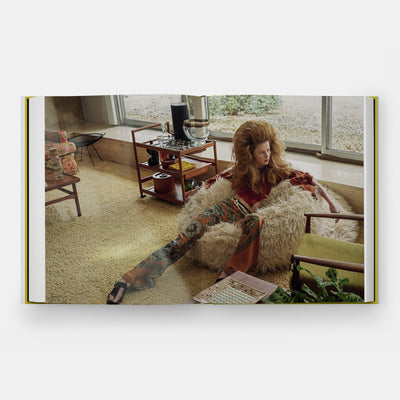
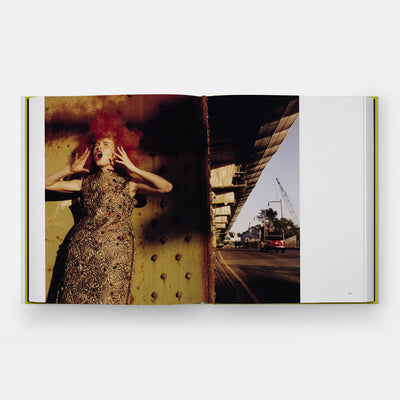
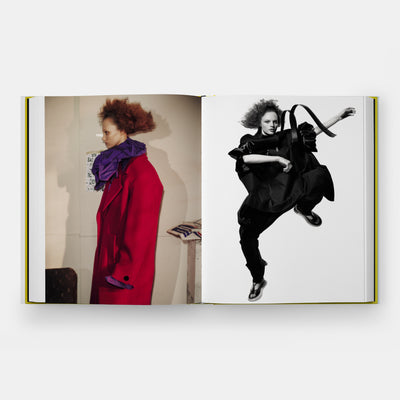
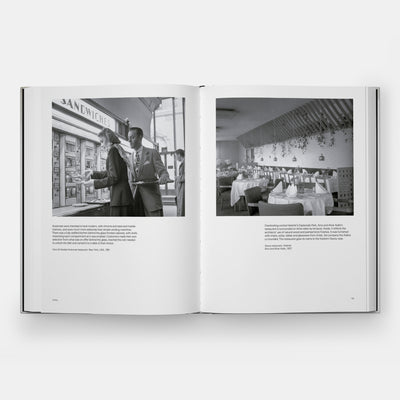
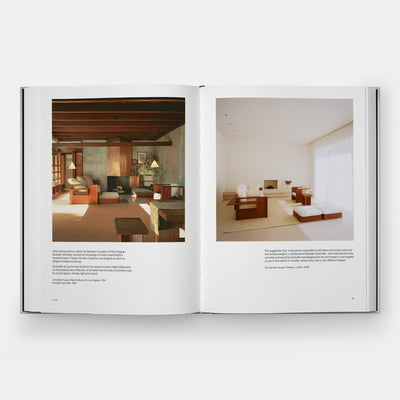
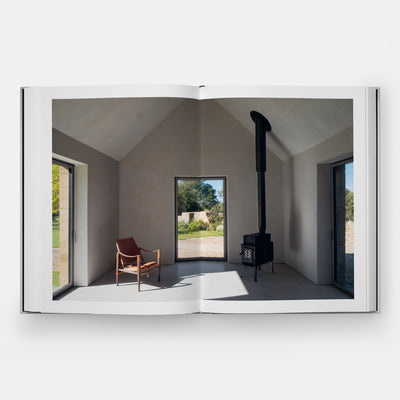
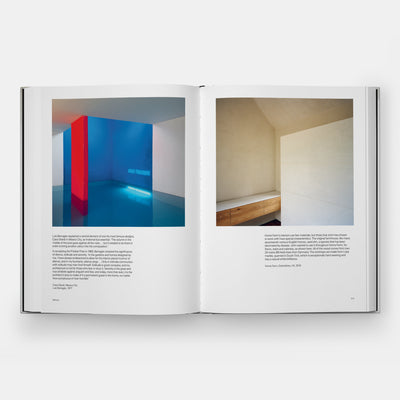
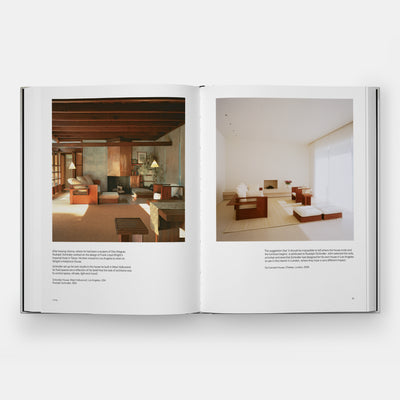
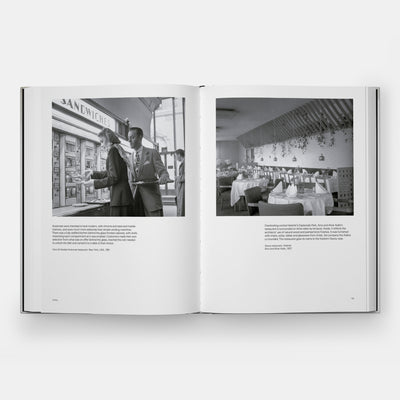
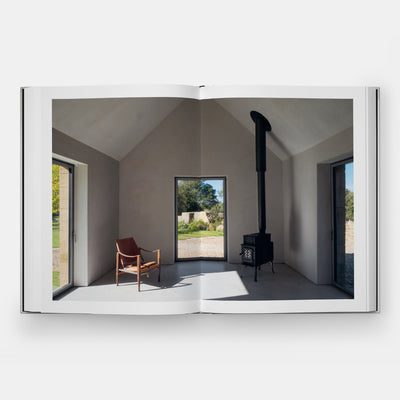
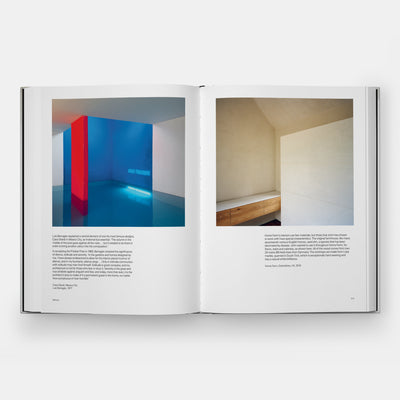
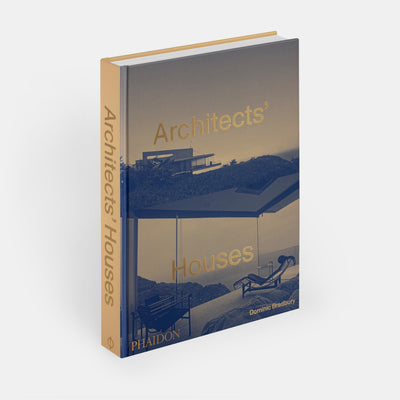
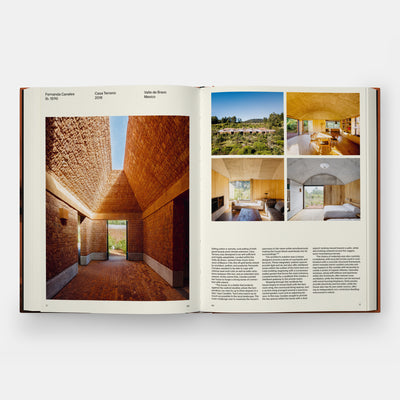
Showcasing 200 homes around the globe, from mid-century to the present, our new book Architects' Houses allows readers to step inside the minds and homes of the world’s leading architects, tracking the evolution of modern residential architecture by those who do it best.
Author Dominic Bradbury, the writer and journalist behind so many of Phaidon’s hit architecture books (among them Mid-Century Modern Designers, Atlas of Interior Design, Atlas of Mid-Century Modern Houses, Atlas of Mid-Century Modern Masterpieces), sets the scene in his introduction, exploring the unparalleled level of freedom the architect enjoys when designing their own home as well as the radically different outcomes of this process.
Architects' Houses features homes in an array of scales and styles from internationally acclaimed architects, from Frank Lloyd Wright, Lina Bo Bardi, and Charles Correa to Ken Shuttleworth, Deborah Berke, Bjarke Ingels, and Omar Gandhi.
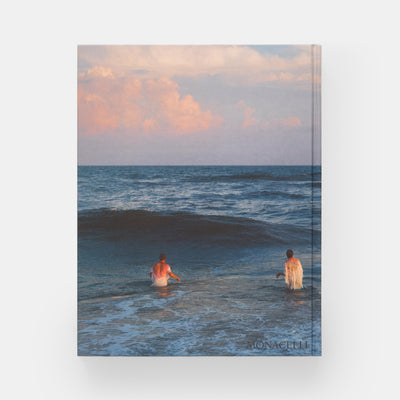
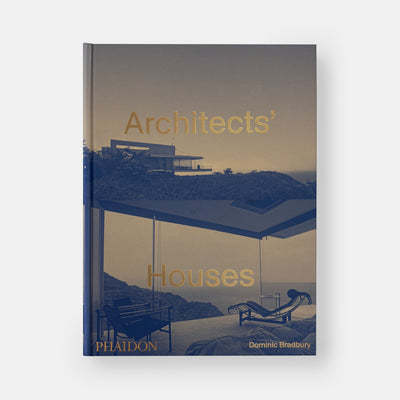
Featured architect and founding partner of Mecanoo, Francine Houben, contributes the book’s foreword, opening with a beautiful and thoughtful account of her own experience designing her home in the Netherlands. The cover features two images of architect Shohei Yoh’s home in Japan, the project aptly titled by the architect “Another Glass House Between Sea & Sky,” artfully printed in black on a terracotta tinted paper, with the title type in gold foil.
We caught up with Dominic Bradbury and asked him all about Architects' Houses.
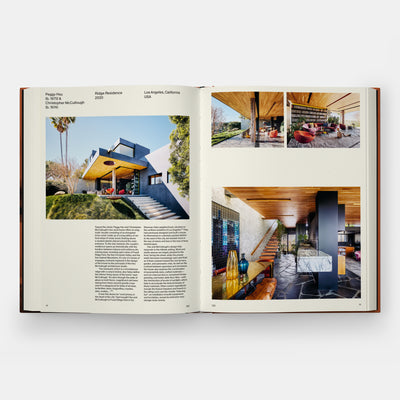
 Peggy Hsu & Christopher McCullough, Ridge Residence, 2020, Los Angeles, California, USA. Image credit: Photo: Joe Fletcher / Courtesy Hsu McCullough
You’ve written so many great architecture books for Phaidon, what appealed to you about architects’ houses? It's a subject that's always fascinated me. Through my work as a journalist and as a writer I meet architects and often end up visiting them in their home. In many cases, the most interesting articles come out of those because it is such a personal experience. You feel you're getting directly to the architect, rather than going through a client or a project. Their home is the most personal expression of their work. So you feel you're getting closer to them, and that's very interesting in itself. You learn a lot from that process.
 Robert Konieczny, Konieczny’s Ark, 2015, Brenna, Poland. Image credit: Photo: Olo Studio / Courtesy KWK Promes
Is there a common thread that sets architects' houses apart from the houses that they create for their clients? There is a quote I really like that you'll find in the introduction. It’s a quote from the Japanese architect, Kiyonori Kikutake, and he says an architect's ability is said to be best judged from the house he lives in. So he decided to make the building of his own house the very first project of his career. I think you often come across a feeling among architects that that they have to build a house at some point. It may not be the first project, but it's a really important part of their lives. And it can be slightly daunting for some architects, because it is such a personal expression of their work. But as we talk about in the introduction, it's often a manifesto statement. It's often a statement of intent, a showcase as well as a home that they share with their family.
 Emili Fox, Ballast Point House, 2019, Sydney, New South Wales, Australia. Image credit: Photo: Anson Smart
A lot of the houses featured in the book seem to have a standout feature – a staircase, a view, a bedroom facing a forest. The setting is definitely a constant theme, and, in many cases, the architects are really looking for a special spot to express themselves. So it's not only the expression, but also the context of the project. And there are some really special contexts. Although having said that sometimes it might be quite an urban or hemmed in context where the challenge is different. But where the architect is probably still trying to create a statement of some kind they may express it in the staircase or a roof terrace or something special that comes through. During the curation process, I guess we were consciously or subconsciously looking for those special moments, the wow factor.
 Palinda Kannangara, Studio Dwelling, 2015, Colombo, Sri Lanka. Image credit: Courtesy Palinda Kannangara
There is a lovely piece of writing in the book in which Luis Barragan reminds us how the idea of luxury relates to the promise of space, volume, sunlight, and tranquillity. Luis Barragan is definitely a favorite of mine because he's one of these architects who talks about emotions and feelings. Whereas with some architects, those are not the first things that they think about. And I've got a real soft spot for the way Barragan talks about beauty and light and fountains even. There's something incredibly romantic about that. It reminds you that, despite statements and manifestos, this is a home and the emotional center point of an architect’s life.
 William Morgan, The Morgan House, 1973, Jacksonville, Florida, USA. Image credit: Duane Talley
Architects’ houses are like Gesamtkunstwerks, aren't they? In that when an architect creates a house for a client, they have no control over the things that might eventually fill the space – the opposite is true for their own. Absolutely. Another common refrain from meeting architects is their horror of walking into a project and the client has filled it with things that are really quite inappropriate or don’t match the original vision, and the project, in a sense, derailing.
So this is the moment where they can do what they want, what they like, and curate the interiors in a way that matches the architecture. Bring it all together. Architects like Alvar Alto just go into endless detail on this, looking at every last door handle. Every detail is just so carefully thought out - the living room, out, the bathroom, the bed - everything is executed so beautifully. So it's that combination of the fantasy and functionality.
There's the fantasy side on one hand and there's the detail on the other. I remember Adam Richards, whose Nithurst Farm house is in the book, talking about the inspiration for the house, talking about movies and the film Stalker where there's this magical journey to an imaginary house and trying to translate that.

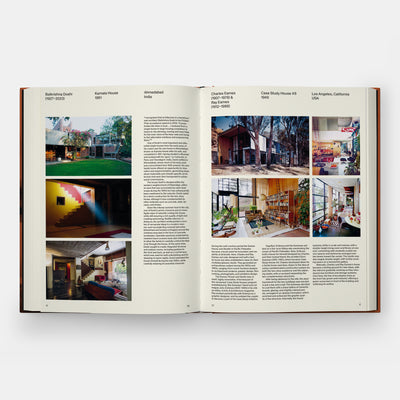
Charles & Ray Eames, Case Study House #8, 1949, Los Angeles, California, USA. Image credit: © 2026 Eames Office, LLC. All rights reserved
Did you come across any absolutely no compromise type houses in your research? Well context can often generate compromises, especially in an urban setting. Or if an architect is trying to rework a historical building like say John Pawson and Home Farm. I don't know if compromise is the right word - John Pawson will never make a compromise.
But in some cases architects are working within a different context compared to making a building a house from scratch. That was part of the joy of the book, exploring these very different contexts, these very different solutions. If you gave 200 architects the challenge of building their own house, there'd be so many things in common, but actually, they're all just so unique. Every solution is different. No two architects actually think the same way. So it's that artistry and individuality that makes the book really exciting.
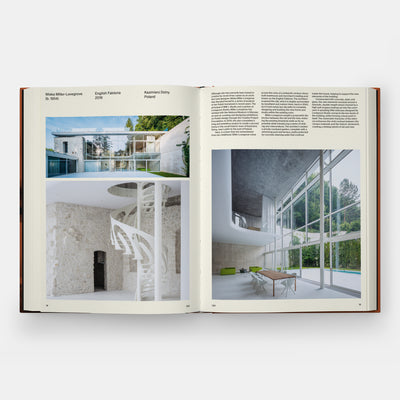
 Miska Miller-Lovegrove, English Faktoria, 2019, Kazimierz Dolny, Poland. Image credit: Photo: Juliusz Sokolowski / Courtesy Miska Miller-Lovegrove
How important is the idea of legacy, the belief that this is the house the architect will ultimately be judged by? I sometimes found that houses have been refined or updated by the architect, which goes back to the idea of legacy. Then there are architects like Cliff May, who did five houses for himself and was refining the ideas through each project, through each house, and each house was became more ambitious. So with a number of architects in the book who did more than one house they're carrying the ideas forward and allowing them to evolve and represent different phases of their career.
After researching the built environment for decades, are you still able to be surprised by what you uncover? Part of the joy is always learning something new or going in a slightly different direction or exploring an architect's work you didn't know so well. Some of my most special experiences as a writer have been through visiting architecture. I remember visiting Charles Gwathmey in his house on Long Island before he died and just having the most wonderful visit. And then Peter Aldington, who died quite recently we went to see him at Turn End and again, that was very special. So when you talk about legacy you feel very much that it is their legacy, because it is their most personal expression.
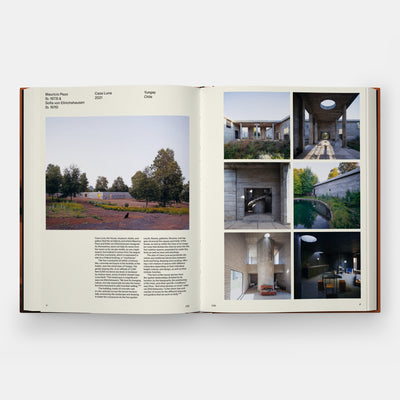
 Mauricio Pezo & Sofia von Ellrichshausen, Casa Luna, 2021, Yungay, Chile. Image credit: Courtesy Pezo von Ellrichshausen
How do you feel when you walk into places like that? Well, definitely honored, definitely grateful to be allowed across the threshold. And then I think with someone like Peter Aldington being able to have that conversation about the house and its history feels very special. You feel that you're documenting something important. Important to them, important to architectural history. So those are very special moments. I remember visiting Oscar Niemeyer's house in Brazil. Obviously, he had passed away by that point, but we visited the house and again, you feel in a way that they’re around you, you're immersed in their world.
Tell us about some of your personal favourite architects’ houses in the book. I'll talk about the Albert Frey because I visited it - some years ago now – and it’s an extraordinary site. It's way up on the hill above Palm Springs, so you have to make this journey up the hill. And you think it's the most extraordinary place to pick to build a house. And then you look out at the view, and you realise why he chose it. Because it's such a rugged, rocky, mountain side. It was his second house. The first house was down in the valley. And then he'd gone up to the hills. And again, that was very much part of his working process, to experiment with those two houses and develop ideas.
The Richard Neutra house is iterative in the sense that the original house burnt down. He then worked with his son on the rebuild and they developed their ideas and took them further. And legacy was very important in that project. And it was obviously experimental to begin with. So that goes back to this idea of refinement.
 Albert Frey, Frey House II, 1964, Palm Springs, California, USA. Image credit: © J. Paul Getty Trust. Getty Research Institute, Los Angeles
We'd originally picked the Mauricio Pezo house and studio they designed for themselves by the coast, which they still own. But they said they’d rather put Casa Luna in as it is a more recent project and reflected more where they are now. I wasn't so familiar with Casa Luna, but then we looked at it and I thought this is even more extraordinary than the other house. They've done some extraordinary houses in their time, but this one took everything onto another level, and it's in the country, so it goes back to that idea of escape and refuge.
And the geometry, the setting, the scale the way it works around this giant courtyard, garden, and just the sense of space and volume they were able to create out of all of these different spaces goes back to the idea of fantasy. Some of these spaces almost feel like a fairy tale. They're just so extraordinary. I visited the house they did in Spain quite recently which is also a concrete, rural home and, again, it has this fairytale-like quality.

Norman Foster, La Voile, 2002, Saint-Jean-Cap-Ferrat, France. Image credit: © Nigel Young / Foster + Partners
And then I look at something like the Hiroshi Hara, Hara House. That's a good example of a house that really reflects his design philosophy. He talked about the idea of the interiors of a house and the rooms as like a city or a street. Spaces arranged off these circulation routes that would be like streets. So it was at least a very theoretical house. But also like a manifesto, a statement of intent. So it's quite an individual house, but very special.
I've got this soft spot for, mid-century modernism. So I'm a real sucker for houses like the William Morgan house. Again it's the combination of geometry, the setting – it’s right on the beach so he's got his boat stored at the base of the house and the triangular form of the building reaches down to the beach. And it is fabulous. It's just like one of those houses you dream of owning really.
 Hiroshi Hara, Hara House, 1974, Tokyo, Japan. Image credit: Courtesy Hiroshi Hara + Atelier Phi
I think some of those mid-century designers who took that more expressive route, like Morgan or Richard Foster, there is a dreamlike quality, a feeling that anything is possible, we're not going to be held back. So if they wanted a triangular house going down to the beach or a house that revolves around 360 degrees, then that's what they were going to do. So you see that liberation through architects’ houses, but particularly during the mid-century period when things are just so optimistic and so experimental.
So my favorites all seem to be mid-century houses, which is slightly worrying, but goes back to my obsession. There are some more contemporary ones, like the Nakashima Estate at New Hope is another huge favourite, which I had visited, and his Conoid Studio we put in the book is just extraordinary.
 Richard & Dion Neutra, VDL Research House II, 1966, Los Angeles, California, USA. Image credit: Photo: Thomas Cugini, Zurich. Copyright: Carla Cugini, Cologne, Lorenz Cugini, Zurich
What speaks to you, what is it that hits you in the heart? With the Nakashima, it's a sense of craftsmanship, the setting, the surroundings. It’s surrounded by woods and it's such a bucolic escapist setting. We think of Nakashima more as a furniture designer, but he was also a trained architect. So he designed the Conoid Studio and other buildings at New Hope himself, just adding these new buildings to this farmstead, and they were like a diary. Each one is quite different and took him in a slightly different direction. But the texture, the craftsmanship, the originality, the setting, the detailing, the cohesion of the vision, the dream. I think part of the excitement is the mix and following these different narrative threads through time and geography.
 Dominic Bradbury - photo courtesy the author
The architect client relationship is often emotionally fraught - more so when the project is a home. Were there any architects’ houses responsible for an architect divorce? Ha! It can ask quite a lot of family. Because the architect is the client, but their families are also the client. And so, without naming any names, in some cases you feel they've actually listened to their partner, their family, and taken all of their wishes into account and the result is an extraordinary bespoke home that everyone falls in love with, that’s created around a shared lifestyle and the setting. But in other cases, it's more as though the family are having to fit around them which I think is quite a big ask.
Enjoyed the interview? Then get a copy of Architects' Houses here.