

![Handwork: Handcrafted Objects that Made America [Craft in America]](http://www.phaidon.com/cdn/shop/files/M-handwork-en-3727-3d-standing-front-3000_cf7b8381-b3a2-41fd-86da-6fe623fb0a35.jpg?v=1784715138&width=400)
![Handwork: Handcrafted Objects that Made America [Craft in America]](http://www.phaidon.com/cdn/shop/files/M-handwork-en-3727-3d-overview-3000_038c21c2-0af7-41e2-8a96-9b0beaf9c2d6.jpg?v=1784715138&width=400)
![Handwork: Handcrafted Objects that Made America [Craft in America]](http://www.phaidon.com/cdn/shop/files/M-handwork-en-3727-3d-spread-1-3000_675d5a59-80e7-4b98-bb57-f9d68d61b20d.jpg?v=1784715138&width=400)
![Handwork: Handcrafted Objects that Made America [Craft in America]](http://www.phaidon.com/cdn/shop/files/M-handwork-en-3727-3d-spread-2-3000_a21c9230-7856-470d-8101-09ae2fef75e3.jpg?v=1784715138&width=400)
![Handwork: Handcrafted Objects that Made America [Craft in America]](http://www.phaidon.com/cdn/shop/files/M-handwork-en-3727-3d-spread-3-3000_6dbd48c4-eaab-4b0d-86a2-19b97d8be954.jpg?v=1784715138&width=400)
![Handwork: Handcrafted Objects that Made America [Craft in America]](http://www.phaidon.com/cdn/shop/files/M-handwork-en-3727-3d-spread-4-3000_851a14d9-3b23-4197-85c5-3a4503b24548.jpg?v=1784715138&width=400)
![Handwork: Handcrafted Objects that Made America [Craft in America]](http://www.phaidon.com/cdn/shop/files/M-handwork-en-3727-3d-spread-5-3000_232b034c-682e-4a6f-b47b-81d5a99dd497.jpg?v=1784715138&width=400)
![Handwork: Handcrafted Objects that Made America [Craft in America]](http://www.phaidon.com/cdn/shop/files/M-handwork-en-3727-3d-spread-6-3000_4c787d9d-1fb6-4812-9652-d15d93423bc0.jpg?v=1784715138&width=400)
















Artists throughout history have sought to immortalise the emotions stirred by those closest to them.
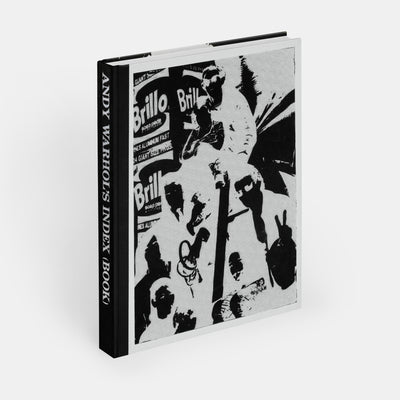
For Andy Warhol—who rarely spoke of his biological relatives—his immediate circle of friends and collaborators, the 'superstars' as he famously named them, became a chosen family. He documented them relentlessly; at his studio the Factory, in his films, and across his public life in New York.
The British painter Francis Bacon held a starkly different view of intimacy, once remarking that he "always thought of friendship as where two people really tear one another apart, and perhaps in that way learn something from one another".
Even so, making art may be among life's loneliest pursiuits, and a shoulder to lean, and occasionally cry on, is essential. As Picasso acknowledged when reflecting on the importance of personal connection: "I'm surrounded by great friends and family. I don't know what I would do without them."
Here, we present eight works by contemporary artists whose Artspace editions draw inspiration from home, friends, family, and yes, the occasional foe.
Marilyn Minter – Big Red, 2022

Since the mid-1990s, Marilyn Minter’s process has begun with elaborate photoshoots, to create the source material for her paintings, which are mostly rendered in enamel on metal to reinforce a high-gloss finish. The original painting Big Red emerged from a photoshoot of fellow artist and friend Wangechi Mutu. It’s the first limited edition print ever to reference one of Minter’s iconic paintings.
“She was working as a model and she wanted to document her pregnancy,” Minter tells Artspace. “She put herself together in such an exotic, beautiful way and I just shot all around it. We did two days of work. She had great shoes on, and feathers and she looked gorgeous, just gorgeous.”
“I wasn’t thinking of Wangechi Mutu the artist. She was a model who was fearless. She was wearing blue lipstick. I didn’t know that when she smiled, her teeth would be gold! We were just playing, fooling around. She called herself a prude, but she posed naked. She said she’d never have done that if she wasn’t pregnant. We got some great shots. We were both in the zone. This [Artspace edition] is a combo, a print of a painting.”
“My shoots happen quite quickly. I really just have these ideas, and I just start doing them. And then one idea leads to another. I don’t know what I’m going to do ahead of time at all. I have a general idea, but everything changes when I look through the lens. It’s totally intuitive.”
Woody De Othello – our glass, 2023

For Woody De Othello, the home is alive. Like Salvador Dalí, Marcel Duchamp, or Felix Gonzalez-Torres before him, much of Othello’s fantastically engaging, thought-provoking work is situated in a domestic realm, anthropomorphizing the space we’re in, or a mundane everyday object we interact with; a telephone here, a clock or light switch there.
Our two-pronged edition our glass, 2023 includes a small run of 30 vibrant screenprints, as well as a run of only five prints that come accompanied with handmade glazed ceramic sculptures.
“I feel like those small everyday objects hold a lot of life metaphors,” he tells Artspace. “Right now my work is about representation, looking at everyday objects and transmuting them to have style and character and emotion.”
“The print is about community, or close friends, gathering. With this edition I was thinking a lot about summer approaching and the energy of having friends over. The flowers are blossoming, and glasses are on the table. Things are ready to get poured. So that shared space is in the energy of this print.”
“I wanted all aspects of this piece to feel very light-hearted and positive and open. We’re just coming together to share a moment in time and share a couple of refreshments and hang out together.”
Loie Hollowell – Yellow Brain, 2022

The abiding subject of Hollowell’s work is the experience of her own body. At the same time, the sheer luminosity of Hollowell’s work is indebted to her California roots and that state’s eminent proponents of the Light and Space movement. The inspiration for Yellow Brain, 2022 is rooted in that movement along with a very poignant and personal experience much closer to home.
“I made them {the paintings that Yellow Brain is based on} for my dad who had a traumatic brain injury a year ago,” she told Artspace in 2022. “He fell from a ladder straight down on his head onto concrete. He was in the hospital for a long time on life support and when he became conscious he wasn’t able to speak at all - not even make sounds.”
“The series of works that this print is based on came out of the desire to want to make color field experiences for him, something for him to meditate on. He is a painter - a very formally rich and super intensely Yale-educated formalist painter - and so I thought making these really basic color studies would be something like a tribute to him.”
“I was thinking about how these would actually function if I was in his position, and trying to regain consciousness, and absorb color through this new brain space that got totally discombobulated from the fall. I tried all these different colors when he was coming out of the induced coma.”
Camille Henrot - Mother Tongue, 2020/21

French is Camille Henrot ’s mother tongue, though this hugely talented, Parisian-born artist, excels in teasing apart the nuance and contractions in the English language, and in contemporary life, via her videos, films, sculptures, paintings. Mother Tongue, 2020/21 can be read in various ways. Its rich visual beauty belies a deeper inquiry into the nature of humanity itself and drives cracks into the iconic art historical trope of mother and child.
“To me, parenting is a very interesting field or source for material because of its messiness,” she tells Artspace. “It’s complex and ambivalent and unstable. There is tenderness but there is also anger. There is attraction but there is also repulsion. And if you pull on these strings, everything comes together: sexuality, love, death, and much more.”
“The foundational experiences of childhood is something that influences all of our later experiences in life. When we feel a sense of powerlessness politically, or in our relationship to technology and the media, there is an innate recall to the powerlessness we felt as children - having to bow to, or rebel against, the authority of our parents in the same way. Perhaps working on these topics allows me to drive towards their original form and look at the systems of relationships that we have, in order to consider the ways we project ourselves into the future.”
Anne Buckwalter - Self-Portrait with Hairbrush, Pen, Book, Leash, and Collar, 2024

Rendered in a painting style redolent of the folk art traditions of her Pennsylvania upbringing, For Anne Buckwalter the domestic interior is a psychological, and often sexual space.
For Buckwalter, a bed for instance, “perfectly symbolizes the collision of many conflicting elements: sickness/sexuality, comfort/discomfort, consciousness/unconsciousness).” By inventing interior spaces, she says she “can allow contradictory elements to live in the same room, literally.”
She was born and raised in Lancaster, a part of southeastern Pennsylvania that is known for its Pennsylvania Dutch culture. “This regionally-specific culture and its unique traditions — particularly its folk art, culinary, and religious traditions— were a huge part of my childhood. I grew up around a lot of domestic crafts, hand-painted furniture, Amish quilts and textiles, and this aesthetic is very much something I connect to a sense of home.
“I made this image specifically for this project. A few years ago I made a series of drawings of beds, and the composition of those drawings, with a single bed surrounded by the white space of the paper, seemed like it would be a good fit for a print. And I wanted to make something new that felt aligned with what I’m currently exploring in my practice. I was attracted to the idea of having there be some objects nestled into a visual field of intense detail — so I knew I wanted to paint an intricate quilt to put on the bed, and have there be objects strewn about that were all the same color, thinking they could be printed with the same process.”
Tschabalala Self – The Actress Alexis, 2024

One of the main concepts in Tschabalala Self’s practice is that one's identity is a reflection of many aspects and is formed through a host of varying experiences. “Some aspects are inherent, while other aspects are experience-based,” the artist tells Artspace. The Actress Alexis, 2024 embodies her signature style, characterized by bold colors, dynamic forms, and profound narrative depth. The exclusive edition comprises ten unique prints, each with hand-painted finishes.
The Alexis in question is Alexis Cofield, one of the principal actors in Self’s experimental play Sounding Board, commissioned for Performa in 2021. The play explores themes of intimacy, control, and interpersonal relations as they intersect with race and gender.
“I cast 4 actors for the Sounding Board performance,” Tschabalala Self tells Artspace. “I drew portraits of each actor to better understand their role and their personality for the production. Those sketches were then used to create four, large scale paintings.”
“I would say I have a very intimate relationship with the figures in my paintings; but it’s also a mysterious relationship. The mystery is because they continue to unfold themselves to me, even after the making has been completed. I also am fascinated by the idea of an actress because it’s a person that is consciously taking on the role of a character. Characters and character development are an important aspect of my overall practice.”
Cristina Zimpel – CLAP, 2025

Cristina Zimpel’s practice is deceptively simple on the surface. Faces, figures, and fragments of daily life are distilled to a few decisive lines and saturated planes of bold color. But within this elegant economy lies something more subtle, the tension between familiarity and estrangement, between almost classical poise and visual playfulness. Her figures, often female and archetypal, seem poised between eras, almost Victorian in repose, yet utterly contemporary in confidence.
CLAP, 2025 reflects Zimpel’s interest in exploring the “movement of the body, and the transparency and opaqueness of clothing, and varying expressions of femininity,” capturing what she describes as “a moment of truth” through the work’s precise and bold composition. “As my compositions are quite precise, I decided not to embellish the figure or background but concentrate on the face,” she tells Artspace. “I thought I’d create many women, many moods and each with their own personality. I’m concerned that women are becoming way too homogenous these days, so it was great to see all these characters emerge.”
“I’ve always admired people who refuse to conform. That started quite early for me. Living in Western Australia it was easy to spot the outsiders. My mother was probably my first fascination as she had an individuality the other mothers didn’t have.
My subjects are likely a veiled portrait of my mother's spirit and mine combined. A lot of that can be communicated through body language, clarity of composition and color.”
Dana Schutz – Adversaries, 2019

The Brooklyn-based painter and sculptor Dana Schutz constructs complex scenarios, often depicting figures in impossible or invented situations, to reveal the ambiguities of her subjects’ psychological states. The forms of these abstracted, distracted characters encroach or kick at the edges of her luminous canvases.
For Schutz, the painting is a world, a set of distinct spaces, relations, and landscapes. Try and dig a little into the specifics of who, what, how, and where, and you may get lost in that world, stretching for a narrative that might transport you somewhere you understand.
The faces in her landscapes – “not necessarily totally human, kind of humanoid,” as she describes them - are at turns wistful, concerned, observant.
“I’m really interested in structuring things, because there’s content in how things are structured but it’s being built as the painting’s being built,” she has said. “It’s not there in the beginning. You’re kind of working against it. The painting is reorganizing itself as it’s being painted.”
“I can have an idea of who I think (the characters in the paintings} should be, but they can be surprising and change in the act of painting. The scenarios often involve a certain amount of compression as they are in deliberate proximity to the framing edge. The paintings can be relatively gestural, but the pictorial structure is dominant and often a big part of the conception of the subject.”